Select Language:
Understanding the “Can I Lick It?” Periodic Table: A Color-Coded Guide to Elements in 2025
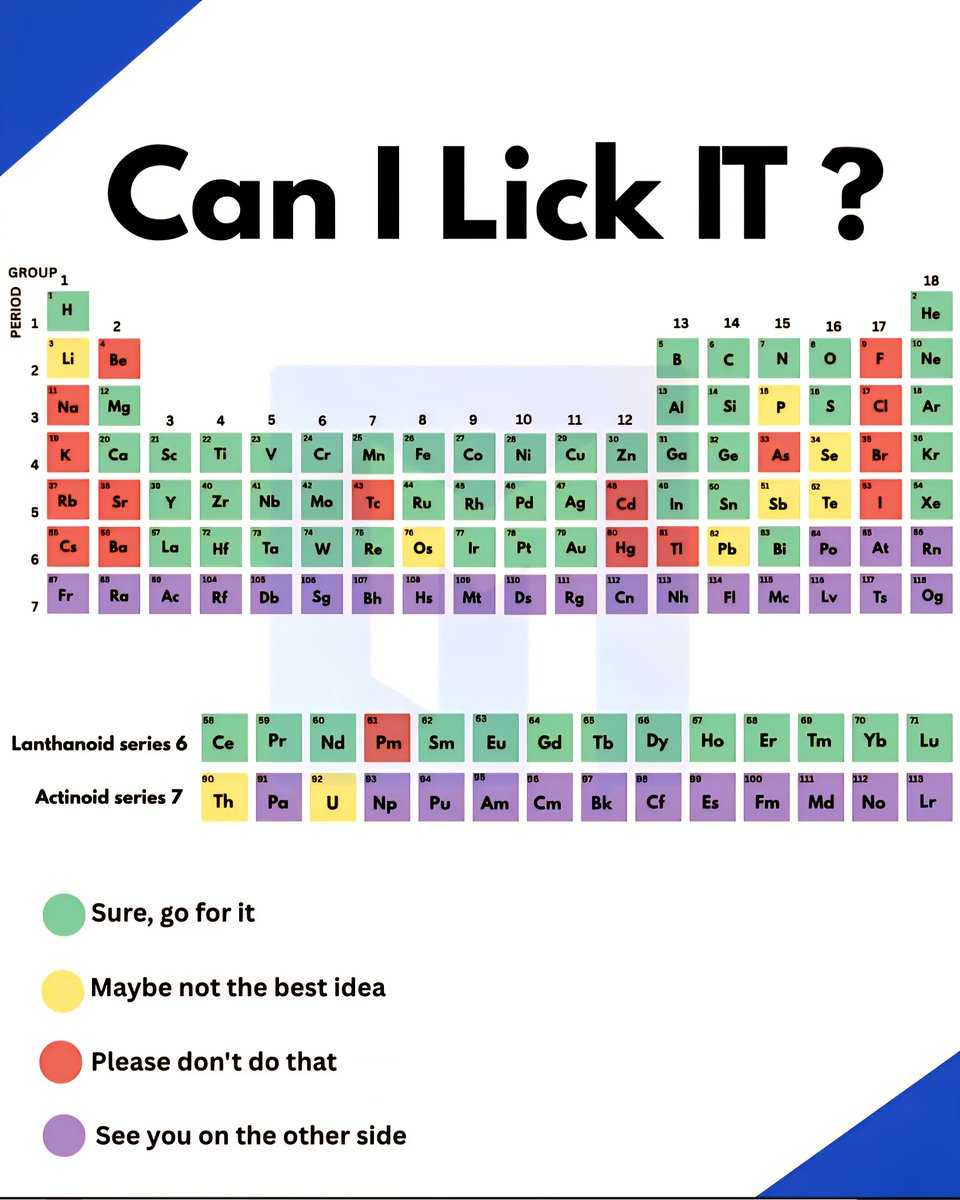
The periodic table has always been a fundamental tool for chemists, students, and science enthusiasts alike. In 2025, a new, engaging educational resource has caught attention—the “Can I Lick It?” periodic table, which categorizes elements based on safety and potential hazards through a colorful system. While it shouldn’t replace scientific caution, it offers an accessible way to understand the diverse nature of elements. Here’s a detailed breakdown of this innovative guide:
Green Elements: Safe for Minimal Contact
The green category on the table includes elements like gold (Au) and silver (Ag). These substances are generally considered safe for minimal handling—think of their common uses in jewelry, electronics, and silverware. The cue here is that, while not recommended to ingest or handle excessively, incidental contact with these metals doesn’t pose significant health risks. This category encourages curiosity but advises respect for their chemical properties.
Yellow Elements: Exercise Caution
Yellow-coded elements include beryllium (Be), considered in certain applications like aerospace materials due to its lightweight strength but posing health risks if mishandled. The yellow classification acts as a warning—these elements may cause health issues upon exposure and should be handled with care. For example, beryllium dust can lead to serious lung conditions if inhaled, emphasizing the need for protective gear during handling.
Red Elements: Avoid Contact When Possible
Red signifies elements that can pose significant health risks and should generally be avoided unless necessary and with proper safety measures. Fluorine (F) and iodine (I), for instance, are included here. Fluorine, a highly reactive gas, can cause severe chemical burns and respiratory issues, while iodine, though essential in small amounts, can be toxic if misused. This category underscores the importance of understanding chemical reactivity and potential hazards.
Purple Elements: Highly Dangerous Substances
Perhaps the most critical category, purple highlights elements like plutonium (Pu), which are extremely dangerous and require strict handling protocols. These substances are associated with radioactive hazards and pose severe health and environmental risks. Handling such elements necessitates specialized knowledge, equipment, and safety procedures, underscoring their classification as highly hazardous.
The Educational Significance of the Color-Coded System
This classification isn’t meant to promote direct interaction with any elements but acts as an educational reminder that the periodic table’s elements vary dramatically—from safe metals to highly toxic or radioactive substances. It provides a visual way to grasp the concept of chemical safety and understanding element properties without overwhelming technical jargon.
Practical Use for Enthusiasts and Students
Whether you’re a student learning about chemistry or a science enthusiast curious about the elements around us, this guide offers a quick snapshot of potential hazards. It could serve as a handy reference during lab work or casual exploration, emphasizing the importance of respecting the chemical nature of substances.
In Summary
The “Can I Lick It?” periodic table offers a fresh perspective on familiar elements, mapped through a bright, easy-to-understand color system. While it makes chemistry more approachable and emphasizes safety consciousness, it also reinforces the idea that all elements—regardless of their harmless appearance—must be treated with respect. Remember: curiosity should never come at the expense of safety.
Note: Always consult official safety guidelines and scientific literature when handling chemicals, and never attempt to test or ingest substances based solely on visual guides. Your safety remains paramount.
Image Source: Twitter
 ChatGPT
 Perplexity
 Gemini AI
 Grok AI