Select Language:
2025 U.S. Tariff Landscape: A Closer Look at Global Rates
-
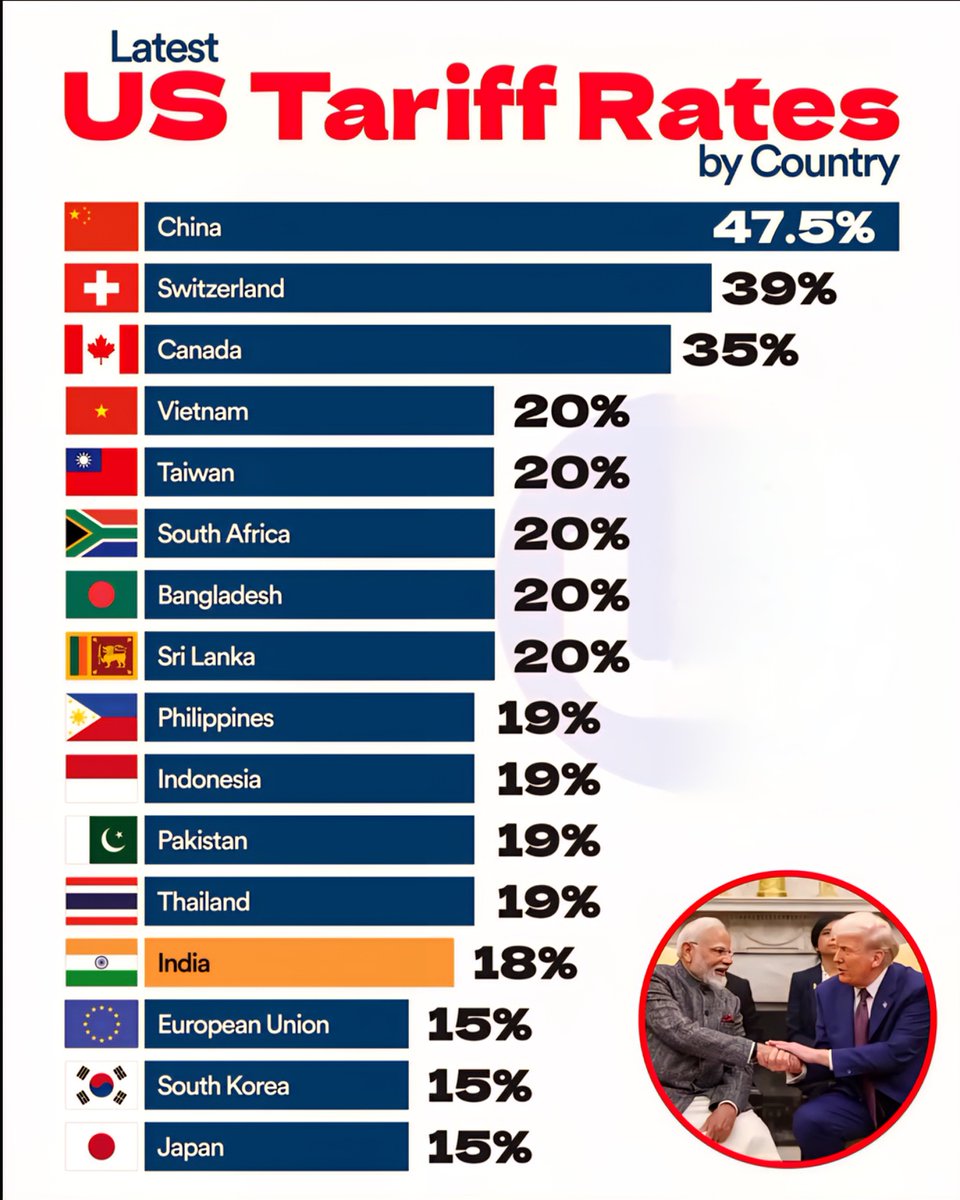
China Dominates with the Highest Tariff Rate at 47.5%
China remains the country with the most significant tariff rate imposed by the U.S., standing at an eye-catching 47.5%. This high rate reflects ongoing trade tensions and efforts to prioritize domestic manufacturing. Companies sourcing from China are feeling the impact, prompting many to explore alternative suppliers or renegotiate existing contracts. -
Switzerland Retirement at 39%, Maintaining Its Position as a Premium Trading Partner
Switzerland faces a substantial 39% tariff rate, which influences American importers dealing in luxury goods, pharmaceuticals, and precision machinery. Despite tariffs, Switzerland continues to be a strategic partner due to its high-quality exports and strong diplomatic relations. -
Canada’s Tariffs Remain Moderate at 35%, Emphasizing Its Close Economic Ties
With a 35% tariff rate, Canada remains one of the United States’ most vital trading partners. The close geographic proximity and shared economic interests ensure sustained robust trade, even amid tariff fluctuations. -
Vietnam, Taiwan, South Africa, Bangladesh, and Sri Lanka All Contextually Share a 20% Tariff Rate
Several emerging markets face a 20% tariff rate, affecting sectors like textiles, electronics, and consumer goods. Vietnam and Taiwan are particularly noteworthy for their role in electronics manufacturing, which reconfigures supply chains in response to tariff challenges. -
Philippines, Indonesia, Pakistan, and Thailand Hold at 19%
These countries form a critical part of the United States’ global supply chain, especially in textiles, agriculture, and technology. The 19% tariff rate pushes U.S. importers to consider diversification strategies to optimize costs. -
India’s Tariff Rate Slightly Lower at 18% Reflects Growing Trade Relations
India, with an 18% rate, continues its upward trajectory in U.S. trade engagement. The country’s expanding tech and pharmaceutical industries are key drivers, with the tariff rate influencing import decisions and investments. -
European Union, South Korea, and Japan All Positioned at 15% Tariff Rate
These advanced economies maintain relatively lower tariffs at 15%, reinforcing strong transcontinental trading relationships. The EU, South Korea, and Japan are vital partners in high-tech, automotive, and luxury markets. -
Tariffs as a Major Factor Reshaping U.S. Global Supply Chains
The rising or stable tariffs across these nations highlight a strategic shift in international trade. Companies are actively re-evaluating supplier bases, considering nearshoring options or U.S.-based manufacturing to mitigate tariff impacts.
In 2025, the evolving tariff landscape continues to influence global commerce, prompting businesses to adapt quickly to maintain competitiveness. The political climate, trade negotiations, and economic policies will undoubtedly shape tariff rates further in the coming months, with the goal of balancing protectionism with global economic integration.
Remaining aware of these tariffs enables companies to better strategize their supply chains, negotiate deals, and anticipate market shifts in an increasingly interconnected world.
 ChatGPT
 Perplexity
 Gemini AI
 Grok AI