Select Language:
Discover the 7 Wonders of the World in 2025: A Closer Look at Humanity’s Greatest Achievements
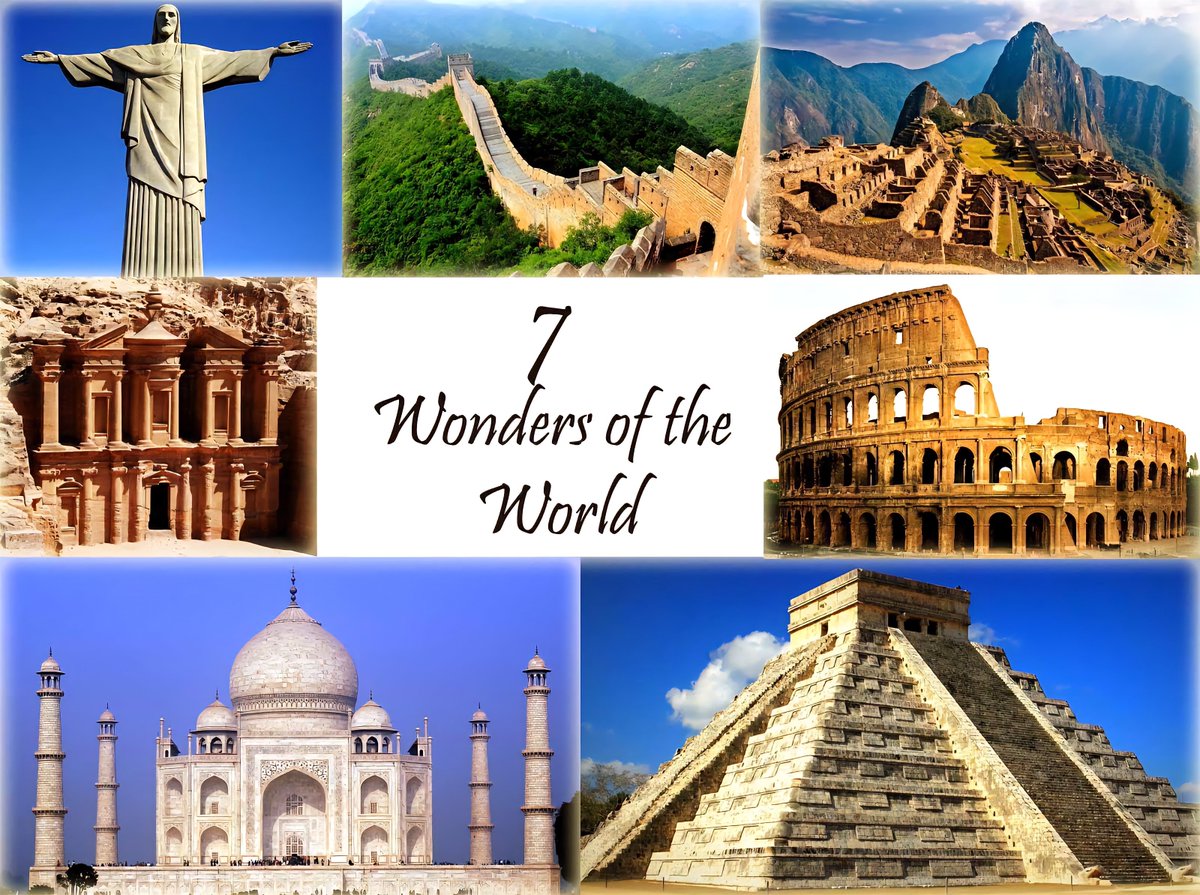
The Majestic Taj Mahal — India
Nestled in the heart of India, the Taj Mahal stands as a testament to eternal love and remarkable Mughal architecture. Built between 1632 and 1653, this ivory-white marble mausoleum was commissioned by Emperor Shah Jahan to honor his beloved wife, Mumtaz Mahal. Today, it’s not only an iconic symbol of India but also a UNESCO World Heritage site attracting millions of visitors annually. Its intricate craftsmanship, symmetrical gardens, and stunning reflection pools make it a must-see for travelers and history enthusiasts alike.
The Historic Great Wall of China — China
Stretching over 13,000 miles, the Great Wall of China is an extraordinary feat of ancient engineering that dates back centuries. Originally constructed to defend Chinese states from invasions, this massive structure has become an enduring symbol of Chinese resilience and ingenuity. Today, sections like Badaling and Mutianyu are popular spots for tourists eager to walk along its ramparts, learn about China’s turbulent history, and soak in breathtaking views of the surrounding landscape.
The Hidden Treasure of Petra — Jordan
Carved into rose-colored rock faces, Petra is an archaeological marvel located in southern Jordan. Once a thriving trade hub, this ancient city has been a UNESCO World Heritage site since 1985 and is often called the “Rose City” because of its striking pink-hued cliffs. Visitors are captivated by its iconic façade, Al-Khazneh (the Treasury), which was famously featured in movies like Indiana Jones. Exploring its narrow siq corridors, tombs, and temples offers a captivating glimpse into Nabataean civilization that thrived over 2,000 years ago.
Italy’s Eternal Colosseum — Rome
Standing amidst the ruins of ancient Rome, the Colosseum is a testament to Roman architectural and engineering prowess. Constructed between AD 70 and 80, it once hosted gladiatorial combat, wild animal fights, and other grand spectacles that drew crowds from across the empire. Today, the amphitheater’s partially restored exterior remains a powerful reminder of Rome’s imperial past and continues to inspire awe among visitors exploring the Eternal City.
Peru’s Mystical Machu Picchu — Andes Mountains
Perched high in the Peruvian Andes, Machu Picchu is an awe-inspiring remnant of the Inca Empire. Believed to have been a royal estate or religious site, the citadel was abandoned during Spanish conquest but rediscovered in the early 20th century. Its precise stonework, terraced fields, and panoramic vistas make it one of the most photographed UNESCO World Heritage sites. In 2025, advancements in archaeological research and sustainable tourism have helped preserve this incredible site for future generations.
Brazil’s Iconic Christ the Redeemer — Rio de Janeiro
Dominating the skyline of Rio de Janeiro, the statue of Christ the Redeemer stands 98 feet tall with an arm span of 92 feet. Completed in 1931, this Art Deco masterpiece is made of reinforced concrete and soapstone. It symbolizes peace and openness, welcoming visitors from around the world. In recent years, conservation efforts and environmental initiatives have enhanced its accessibility and preserved its structural integrity amid increasing tourism.
Mexico’s Mysterious Chichen Itza — Yucatán Peninsula
A premier example of Mayan civilization, Chichen Itza is a sprawling archaeological site famous for the massive El Castillo pyramid, also known as the Temple of Kukulkan. Built between the 9th and 12th centuries, this complex combines Mayan and Toltec architectural styles. Its astronomical alignments and carved stone structures continue to fascinate researchers and tourists. Efforts in 2025 focus on ongoing preservation, ensuring that this archaeological gem remains an educational beacon for centuries to come.
As this year unfolds, these seven wonders continue to serve as timeless reminders of human creativity, resilience, and cultural diversity. Whether exploring ancient ruins, marveling at engineering marvels, or admiring artistic masterpieces, visitors worldwide celebrate these sites that define our shared heritage.
 ChatGPT
 Perplexity
 Gemini AI
 Grok AI