Select Language:
Richest Countries by Natural Resource Wealth in 2025
1. Russia: Valued at an Impressive $75 Trillion
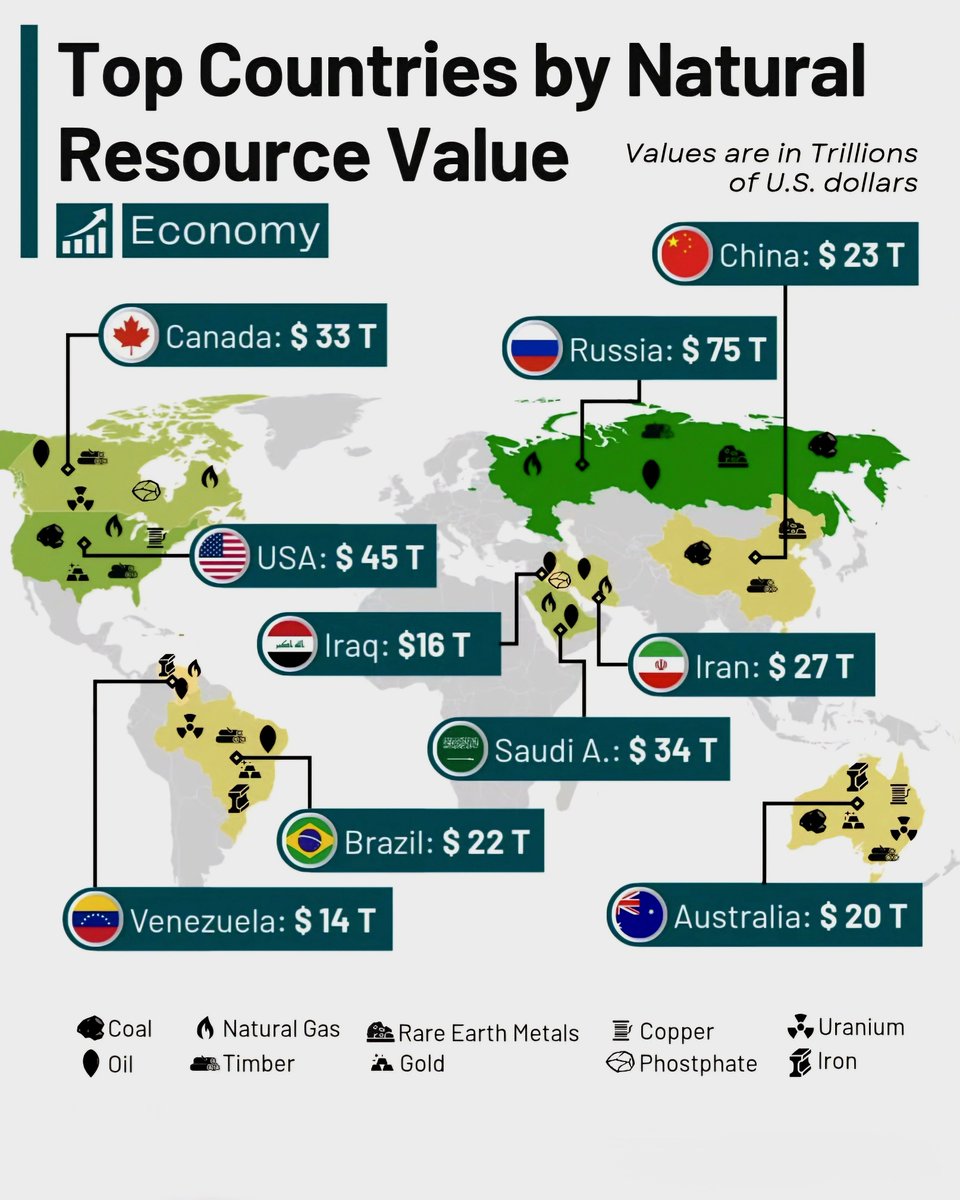
Leading the charts, Russia continues to dominate as the country with the most extensive natural resource wealth. With an estimated valuation of $75 trillion, Russia’s vast reserves include oil, natural gas, coal, minerals, and timber. Its enormous Siberian resources and ongoing investments in resource extraction technologies ensure that Russia maintains its position as a global resource titan. The country’s strategic approach to resource management has contributed significantly to its staggering valuation, enabling it to influence global markets and energy prices.
2. United States: Holding a Robust $45 Trillion in Resources
The USA remains a powerhouse with approximately $45 trillion worth of natural resources. This includes a diverse mix of crude oil, natural gas, coal, minerals, and agricultural resources. The country’s technological innovation and advanced extraction methods have maximized resource efficiency, fueling economic growth. The pivotal role of the US resource sector in energy independence and industrial development underscores its formidable standing globally. Moreover, the recent investments in alternative and renewable resources mark a shift toward sustainable resource management.
3. Saudi Arabia: Estimated at $34 Trillion in Reserves
Saudi Arabia’s massive oil reserves continue to be a cornerstone of its economic strength, valued at roughly $34 trillion. The kingdom’s strategic focus on energy exports bolsters its position on the global stage. Despite efforts to diversify, oil still accounts for the majority of its wealth, underpinning government revenues and investment in infrastructure and modernization. As a leading oil exporter, Saudi Arabia’s resource wealth remains a significant influence in global energy markets.
4. Canada: Estimated at $33 Trillion
Canada’s natural resource wealth is remarkable, totaling approximately $33 trillion. Abundant in minerals, forests, freshwater, and energy resources like oil sands, this country has leveraged its resources for economic prosperity. The nation’s commitment to sustainable extraction practices and environmental preservation has helped attract international investment. Canada’s resource sector forms the backbone of its economy and supports millions of jobs across the country.
[Insert Image Here]
5. Iran: Valued at $27 Trillion
Iran’s rich deposits of oil, natural gas, and minerals make it one of the most resource-abundant nations, with an estimated worth of $27 trillion. Despite international sanctions, Iran’s strategic resource planning continues to bolster its economy. The country’s vast natural reserves provide potential for future growth, especially as geopolitical shifts open new markets and investment opportunities.
6. China: Estimated at $23 Trillion
China ranks sixth with approximately $23 trillion in natural resource wealth. The country’s vast mineral deposits, rare earth elements, and energy resources support its manufacturing and technological industries. With a growing focus on sustainable development, China invests heavily in renewable resources and green energy initiatives, aiming to balance its resource consumption with environmental preservation.
7. Brazil: Valued at $22 Trillion
Brazil’s wealth in natural resources, estimated at $22 trillion, is largely based on its abundant minerals, forests, and freshwater resources. The Amazon rainforest, while rich in biodiversity, also holds significant mineral deposits. The nation is exploring sustainable ways to harness its resources, balancing economic development with environmental conservation efforts.
8. Australia: Worth around $20 Trillion
Australia’s resource valuation stands at approximately $20 trillion. Its extensive mineral deposits, including iron ore, coal, and gold, drive the economy. Australia’s technological advancements in mining and export infrastructure have made it one of the world’s leading resource exporters. The country continues to explore sustainable practices to manage its resource abundance responsibly.
9. Iraq: Valued at $16 Trillion
Iraq’s natural resource landscape is primarily defined by its massive oil reserves, with an estimated worth of $16 trillion. The country’s ongoing infrastructure development and political stability are crucial for unlocking its full resource potential. Iraq remains a pivotal player in global energy markets thanks to its strategic position and resource wealth.
10. Venezuela: Estimated at $14 Trillion
Venezuela’s resource wealth, valued at around $14 trillion, is mostly concentrated in its oil reserves. Despite economic challenges and political instability, the country commands one of the largest proven oil reserves in the world. Future prospects hinge on political reforms and investments in modernizing the energy sector to restore its position in the global market.
Conclusion
As of 2025, these countries reflect the sheer scale and strategic importance of natural resource wealth across the globe. While resource abundance provides significant economic advantages, responsible management and sustainable practices are now recognized as essential for long-term stability and environmental health. Countries continue to adapt their resource strategies to meet the demands of a changing world economy and the global shift toward sustainability.
 ChatGPT
 Perplexity
 Gemini AI
 Grok AI