Select Language:
Top Countries with the Most Valuable Natural Resources in 2025
1. Russia — Valued at $75 Trillion
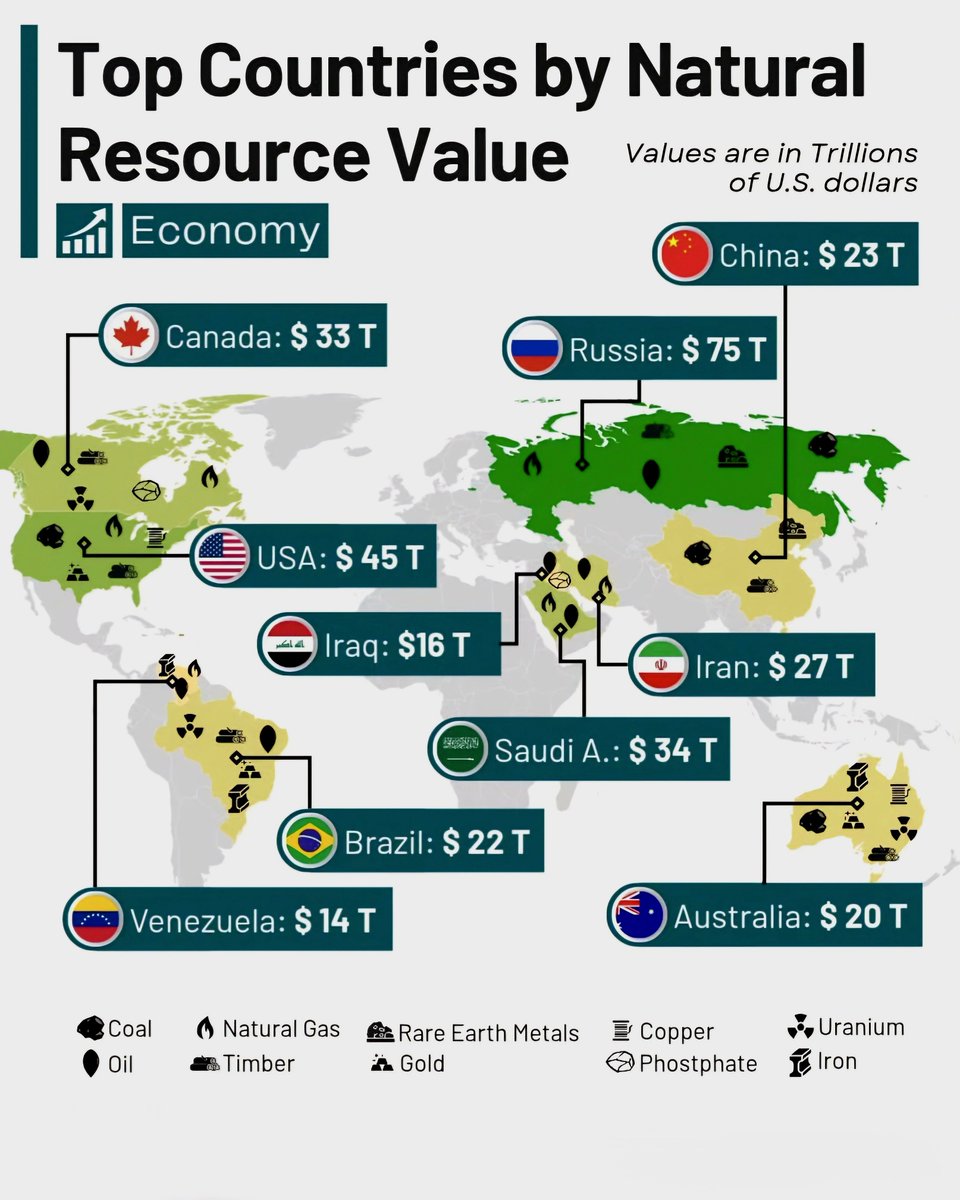
Russia maintains its position at the top of the list with an astonishing $75 trillion worth of natural resources. Its vast expanse encompasses enormous reserves of oil, natural gas, coal, and minerals. These resources are a critical driver of Russia’s economy, fueling energy exports and influencing global markets. Recently, Russia has increased investments in sustainable extraction technologies, aiming to bolster resource longevity amid geopolitical challenges. The country’s resource wealth significantly contributes to its geopolitical stature and economic stability.
2. United States — Valued at $45 Trillion
The USA comes in second, boasting a resource value of $45 trillion. Its diverse natural portfolio includes petroleum, natural gas, coal, copper, and agricultural resources. Notably, technological advances have optimized extraction and production, helping maintain America’s position as a leading global resource holder. The U.S. also invests heavily in renewable energy, leveraging natural resource reserves to diversify energy sources, with innovations in wind, solar, and bioenergy sectors gaining momentum.
3. Saudi Arabia — Valued at $34 Trillion
Saudi Arabia’s resource valuation stands at $34 trillion, primarily driven by its massive oil reserves. As the world’s largest exporter of petroleum, it continues to influence global energy markets. Recently, Saudi Arabia has diversified efforts to develop other sectors like tourism and entertainment, yet oil remains a cornerstone of its economic foundation. The Kingdom’s strategic investments in renewable energy and sustainable development are also signs of transition plans for a post-oil economy.
4. Canada — Valued at $33 Trillion
Canada’s wealth of natural resources totals approximately $33 trillion, including vast reserves of oil sands, timber, minerals, and freshwater. Its resource richness fuels its resource-intensive industries, making it a leading exporter of commodities like wood, minerals, and oil. Canadian policymakers emphasize sustainable development, balancing resource extraction with environmental protection. Indigenous communities increasingly participate in resource projects, shaping the future of resource management.
5. Iran — Valued at $27 Trillion
Iran’s resource assets are valued at around $27 trillion, driven mainly by its extensive oil and natural gas fields. Despite global sanctions impacting some sectors, Iran continues to be a key player in the energy market. Recent efforts focus on modernizing infrastructure and expanding extraction capabilities to boost exports. Iran’s strategic location also enhances its role as a regional energy hub, with plans to develop pipeline networks and enhancing access to neighboring markets.
6. China — Valued at $23 Trillion
China holds approximately $23 trillion in natural resources, including coal, rare earth elements, and other metals essential for high-tech manufacturing. Its rapid urbanization and technological boom rely heavily on domestic resource extraction and strategic reserves. Recently, China has increased efforts in renewable energy resource development, such as wind and solar farms, aiming to reduce dependence on imported fuels and enhance sustainability.
7. Brazil — Valued at $22 Trillion
Brazil’s resource value is estimated at $22 trillion, with abundant reserves of iron ore, bauxite, timber, and freshwater. The Amazon rainforest remains vital to global biodiversity and climate regulation. Brazil’s resource sector faces challenges balancing economic development with environmental conservation. New policies encourage sustainable mining practices and investment in renewable energy, especially hydroelectric power.
8. Australia — Valued at $20 Trillion
Australia’s rich array of natural resources totals around $20 trillion. It is a major exporter of minerals, including iron ore, coal, gold, and lithium. Australia’s mining industry benefits from advanced technology and infrastructure, supporting regional development. The country is also aggressively investing in renewable energy resources to transition toward a greener economy while maintaining its resource export dominance.
9. Iraq — Valued at $16 Trillion
Iraq’s resource estimate stands at $16 trillion, primarily due to its massive oil reserves. The country is working toward stabilizing its oil industry after years of conflict and political instability. Recent reforms aim to increase oil production capacity, attract foreign investment, and rebuild infrastructure. Iraq’s strategic position makes it a key energy transit route in the Middle East.
10. Venezuela — Valued at $14 Trillion
Venezuela, sitting at $14 trillion, possesses some of the world’s largest oil reserves. Economic challenges and political turmoil have hampered resource development, leading to underinvestment and declining production. However, renewed international interest and potential reforms could revitalize its resource sector, which remains vital to its economy and regional influence.
This list reflects the latest data from Statista, updated for 2025, showcasing the global landscape of natural resource wealth and how these assets shape economies and geopolitical strategies worldwide.
 ChatGPT
 Perplexity
 Gemini AI
 Grok AI