Select Language:
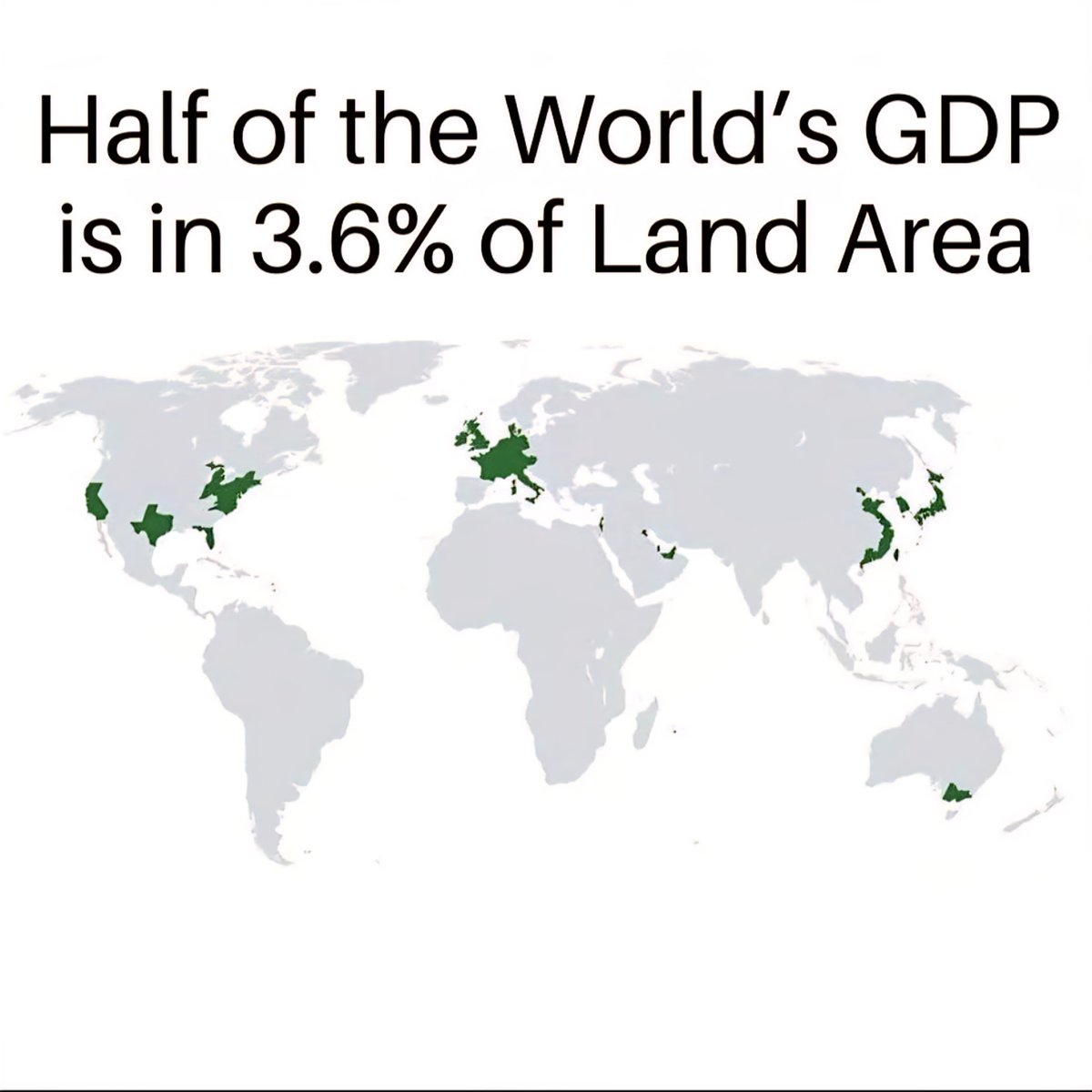
Incredible Global Economic Disparities: 3.6% of Land Accounts for Half of the World’s GDP
1. Massive Economic Concentration in a Small Area
A startling statistic has emerged in 2025: just 3.6% of the Earth’s land area holds half of the world’s gross domestic product (GDP). This means that a tiny fraction of the planet’s territory is responsible for a significant portion of global economic activity, highlighting the extreme economic disparities that exist across regions and countries.
This concentration is primarily found in highly developed urban centers, global financial hubs, and tech-driven cities that drive innovation and wealth creation. The intense economic activity in these areas significantly outpaces smaller, less developed regions, often leading to stark differences in quality of life and access to resources.
2. The Powerhouse Urban Centers Dominating Global Wealth
Major metropolitan areas like New York City, Tokyo, London, and Shanghai account for most of this concentrated economic output. These cities have become global economic centers due to their advanced infrastructure, dense corporate ecosystems, and strategic positions on international trade routes.
For example, Wall Street and the financial district in Manhattan alone contribute a massive chunk of the United States’ GDP, which itself is a significant portion of the world economy. Similarly, London’s financial district, combined with London’s status as a global hub for banking and commerce, pushes the UK’s economic footprint to the forefront.
3. Tech and Financial Industries Fueling the Disparity
The dominance of the technology and financial sectors within these small land areas explains much of the vast wealth accumulation. Silicon Valley in California continues to be the epicenter of technological innovation, housing numerous billion-dollar startups and multinational corporations. Conversely, London and Hong Kong continue to dominate global finance, managing trillions of dollars in assets.
These industries benefit from dense networks of talent, investment, and infrastructure, leading to disproportionate economic growth compared to rural and less developed areas. Such a focus on high-value industries perpetuates the economic chasm between urban centers and the rest of the world.
4. Impact on Global Inequality and Development
This uneven distribution of wealth and economic activity has serious implications for global inequality. While some regions thrive, others struggle with poverty, lack of infrastructure, and limited access to education and healthcare.
The stark divide also affects international migration patterns, with people flocking to these economic hotspots in hopes of better opportunities. Governments are increasingly challenged to address these disparities through policy reforms, investments, and global cooperation to foster more equitable growth.
5. The Future of Land and Wealth Distribution
Looking ahead to 2025, experts predict that this trend of concentration will likely intensify as technological advancement and globalization continue. However, there’s also a growing push for inclusive development programs aiming to bridge the gap between these economic hubs and the rest of the world.
Investments in infrastructure, education, and digital connectivity are seen as crucial steps toward breaking down barriers and spreading economic benefits more evenly across the globe. The question remains: can we see a more balanced distribution of wealth and land in the coming years, or will the concentration trend deepen?
6. A Glimpse into the Future of Global Economics
Understanding that 3.6% of land hosts half of the world’s GDP offers crucial insights into how economic power centers are shaping the future of our planet. As nations and corporations navigate this landscape, the focus will likely shift toward sustainable development and equitable growth initiatives to ensure that prosperity is shared more broadly.
The challenge remains significant, but with innovative policies and collaborative efforts, there’s hope for a more balanced economic future that benefits everyone, not just a select few regions.
The above infographic underscores the pressing need to address the vast economic disparities that define our world today.
 ChatGPT
 Perplexity
 Gemini AI
 Grok AI