Select Language:
Why Africa Is Now Considered Larger Than Russia in 2025
1. Africa’s Expanding Geographical Boundaries
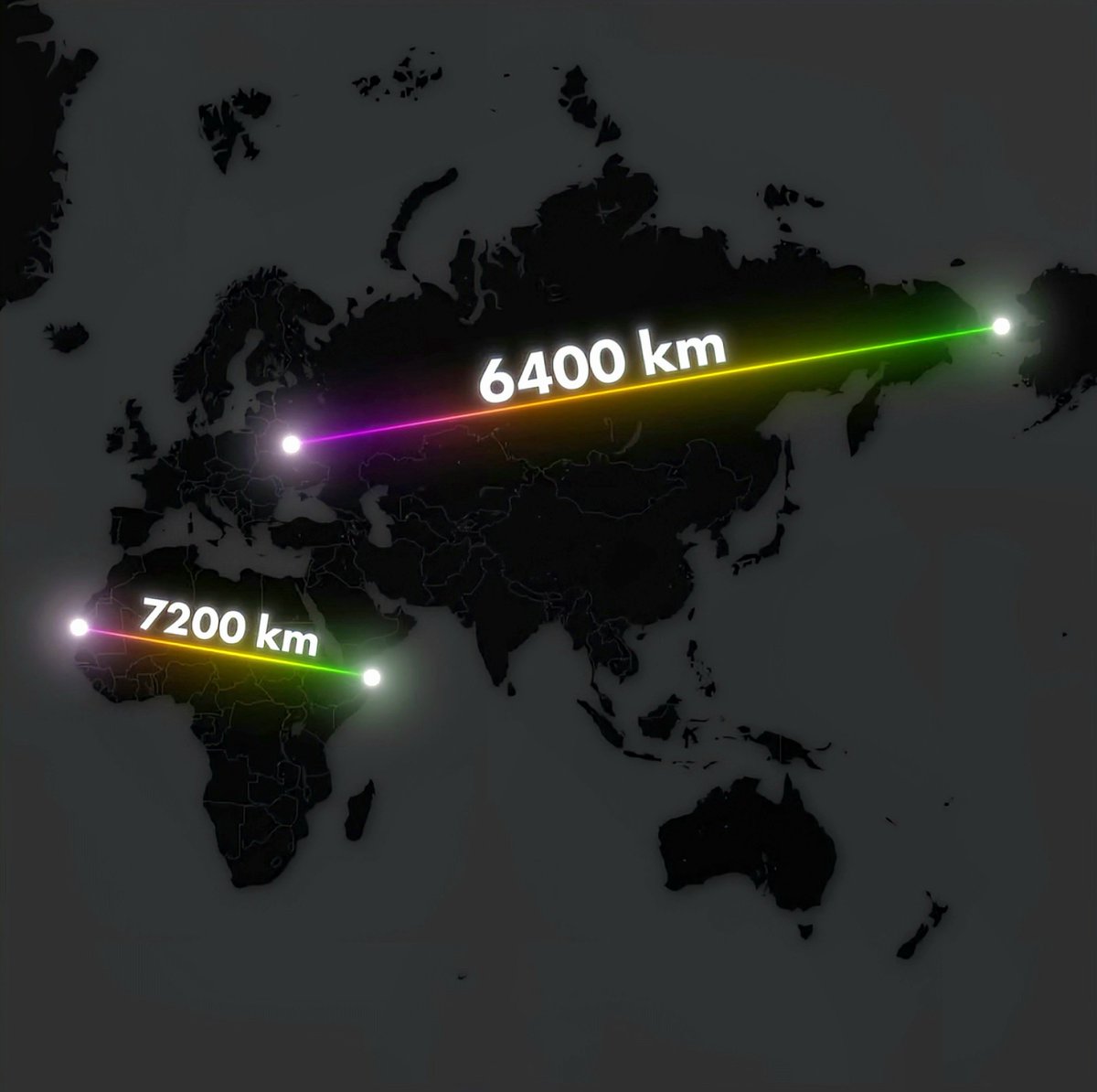
Recent geographical assessments have brought to light a compelling fact: Africa’s landmass now surpasses that of Russia, the previous largest country in the world. While historical data positioned Russia as the largest, new measurements reveal Africa stretching further than ever before, covering approximately 30.2 million square kilometers. This update is the result of advanced satellite technology and more accurate mapping techniques that have reassessed continental boundaries and land areas.
2. Changing Perspectives on Continental Borders
Traditionally, Russia has been regarded as the largest country globally, primarily encompassing vast stretches of Eastern Europe and Northern Asia. However, the modern understanding of Earth’s geography considers tectonic, ecological, and geopolitical shifts that affect how continents are defined. The actual physical landmass of Africa, which spans diverse terrains from deserts to rainforests, is now recognized as larger than previously thought, making Africa the new record-holder for the world’s largest continent.
3. The Impact of Satellite Technology and Modern Mapping
The leap in Africa’s size assessment owes much to technological advancements in satellite imagery and geographic information systems (GIS). These tools enable scientists to accurately map and measure land boundaries, often revealing previously uncharted or underexplored regions. As a result, Africa’s total land area has been recalculated, confirming its status as the world’s largest continent, overtaking Russia by a significant margin.
4. Ecological and Cultural Diversity on a Grand Scale
While size is an impressive statistic, the true significance of Africa’s expanded boundaries lies in its unparalleled diversity. The continent is home to over 3,000 ethnic groups, more language families than any other region, and a multitude of ecosystems, from lush rainforests to expansive savannas. This immense diversity is now even more prominent with the recognition of Africa’s larger geographical scope, emphasizing its importance in global ecological and cultural diversity.
5. Geopolitical Implications of the New Measurement
The reassessment of Africa’s land mass also carries geopolitical consequences. Countries and international organizations now recognize Africa as an even more critical player on the global stage—not just for its population and resources but also for its expanded territorial extent. This shift could influence policy decisions, resource management strategies, and development priorities across the continent.
6. Environmental Opportunities and Challenges
With its larger landmass, Africa faces both increased opportunities and complex challenges. The expansive territory offers new avenues for sustainable development, conservation projects, and resource utilization. Conversely, it also raises concerns about deforestation, climate change impacts, and the management of biodiversity across its vast and varied ecosystems.
7. A New Perspective on Global Geography
The revelation that Africa surpasses Russia in size reshapes how the world views geopolitical boundaries. While the political borders within countries remain unchanged, understanding Africa’s true size encourages a reevaluation of global maps, spatial relationships, and regional influence. It also serves as a reminder of the importance of technological progress in refining our understanding of Earth’s physical features.
This new perspective on Africa’s size demonstrates how ongoing technological evolution and more precise geographical data continually reshape our world understanding. Recognizing Africa as the largest continent underscores its growing importance on the global stage, highlighting both its vast potential and the urgency of sustainable stewardship.
 ChatGPT
 Perplexity
 Gemini AI
 Grok AI