Select Language:
Public Outlook for 2026: Top Countries Expected to Lead Global GDP Growth
India Leads the Pack with Promising Growth
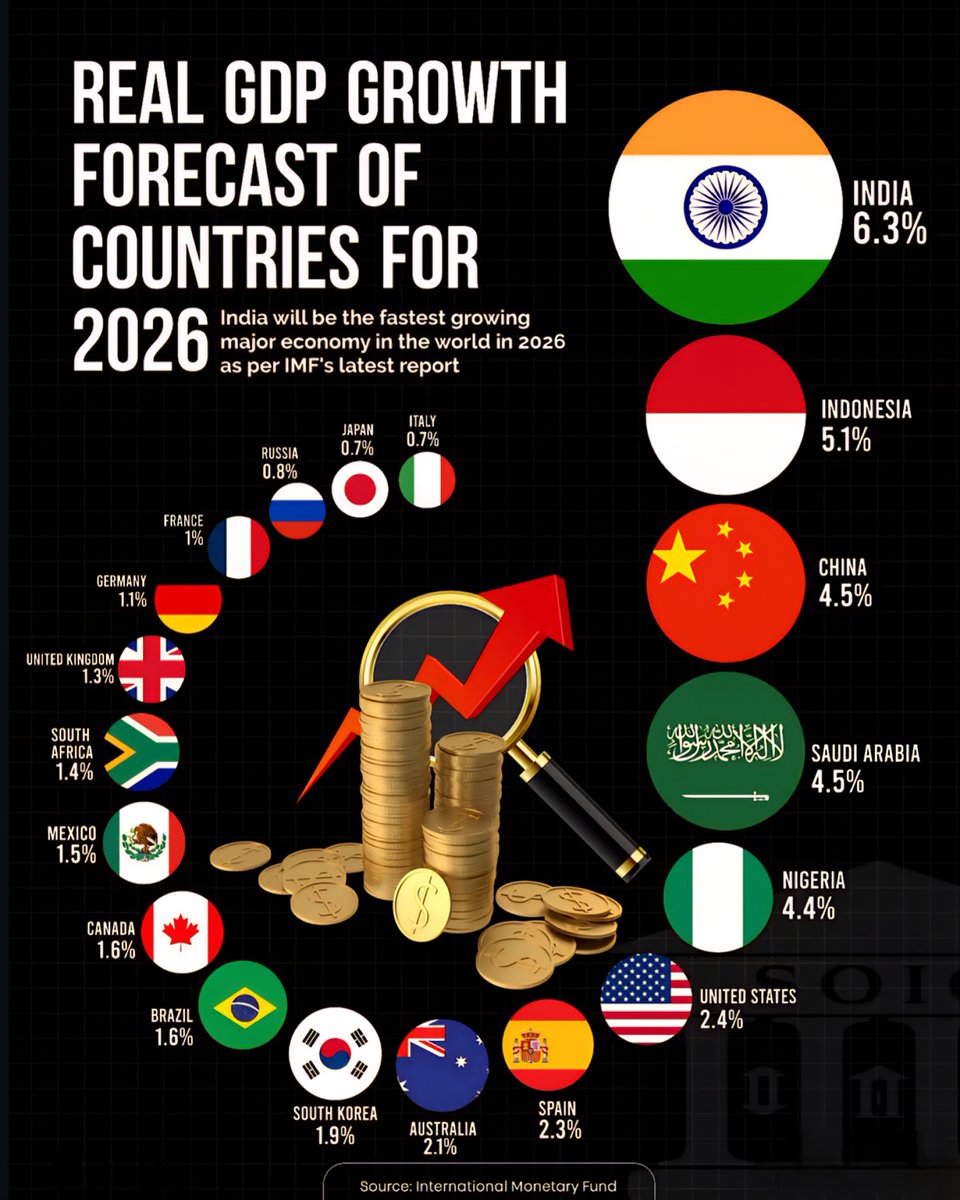
India is projected to maintain its position as the world’s fastest-growing major economy in 2026, with a projected real GDP growth rate of 6.3%. This impressive forecast stems from robust domestic consumption, ongoing infrastructure investments, and a dynamic technology sector that continues to attract both foreign and domestic investments. Economic reforms aimed at liberalizing certain sectors and improving ease of doing business have also contributed to a conducive environment for growth.
Indonesia Continues Its Rapid Expansion
Following closely is Indonesia, with an expected growth rate of 5.1%. As Southeast Asia’s largest economy, Indonesia’s expanding middle class and increasing urbanization are fueling consumer spending. Additionally, government initiatives to boost infrastructure development and digital infrastructure have played a significant role in the country’s upward trajectory.
China and Saudi Arabia at a Crossroads
Despite a slowing trend, China and Saudi Arabia are both anticipated to grow at 4.5% in 2026. China continues to pivot towards high-tech industries and green energy, aiming to transition from manufacturing-driven growth to innovation-led expansion. Meanwhile, Saudi Arabia’s Vision 2030 continues to attract billions of dollars into diversified sectors beyond oil, including entertainment, tourism, and technology.
Nigeria’s Steady Growth Driven by Market Potential
Nigeria is forecasted to expand at 4.4%, representing continued resilience amid global economic shifts. Economic diversification plans, investments in infrastructure, and efforts to enhance the business environment are key factors supporting Nigeria’s modest yet steady growth. The country’s large youth population and natural resources further underpin its growth prospects.
United States Maintains Steady Yet Moderate Expansion
The U.S. GDP growth is expected to be 2.4% in 2026. While slower compared to emerging markets, the US benefits from technological innovation, a strong labor market, and resilient consumer demand. Policy adjustments and ongoing investments in AI, clean energy, and manufacturing are assumed to sustain this moderate growth.
European Countries Showcase Incremental Growth
Spain and Australia are expected to grow at 2.3% and 2.1%, respectively, while South Korea is projected at 1.9%. Europe’s economic recovery continues amid uncertainties, with Spain benefiting from tourism rebounds and technological advances. Australia’s resource exports and service sectors are supporting its growth, while South Korea’s focus on innovation and chip manufacturing holds promise.
Brazil and Canada: Moderate Growth in Diverse Economies
Brazil and Canada are anticipated to grow by 1.6% each. Brazil’s growth is driven by agricultural exports, renewable energy investments, and improved political stability. Canada’s economy benefits from resource exports, technological innovation, and a robust services sector.
Mexico and South Africa Offer Slight Expansions
Mexico’s economy is projected to expand by 1.5%, mainly boosted by manufacturing tied to U.S. supply chains and energy reforms. South Africa’s growth outlook is modest at 1.4%, supported by mineral exports and infrastructure development, despite facing internal challenges.
The Slightest Growth Among Major Economies: UK, Germany, France, Japan, and Italy
The United Kingdom is expected to grow by 1.3%, reflecting ongoing Brexit adjustments and post-pandemic recovery efforts. Germany and France are forecast at 1.1% and 1.0%, respectively, with European economic stabilization amid geopolitical tensions. Japan and Italy stay at the lower end with 0.7%, indicating persistent demographic challenges and economic restructuring needs.
This outlook underscores the shifting landscape of global economic powerhouses, emphasizing emerging markets’ rapid growth potential and highlighting slow but steady progress in traditionally developed economies.
Source: IMF 2026 Report
 ChatGPT
 Perplexity
 Gemini AI
 Grok AI