Select Language:
1. The Invention of the Telephone: Alexander Graham Bell’s Breakthrough Communication Device
In 1876, Alexander Graham Bell revolutionized global communication with his invention of the telephone. This transformative device connected people instantly across vast distances, shrinking the world and paving the way for modern communication networks. Bell’s breakthrough continues to influence how we stay connected daily, from personal calls to international business.
2. The Theory of Evolution: Charles Darwin’s Framework for Understanding Life’s Diversity
Published in 1859, Charles Darwin’s theory of evolution by natural selection changed how humanity perceives biological development. His insights shed light on the origins of species and ecological adaptation, fundamentally transforming biology and our understanding of life’s interconnected history on Earth.
3. Blood Circulation: William Harvey’s Medical Milestone
In 1628, William Harvey elucidated how blood circulates throughout the human body. His discovery laid the foundation for modern cardiovascular medicine and improved surgical procedures, saving countless lives and advancing medical science dramatically.
4. Creating the World Map: Anaximander’s Early Geographical Vision
The ancient Greek philosopher Anaximander conceptualized one of the earliest world maps around 550 BCE. His pioneering work marked a significant step in humanity’s quest to understand and chart the Earth’s geography, influencing navigation and exploration for centuries.
5. The Steam Engine: James Watt’s Engine Powering the Industrial Revolution
In the late 18th century, James Watt enhanced the steam engine, making it more efficient and practical for industrial use. His innovations fueled the Industrial Revolution, transforming economies, cities, and societies worldwide through mechanized manufacturing and transportation.
6. The Printing Press: Johannes Gutenberg’s Typographic Revolution
Around 1440, Johannes Gutenberg’s movable-type printing press democratized knowledge by enabling mass production of books. This unprecedented dissemination of information fueled the Renaissance, scientific progress, and education reforms—shaping the modern world.
7. The Light Bulb: Thomas Edison’s Illumination Innovation
In 1879, Thomas Edison perfected the electric light bulb, bringing light to homes and streets, extending productive hours, and improving living standards. Edison’s invention powered urban development and technological advancement that continues today.
8. Vaccination: Edward Jenner’s Smallpox Cure
In 1796, Edward Jenner developed the first smallpox vaccine, initiating the era of immunology. His work vastly reduced the spread of deadly diseases and laid the groundwork for modern vaccines that protect billions globally.
9. The Computer: Charles Babbage’s Analytical Machine
In the 1830s, Charles Babbage conceptualized the first mechanical computer, known as the Analytical Engine. Although not built in his lifetime, his ideas foreshadowed the development of modern computers, transforming every aspect of contemporary life.
10. Radio: Guglielmo Marconi’s Wireless Communication
In the late 19th century, Guglielmo Marconi pioneered wireless transmission of electromagnetic signals, leading to the radio. This invention revolutionized mass communication, broadcasting news, music, and emergency alerts worldwide.
11. Television: John Logie Baird’s Visual Media Pioneer
In 1927, John Logie Baird demonstrated the first working television system. Television became a dominant medium for entertainment and information, shaping political landscapes, culture, and social interaction globally.
12. The Internet: Vint Cerf’s Net of Connectivity
In 1983, Vint Cerf co-designed the TCP/IP protocol, the foundation of the modern internet. This interconnected digital network transformed commerce, education, social interaction, and entertainment, becoming an essential part of daily life.
13. The Periodic Table: Dmitri Mendeleev’s Chemical Organizer
In 1869, Dmitri Mendeleev arranged the elements into the periodic table, revealing periodic trends and enabling scientific discovery in chemistry. It remains a vital tool for scientists and educators today.
14. The Theory of Relativity: Albert Einstein’s Space-Time Paradigm
Published in 1905, Einstein’s special relativity, followed by general relativity in 1915, radically altered physics. His theories explained gravity, time dilation, and the fabric of the universe, influencing cosmology and modern physics.
15. The Law of Gravity: Sir Isaac Newton’s Gravitational Principles
In 1687, Isaac Newton formulated the law of universal gravitation. His work explained planetary motions and terrestrial phenomena, forming the cornerstone of classical physics.
16. The Telephone Exchange: Tivadar Puskás’s Communication Network
In the early 20th century, Tivadar Puskás established the first telephone exchanges, facilitating the widespread use of telephony. This infrastructure enabled real-time communication on a massive scale.
17. The Power of Flight: The Wright Brothers’ First Manned Flight
In 1903, Orville and Wilbur Wright achieved the first controlled airplane flight. Their pioneering invention enabled global travel and commerce, shrinking the distances between nations.
18. Electric Motor: Michael Faraday’s Magnetism and Electricity
In the 1820s, Michael Faraday discovered electromagnetic induction, leading to the development of electric motors. These motors drive countless machines, from household appliances to industrial equipment.
19. Polio Vaccine: Jonas Salk’s Global Health Impact
In 1955, Jonas Salk developed the first effective poliovirus vaccine, drastically reducing the incidence of polio worldwide and contributing to the disease’s near-eradication.
20. X-Ray Technology: Wilhelm Röntgen’s Diagnostic Imaging
In 1895, Wilhelm Röntgen discovered X-rays, revolutionizing medical diagnostics and treatment planning by allowing internal visualization without surgery.
21. Penicillin: Alexander Fleming’s Antibiotic Breakthrough
Discovered in 1928, Alexander Fleming’s penicillin ushered in the antibiotic era, saving countless lives from bacterial infections and transforming medicine.
22. Atomic Theory: John Dalton’s Atomic Foundations
In the early 19th century, John Dalton proposed the atomic theory, establishing the existence of atoms as fundamental units of matter—crucial for modern chemistry and physics.
23. Quantum Theory: Max Planck’s Particle and Wave Duality
In 1900, Max Planck introduced quantum theory, shaping our understanding of atomic and subatomic phenomena, leading to technologies like semiconductors and quantum computing.
24. Spacewalk: Alexei Leonov’s Historic Extravehicular Activity
In 1965, Alexei Leonov performed the first spacewalk, demonstrating human capability to work outside spacecraft, paving the way for space exploration missions.
25. Mapping the Stars: Hipparchus’s Early Astronomical Charts
Around 150 BCE, Hipparchus created some of the earliest star catalogs and celestial maps, laying the groundwork for modern astronomy and navigation.
26. Human Space Travel: Yuri Gagarin’s Historic Orbit
In 1961, Yuri Gagarin became the first human to orbit Earth, marking a new era in exploration and inspiring countless missions to the stars.
27. The Heliocentric Model: Nicolaus Copernicus’s Sun-Centered Theory
Published in 1543, Copernicus proposed that the Sun, not the Earth, resides at the center of our solar system, transforming astronomy and science’s worldview.
28. Leonardo da Vinci’s Flying Ideas: Early Concepts of the Aircraft Propeller
In the late 15th century, Leonardo da Vinci sketched prototypes of flying machines and concepts like the helicopter rotor, inspiring future aviation innovations.
29. Breaking the Sound Barrier: Chuck Yeager’s Sonic Boom
In 1947, Chuck Yeager flew faster than the speed of sound in the Bell X-1 aircraft, ushering in the era of supersonic flight and high-speed aviation.
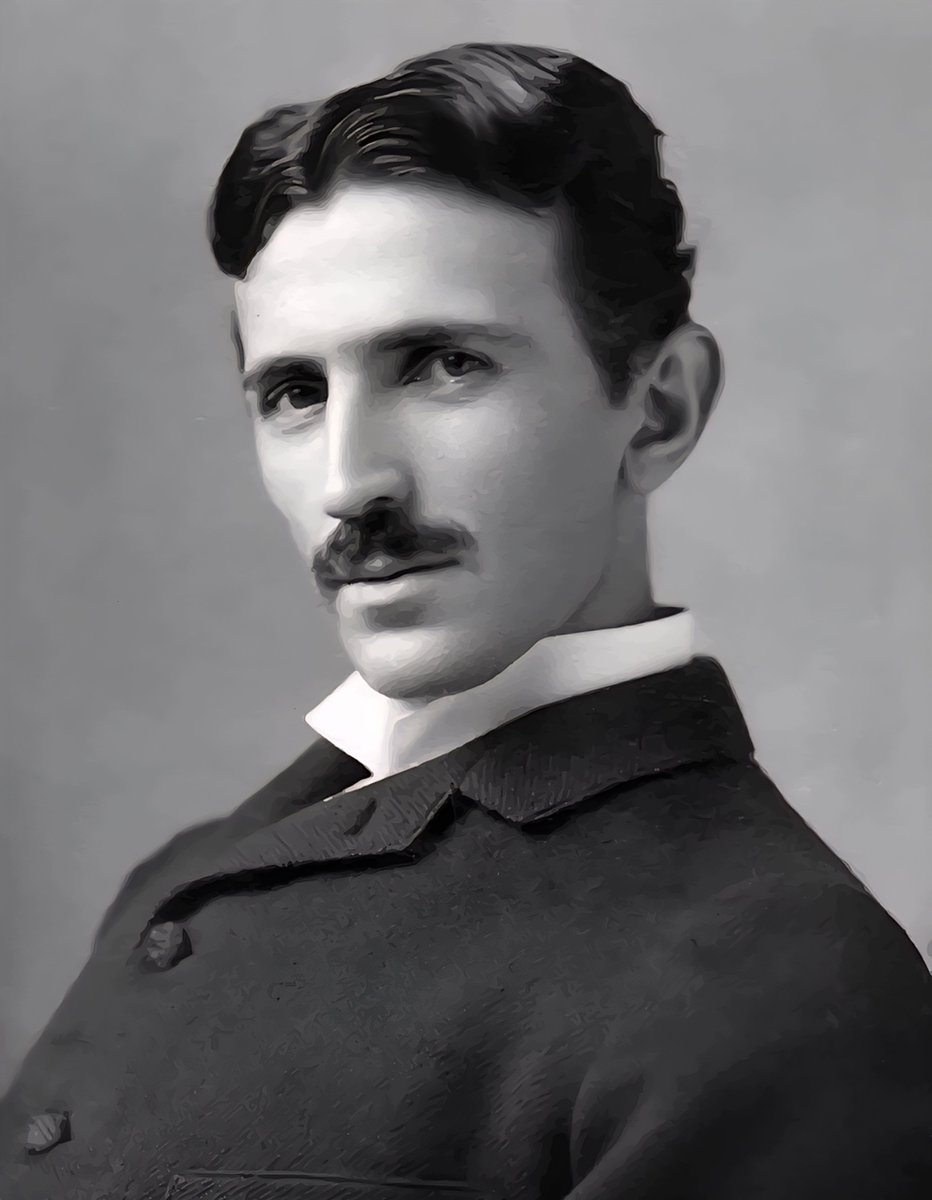
30. Nikola Tesla’s A.C. Power System
In the late 19th and early 20th centuries, Nikola Tesla developed alternating current power systems, enabling widespread electrification and modern electrical grids.
Note: Only selected individuals are highlighted due to space constraints, but their innovations collectively shaped the modern world we live in today.
 ChatGPT
 Perplexity
 Gemini AI
 Grok AI