Select Language:
Significant Trends in the Foreign-Born Population Across OECD Countries in 2025
1. The United States Continues to Lead in Immigrant Numbers
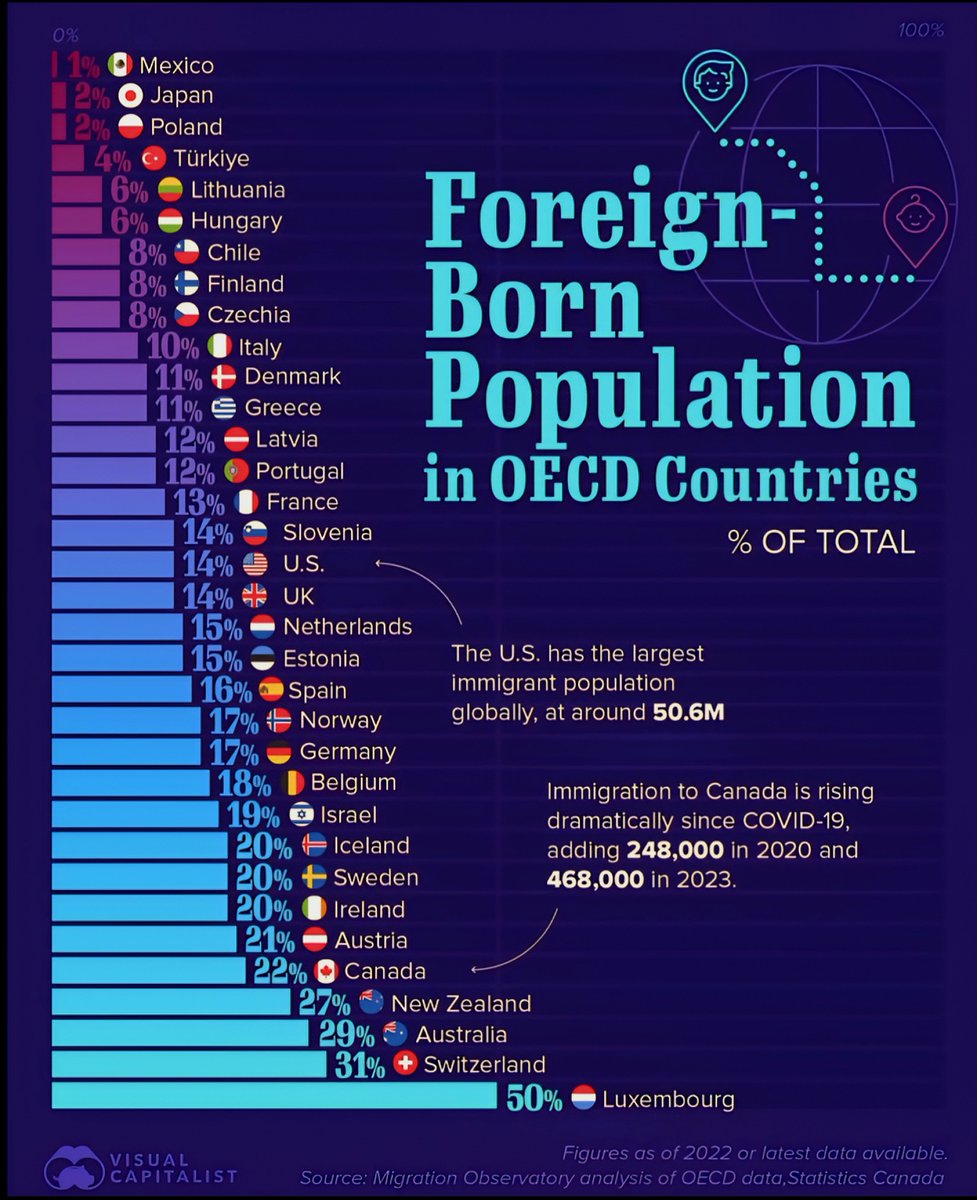
The United States remains the top destination for immigrants within the OECD, housing approximately 46 million foreign-born residents as of 2025. This sustained growth reflects decades of diverse immigration fueled by economic opportunities, educational pursuits, and family reunification. California, Texas, and New York continue to be the states with the largest immigrant populations, contributing significantly to the nation’s cultural and economic fabric. Despite policy adjustments, the U.S. has maintained its reputation as a welcoming hub for newcomers, with recent initiatives aimed at integrating new arrivals more effectively into society.
2. Germany’s Rapid Immigration Acceleration Boosts Its Population Diversity
Germany has experienced a notable increase in its foreign-born population, now accounting for nearly 21% of the total inhabitants. This rise is primarily driven by recent waves of refugees from conflict zones, along with skilled workers from various countries seeking employment opportunities. Major cities like Berlin, Munich, and Frankfurt have become increasingly cosmopolitan, reflecting a broader trend of cultural integration. The government has invested in language programs and employment support to facilitate smooth integration, acknowledging the vital role that immigrants play in addressing labor shortages.
3. Canada’s Steady Growth as a Multicultural Haven
Canada continues to expand its immigration intake, with approximately 24% of its population being foreign-born in 2025. The nation’s proactive policies favor skilled workers, family reunification, and refugees, making it one of the most diverse countries globally. Toronto, Vancouver, and Montreal remain vibrant multicultural centers, hosting communities from every corner of the world. The immigrant population significantly contributes to Canada’s innovation, healthcare, and technology sectors, underpinning the country’s economic resilience amidst changing global dynamics.
4. Australia Maintains a Dynamic, Skilled Immigration System
With around 29% of its population originating from abroad, Australia manages a highly efficient immigration system that prioritizes skilled workers and students. Its major cities—Sydney, Melbourne, and Brisbane—serve as melting pots of cultures, with many residents hailing from Asia, Europe, and Africa. Recent policies have focused on attracting tech professionals and healthcare workers to sustain economic growth and address labor shortages in essential industries. Australia’s open yet selective approach continues to bolster its reputation as a multicultural society.
5. France’s Evolving Demographic Landscape
France’s foreign-born population is nearing 13%, with sizable communities from North Africa, Sub-Saharan Africa, and Southeast Asia. The country’s history of colonial ties and recent refugee movements have shaped its demographic profile. Paris and Marseille are some of the most diverse cities, offering rich cultural landscapes yet facing challenges with social cohesion and integration policies. Efforts are ongoing to improve language acquisition, employment opportunities, and social inclusion to harness the benefits of a diverse populace.
6. The United Kingdom’s Immigration Adjustments Post-Brexit
Despite the UK’s departure from the European Union, the foreign-born population has remained robust, reaching approximately 14% of the total population. Post-Brexit immigration policies have shifted focus towards attracting highly skilled professionals, university students, and entrepreneurial immigrants from Commonwealth nations and beyond. London, Birmingham, and Manchester continue to be major international hubs, benefiting from a globally connected workforce. The adaptation of new policies aims to balance economic needs with social cohesion, especially amid ongoing debates on immigration reform.
7. Japan’s Incremental Immigration Reforms Address Aging Population
Japan, traditionally known for its low immigration numbers, has started relaxing its policies to address the country’s aging population and shrinking workforce. Now, around 2.5% of its residents are foreign-born, with recent reforms allowing more skilled workers from Southeast Asia and Central America. Major urban centers like Tokyo and Osaka are seeing increased diversity, though the country continues to grapple with cultural and institutional integration challenges. These reforms are viewed as pivotal steps toward revitalizing Japan’s economy and community fabric.
8. South Korea’s Slow but Steady Rise in Foreign Residents
South Korea, with a foreign-born population nearing 4%, has begun implementing policies to attract foreign professionals and international students. The government’s recent efforts include streamlined visa processes and initiatives to promote multiculturalism. Seoul and Busan are becoming increasingly cosmopolitan, with growing expatriate communities. While the pace remains slow relative to Western nations, Korea’s demographic transition indicates an awareness of the need for international talent to foster economic growth.
As global migration patterns continue to evolve, the demographic landscapes in OECD countries are becoming increasingly diverse. Policymakers across these nations are balancing economic imperatives with social integration strategies, shaping societies that are more interconnected than ever before. The trends highlighted above offer a snapshot of how immigration remains a central element in shaping the future of these nations.
 ChatGPT
 Perplexity
 Gemini AI
 Grok AI