Select Language:
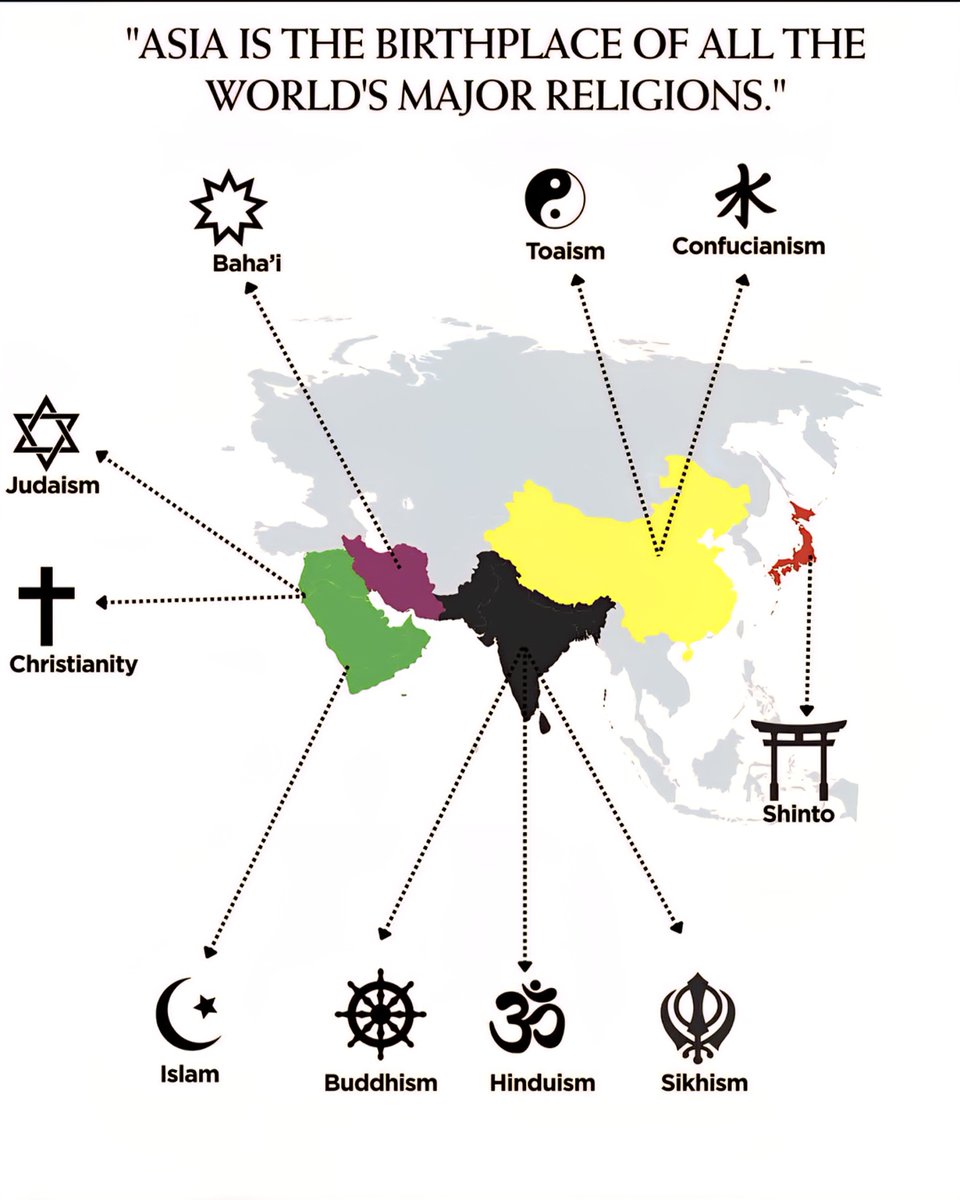
Major World Religions and Their Countries of Origin in 2025
1. Hinduism — India
Hinduism remains one of the oldest and most diverse religions, originating in the Indian subcontinent around 1500 BCE. It encompasses a wide spectrum of beliefs, practices, and philosophies, with India continuing to be its spiritual hub. The religion influences daily life, festivals, and cultural traditions across the country.
2. Confucianism — China
Emerging from the teachings of Confucius around the 5th century BCE, Confucianism is deeply ingrained in Chinese culture, emphasizing moral virtues, respect for elders, and social harmony. While it’s more of a philosophical system today, its influence persists in governance, education, and familial relationships in China.
3. Shinto — Japan
Shinto, the indigenous spirituality of Japan, traces its roots to ancient Japan, with origins dating back to the early centuries CE. Centered around kami, spirits residing in nature and ancestors, Shinto rituals and festivals continue to play a vital role in Japanese society, reflective of an enduring connection to nature and tradition.
4. Judaism — Israel
Founded over 3,000 years ago, Judaism originated in the ancient land of Israel. This monotheistic faith significantly shaped the culture and history of the Jewish people, with Israel acting as its spiritual and cultural heartland. Today, Israel remains a key destination for Jewish pilgrimage and religious practice.
5. Zoroastrianism — Iran
One of the world’s oldest monotheistic religions, Zoroastrianism emerged in ancient Persia (modern-day Iran) around 1500 BCE. Although many Zoroastrians migrated over centuries, Iran continues to house a small but culturally significant community, preserving core elements of their faith.
6. Islam — Saudi Arabia
Islam began in the 7th century CE in the Arabian Peninsula, with Mecca and Medina in modern-day Saudi Arabia as its pivotal sites. As the birthplace of Islam, Saudi Arabia remains a central spiritual address for Muslims worldwide, hosting sacred sites and annual pilgrimages.
7. Buddhism — India
Originating in India around the 5th century BCE, Buddhism spread across Asia and evolved into numerous schools. Although it experienced decline in India, contemporary Buddhism in India focuses on spiritual practices and cultural festivals, maintaining its historical roots.
8. Taoism — China
Taoism was founded in China during the 4th century BCE as a philosophical and spiritual tradition. It emphasizes harmony with the Tao (the Way) and has influenced Chinese health practices, arts, and religious systems, continuing to thrive in Chinese cultural ecology.
9. Christianity — Israel
Christianity originated in the 1st century CE in the Roman province of Judea, within the land of Israel. Today, Israel remains significant for Christian pilgrims, honoring sacred sites such as the Church of the Holy Sepulchre and the Nativity Church.
10. Jainism — India
Jainism, founded around the same time as Buddhism in India, emphasizes non-violence (ahimsa) and asceticism. It continues to influence Indian spiritual practices and social values, preserving ancient traditions amid modern society.
11. Bahá’í Faith — Iran
Founded in Iran during the mid-19th century, the Bahá’í Faith promotes universal peace and unity among religions and nations. Despite facing persecution, Iran remains historically significant for the origins of this faith, which has spread globally with a diverse followers’ community.
12. Sikhism — India
Sikhism was established in the Punjab region of India in the late 15th century, emphasizing faith, equality, and justice. India continues to be the spiritual homeland, with the Golden Temple in Amritsar serving as the religion’s most revered site.
This snapshot of where religions originated highlights the enduring cultural and historical significance of these nations. As the world continues to evolve in 2025, these faiths serve as foundational pillars shaping societies across the globe.
 ChatGPT
 Perplexity
 Gemini AI
 Grok AI