Select Language:
The World’s Biggest Exporters in 2025: A Deep Dive into Global Trade Powerhouses
China Continues to Dominate Global Trade
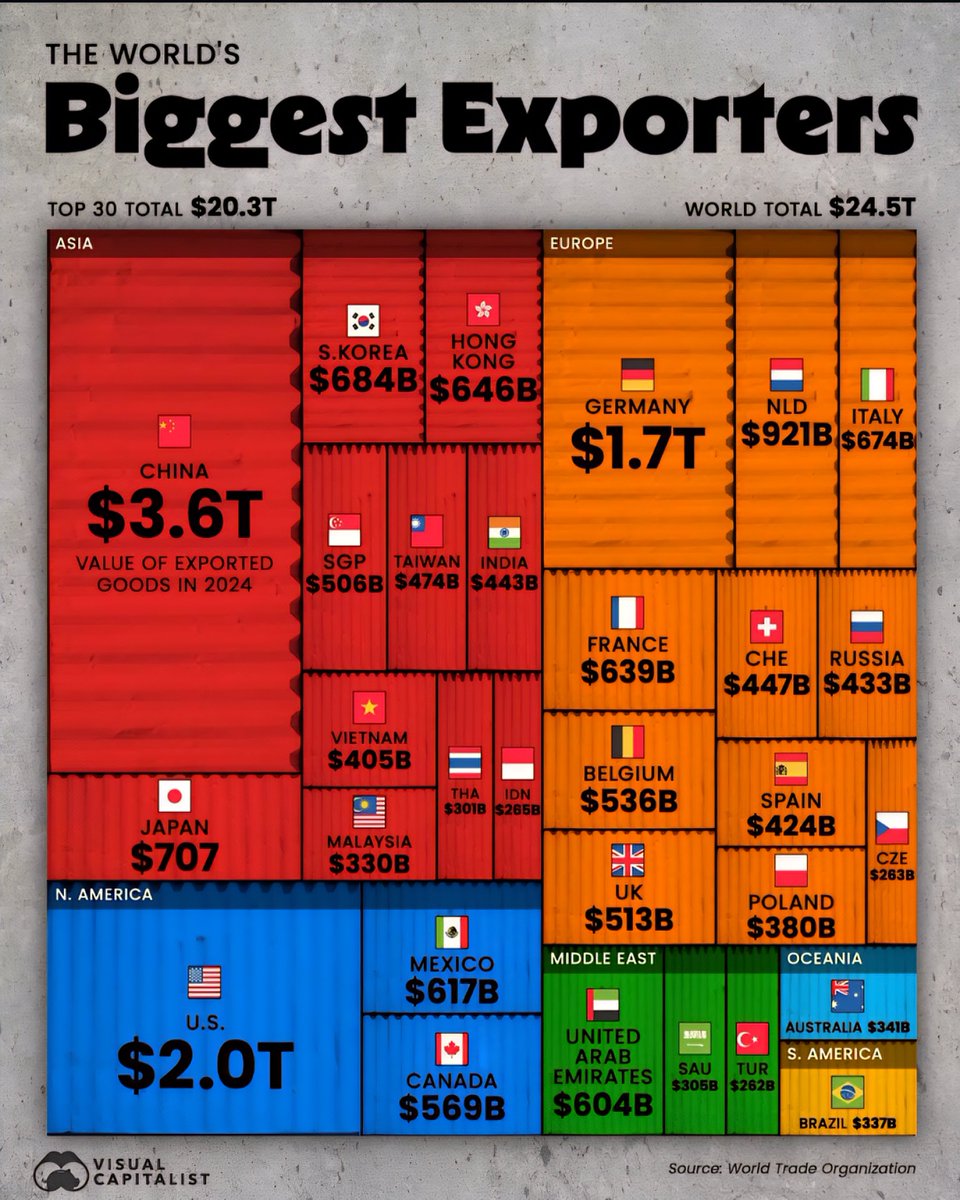
China remains unmoved at the top of the list as the world’s leading exporter in 2025. Its massive manufacturing sector, advanced infrastructure, and extensive trade networks are key factors behind this achievement. The country’s exports include electronics, machinery, textiles, and automotive parts, fueling economies worldwide. Despite rising geopolitical tensions and trade tensions with some countries, China’s export volume continues to grow, largely driven by its massive domestic production capacity and a global demand for affordable goods.
The United States Maintains Its Position in the Top 3
The United States secures the second spot among the world’s biggest exporters. Its extensive technology sector, aerospace industry, and agricultural products contribute significantly to its export totals. In 2025, the US has also seen increased exports related to clean energy technologies and semiconductors, marking a shift toward high-value products. The country’s trade policies and free trade agreements have evolved strategically to bolster its export strength, further cementing its status as a global trade power.
Germany’s Steady Rise as Europe’s Export Champion
Germany continues its legacy as Europe’s leading exporter, ranking third globally. Known for its precision manufacturing, automotive engineering, and machinery, Germany maintains a robust export industry. In 2025, the nation has increased its focus on sustainable manufacturing and innovative technologies, enhancing its competitive edge. The country’s partnerships within the European Union and beyond have helped keep its export market resilient, especially amid global economic fluctuations.
Japan’s Technological Export Powerhouse Status
Japan firmly remains among the top five exporters worldwide. Renowned for its automotive, robotics, and electronics industries, Japan’s exports are driven by innovation and quality. In 2025, Japan has prioritized advanced robotics and AI-enabled devices, ensuring it stays at the forefront of technological exports. The country’s strict trade policies and focus on high-end manufacturing secure its continued place at the top of global trade.
South Korea’s Rapid Export Growth
South Korea has seen a dramatic increase in export volume over the last year, positioning it within the top five worldwide exporters. This growth is driven by its semiconductor industry, consumer electronics, and automotive sectors. Companies like Samsung and Hyundai continue to push their global footprint. Additionally, South Korea’s investment in sustainable and eco-friendly technologies has opened new markets, boosting its export figures significantly.
The Rise of Vietnam and Other Emerging Exporters
Vietnam ranks among the fastest-growing exporters in 2025. Its manufacturing sector, especially textiles, footwear, and electronics, has surged due to favorable trade agreements and lower production costs. The country’s opening up policies and investments in infrastructure have made it a key manufacturing hub for global brands. Similarly, other emerging economies such as India, Mexico, and Indonesia have shown substantial growth, challenging traditional trade powerhouses and diversifying the global export landscape.
The Role of Technology and Sustainability in Shaping Trade
In 2025, technological innovation and sustainability are central themes influencing global export dynamics. Countries investing heavily in green technologies, renewable energy equipment, and AI-powered manufacturing are gaining competitive advantages. The push towards environmentally friendly production practices is not only beneficial for the planet but also creates new export opportunities, reshaping the world’s trade hierarchy.
Summary
As 2025 progresses, the list of the world’s biggest exporters continues to reflect shifts in economic power, technological advancements, and sustainability efforts. China, the United States, Germany, Japan, and South Korea remain front-runners, but emerging economies like Vietnam, India, and Mexico are quickly catching up. Staying competitive in this evolving landscape requires strategic investments in innovation, infrastructure, and sustainable practices—factors that will determine future leaders of global trade.
Note: The trade landscape is continually changing, and these rankings reflect the most recent data as of early 2025.
 ChatGPT
 Perplexity
 Gemini AI
 Grok AI