Select Language:
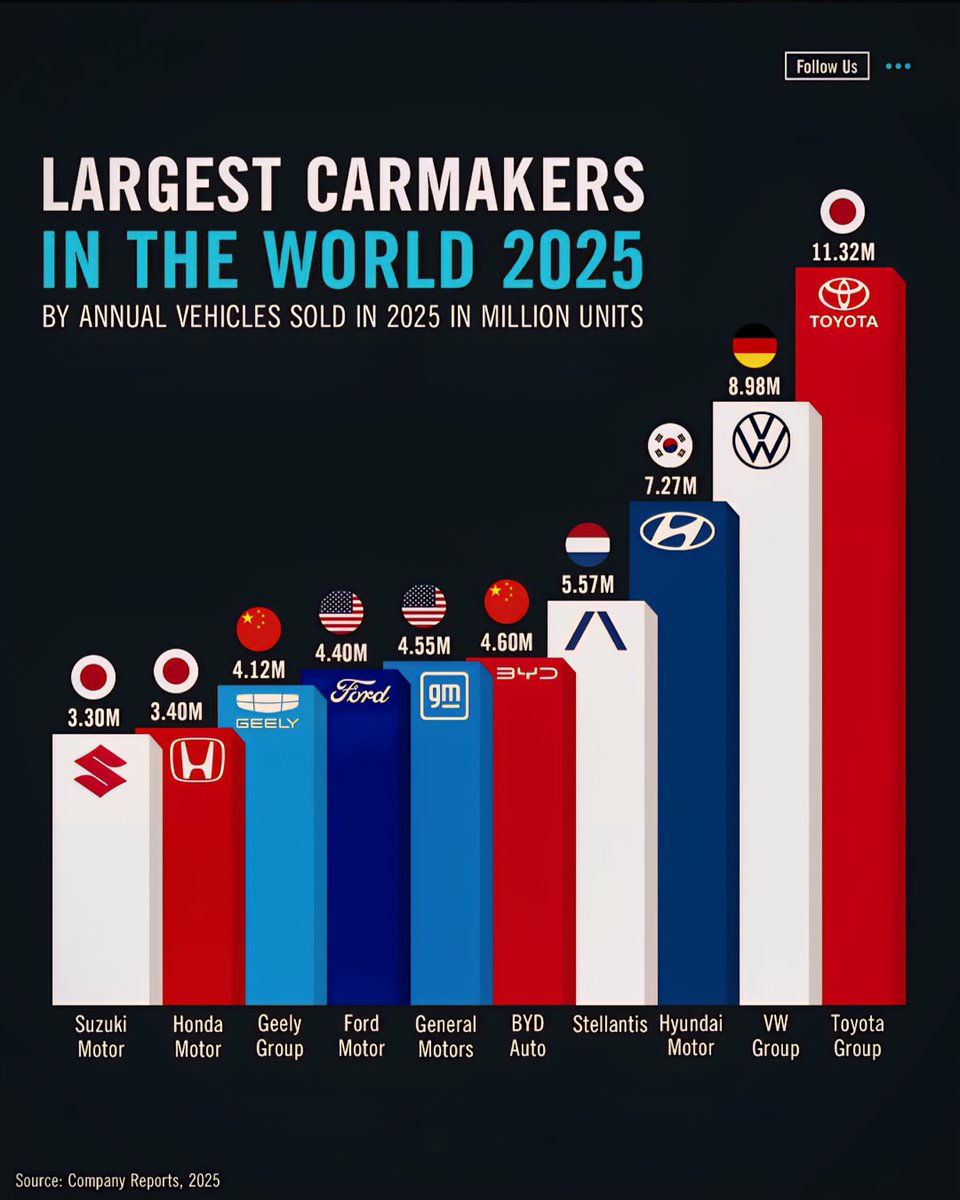
Top Car Manufacturers in 2025: A Global Snapshot
1. Toyota Leads the Pack with Over 11 Million Vehicles
In 2025, Toyota continues its dominance as the world’s largest car manufacturer, selling approximately 11.32 million vehicles across its global operations. The Japanese automaker’s success is fueled by its broad lineup of hybrids, electric vehicles, and traditional gasoline-powered cars. Toyota’s innovative approach and expansive production facilities in Asia, North America, and Europe have solidified its top spot. The brand maintains its reputation for reliability and affordability, appealing to a diverse consumer base worldwide.
2. Volkswagen Secures the Second Spot with Nearly 9 Million Units
Germany’s Volkswagen Group, projected to sell 8.98 million vehicles, remains a key player in the global automotive industry. Its extensive portfolio includes brands such as Audi, Porsche, and Skoda, which collectively cater to a variety of market segments. Volkswagen’s emphasis on electric vehicle development, especially with models like the ID series, has driven its robust sales figures. The automaker’s strategic investments in sustainable mobility and its commitment to reducing carbon emissions have resonated well with eco-conscious consumers.
3. Hyundai Motor Group Expands Its Global Footprint
South Korea’s Hyundai Motor Group has sold approximately 7.27 million vehicles, reinforcing its position among the top automakers. Hyundai and Kia, the group’s flagship brands, have gained international recognition for their affordability, modern design, and advanced technology. The company’s increasing focus on electric vehicles and hydrogen fuel cell technology has contributed significantly to its growth in markets like North America, Europe, and Asia. Hyundai’s aggressive expansion into EV charging infrastructure also underpins its future-oriented strategy.
4. Stellantis Climbs Closer to the Top with Over 5.5 Million Vehicles
The Dutch-American automotive giant Stellantis, formed from the merger of Fiat Chrysler and PSA Group, has sold around 5.57 million units. The company boasts a diverse lineup that includes Jeep, Dodge, Peugeot, and Opel. Stellantis’ strategy revolves around electrification and innovative mobility solutions, reflecting its goal to adapt swiftly to changing consumer preferences. Its strong presence in Europe and North America enables it to compete effectively amidst industry shifts toward electric and autonomous vehicles.
5. BYD Auto Ranks as a Leading Chinese Electric Vehicle Producer
With sales nearing 4.6 million units, Chinese automaker BYD Auto has become a dominant figure in electric mobility. Its focus on affordable electric cars, buses, and commercial vehicles has made it popular both domestically and globally. BYD’s integrated approach, encompassing battery manufacturing and EV technology, has helped position it as a major player in the global electric vehicle market. Its rapid growth showcases China’s rising influence as a center for innovative automotive solutions.
6. General Motors Maintains a Strong Presence
American automaker General Motors (GM) reported sales of approximately 4.55 million vehicles in 2025. GM continues to innovate with a broad electric vehicle portfolio, including models like the Chevrolet Bolt and the expanding Cadillac EV lineup. The company’s strategic investments in EV charging networks and battery production facilities underscore its commitment to a sustainable future. GM’s focus on connectivity and autonomous driving is also shaping its upcoming vehicle models.
7. Ford Motor Rises with a Focus on Electric and Commercial Vehicles
Ford sold around 4.4 million units this year, emphasizing its shift toward electric vehicles and commercial trucks. The popular Ford F-150 Lightning has gained substantial market share, aligning with the company’s goal to electrify its full lineup. Ford’s expansion into connected vehicle technology and investment in EV manufacturing facilities demonstrate its commitment to remaining competitive in the evolving automotive landscape.
8. Geely Continues Its Rapid Growth
Chinese automaker Geely sold approximately 4.12 million vehicles in 2025. Its aggressive expansion strategy includes acquisitions and collaborations with international brands, such as Volvo and Lotus. Geely’s portfolio of electric and hybrid models appeals to a growing middle class in China and expanding markets in Southeast Asia and Europe. The company’s focus on innovation and local manufacturing has been key to its rising global profile.
9. Honda Retains Its Global Market Share
Honda Motor Co. sold around 3.4 million vehicles worldwide in 2025. Known for its fuel-efficient engines and reliable designs, Honda continues to adapt by increasing its electric and hybrid offerings. The company’s emphasis on safety features and consumer trust helps maintain its strong presence especially in North America and Asia. Honda also invests heavily in research to develop next-generation EV technologies.
10. Suzuki Maintains Its Niche Market Position
With about 3.3 million units sold, Suzuki remains a popular choice in compact cars and motorcycles. Its focus on affordability and durability appeals largely to markets in Asia, Africa, and Oceania. While Suzuki is less aggressive in the electric vehicle space compared to competitors, its ongoing investments in efficient internal combustion engines and hybrid systems aim to adapt to future regulations.
The automotive landscape in 2025 continues to evolve rapidly, driven by technological advancements, environmental concerns, and shifting consumer preferences. These top manufacturers set the tone for industry innovation, sustainability, and global competition in the years ahead.
Source: Company Reports, 2025
 ChatGPT
 Perplexity
 Gemini AI
 Grok AI