Select Language:
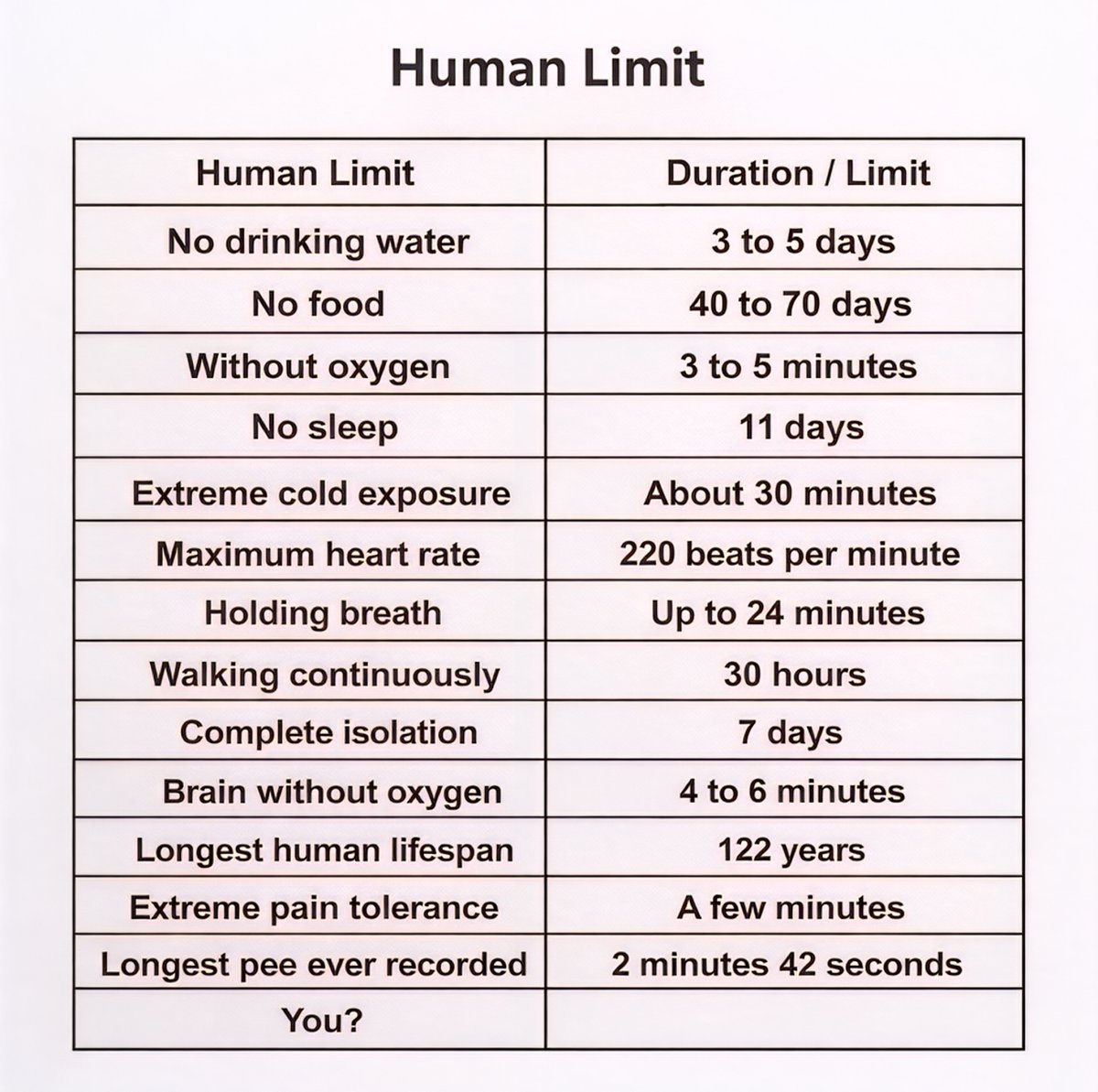
15 Fascinating Human Limits You Might Not Know in 2025
1. Dehydration Tolerance: Up to 5 Days Without Water
While most people would start to experience serious health consequences within a day or two of not drinking water, some individuals have survived up to five days without hydration. Dehydration impacts every system in the body—leading to dizziness, organ failure, and, in extreme cases, death. That said, survival without water is highly dependent on environmental conditions and individual health.
2. Fasting Capabilities: Up to 70 Days Without Food
Humans have survived prolonged periods without food, especially if they remain well-hydrated. Historical records and modern survival stories indicate that people can endure anywhere from 40 to 70 days without nourishment, primarily relying on body fat and muscle reserves. However, this is not advisable without medical supervision, as severe malnutrition causes irreversible damage.
3. Oxygen Independence: Survival Without Air for About 5 Minutes
The average person can hold their breath for approximately 30 seconds to 1 minute. Exceptional free divers have recorded breath-hold times exceeding 20 minutes, with the current world record at around 24 minutes. The critical factor is oxygen deprivation—brain damage may occur after roughly four minutes without oxygen, but experienced divers may extend this window slightly.
4. Sleep Deprivation Limits: Around 11 Days Without Sleep
Sleep is vital for cognitive and physical health. The longest recorded period without sleep is over 11 days (about 264 hours), achieved under medical supervision. During this time, individuals experience hallucinations, memory lapses, and severe cognitive impairment. Chronic sleep deprivation can lead to serious health issues, including immune suppression and heart problems.
5. Exposure to Extreme Cold: Roughly 30 Minutes
Surviving in freezing temperatures depends heavily on clothing, body fat, and environment. Generally, exposure to extreme cold can cause hypothermia within 30 minutes if not properly protected. Hypothermia impairs brain function and can lead to death if not addressed swiftly. Some individuals have survived longer thanks to quick rescue or insulation.
6. Heart Rate Maxes Out at 220 Beats Per Minute
During intense physical activity or stress, the heart rate can approach its maximum of around 220 beats per minute, especially in young adults. This threshold varies based on age, fitness, and health. Reaching such high heart rates puts strain on the cardiovascular system and increases the risk of arrhythmias or heart attack if sustained.
7. Breath-Holding Record: Up to 24 Minutes
In controlled settings, the longest voluntary breath-hold recorded is approximately 24 minutes, thanks to hyperventilation and training. This feat is mostly performed by elite free divers who train to increase their lung capacity and tolerance to carbon dioxide buildup. Such activities, however, are risky and should only be attempted with professional guidance.
8. Walking Non-Stop: approximately 30 Hours
The longest distance walked non-stop is around 150 miles, which equates to about 30 hours of continuous walking under extreme endurance conditions. Heavy training, nutrition, and hydration influence this limit, but fatigue and physical stress eventually mandate rest.
9. Complete Isolation Period: Around 7 Days
Prolonged isolation can cause significant psychological stress, hallucinations, and mental health deterioration. Records suggest that humans can endure around a week of complete sensory deprivation or social isolation before adverse effects become pronounced. Psychological resilience and mental health support are vital in such environments.
10. Brain Survival Without Oxygen: 4 to 6 Minutes
The brain is incredibly sensitive to oxygen deprivation. Typically, brain cells begin to die within 4 to 6 minutes without oxygen, leading to irreversible brain damage. Quick intervention with oxygen or CPR can sometimes reduce damage, but prolonged deprivation can be fatal.
11. Longevity of Humans: The Record Is 122 Years
The oldest documented human lifespan is 122 years, held by Jeanne Calment from France. While average life expectancy varies globally, advances in medicine and healthy living allow some individuals to reach these extraordinary ages. Researchers continue to explore the limits of human longevity.
12. Pain Tolerance: Lasts Only a Few Minutes
Most individuals can tolerate extreme pain—such as injuries or burns—for a few minutes, though this varies widely. Pain management techniques and individual pain thresholds contribute to how long someone can endure intense discomfort before seeking help or losing consciousness.
13. Record for Urination: 2 Minutes and 42 Seconds
The longest recorded time to urinate is 2 minutes and 42 seconds. This record is mainly a curiosity, but it highlights the wide range of human bodily functions and tolerances.
Note: These limits are estimates based on current research, case studies, and documented records. Actual tolerance varies significantly depending on individual health, age, environment, and physical condition. Always prioritize safety in extreme situations.
Image Source: Twitter
 ChatGPT
 Perplexity
 Gemini AI
 Grok AI