Select Language:
The Critical Global Oil Transit Routes: 2025 Update
1. Strait of Malacca – The World’s Busiest Oil Passage
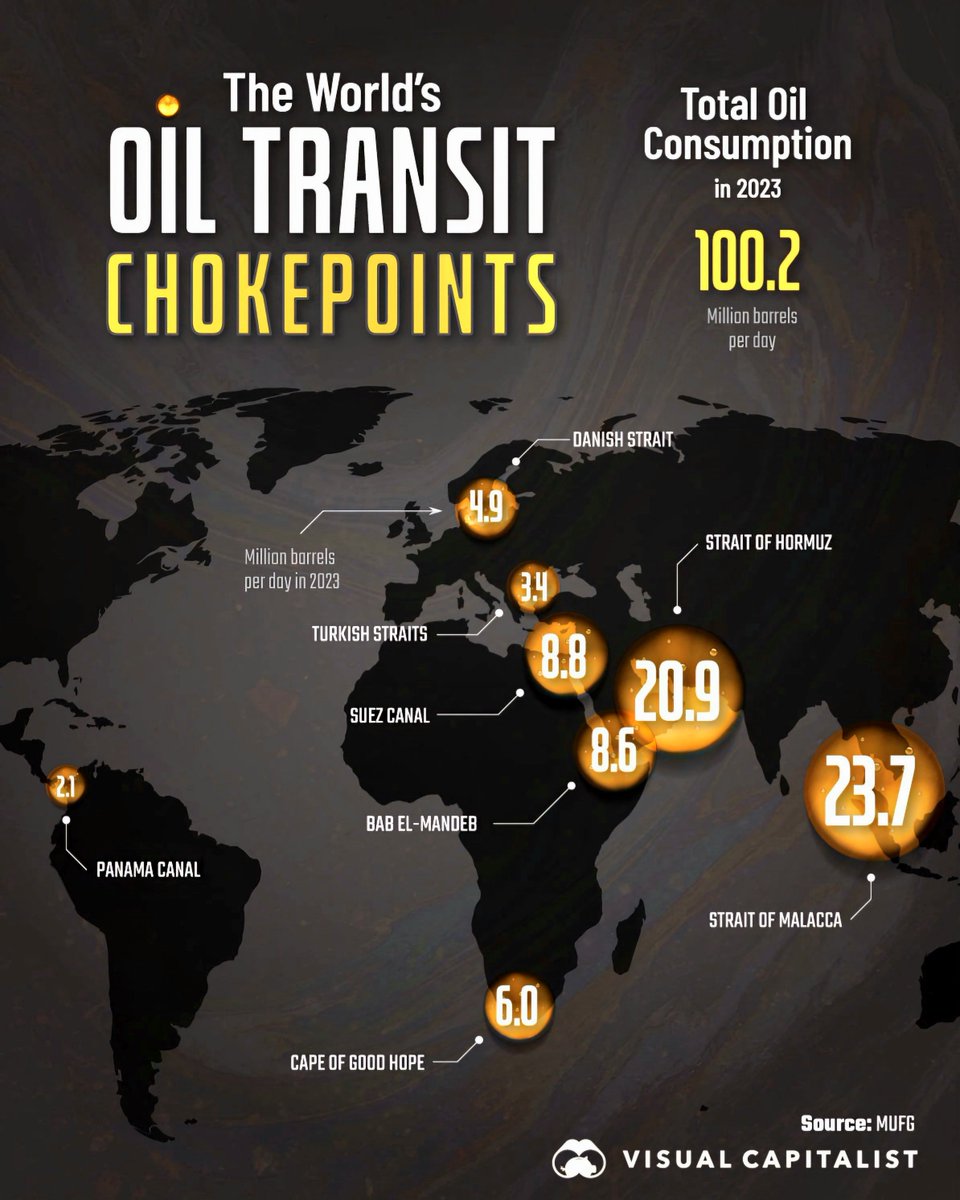
Topping the list as the world’s most significant oil transit chokepoint, the Strait of Malacca remains vital, with approximately 23.7 million barrels daily passing through its narrow waters. Located between the Malay Peninsula and the Indonesian island of Sumatra, this strait is crucial for energy supplies moving from the Middle East and Africa to Asian economies, particularly China and India. Its strategic importance has grown amid rising geopolitical tensions and the ongoing need for secure maritime routes, making it a focal point for international security concerns.
2. Strait of Hormuz – The Middle East’s Gateway
The Strait of Hormuz, through which an estimated 20.9 million barrels per day flow, sits at the heart of global oil politics. Connecting the Persian Gulf with the Gulf of Oman, this chokepoint is essential for the transportation of oil from major producers like Saudi Arabia, Iraq, and Iran. Its geopolitical sensitivity has escalated with regional tensions, with fears of disruptions that could impact global oil markets. Any closure or disturbance here would send shockwaves through world economies, emphasizing its critical role in energy security.
3. Suez Canal – Egypt’s Vital Link
Loading approximately 8.8 million barrels daily, the Suez Canal remains a pivotal artery connecting the Mediterranean Sea to the Red Sea. Its role in facilitating energy and trade routes between Europe, Asia, and Africa cannot be overstated. Situated in Egypt, the canal’s strategic position can influence global supply chains, especially during times of regional instability. Enhancements and security measures continually evolve to ensure smooth transit, underscoring its importance in the global energy landscape.
4. Bab-el-Mandeb Strait – The Gateway to the Red Sea
About 8.6 million barrels per day thread through this narrow strait between the Arabian Peninsula and Africa. As a crucial connector to the Red Sea, it is a vital waypoint for oil shipments from the Middle East heading toward Europe, North America, and Asia. The Bab-el-Mandeb’s security is closely monitored due to its proximity to conflict zones and piracy hotspots, which can threaten the stability of global oil supplies.
5. Cape of Good Hope – The Atlantic Route Alternative
Handling approximately 6.0 million barrels daily, the Cape of Good Hope is a southern African landmark offering an alternative route when the Suez Canal faces closures or disruptions. Its significance has grown with increasing maritime traffic and the need for diversification away from choke points like the Suez. However, the longer route entails higher costs and longer transit times, which continue to influence global shipping logistics and oil markets.
6. Danish Strait – Scandinavia’s Strategic Channel
With roughly 4.9 million barrels per day, the Danish Straits (Danish, Great Belt, and Little Belt) serve as key passages connecting the Baltic Sea with the North Sea. While not as prominent as other chokepoints, these waterways are increasingly critical for European energy imports, especially amid rising geopolitical tensions with Russia. Security measures here are being intensified to prevent disruptions that could ripple through the continent’s energy supply.
7. Turkish Straits – A Critical Mediterranean Crossroads
Transporting about 3.4 million barrels daily, Turkey’s Bosporus and Dardanelles straits form a vital link between the Black Sea and the Mediterranean. Tensions over territorial disputes and regional instability have amplified concerns about transit security. Turkey’s control over these waterways grants it strategic leverage, with ongoing debates about maritime security and the potential for disruptions impacting European and global markets.
8. Panama Canal – North America’s Gateway
The Panama Canal facilitates approximately 2.1 million barrels per day of oil shipments, connecting the Atlantic and Pacific Oceans. Its role in enabling faster transit for U.S., Asian, and Latin American markets remains vital in global energy logistics. Recent expansions have increased capacity, but geopolitical concerns, climate change, and maintenance activities continue to influence its operational stability.
Global Oil Consumption in 2025
In 2023, the world consumed approximately 100.2 million barrels of oil daily, underscoring the immense reliance on these critical chokepoints. Any disruption in these transit routes—whether from geopolitical conflicts, piracy, or natural events—could have far-reaching impacts on energy prices and economic stability.
Source: MUFG via Visual Capitalist, 2025
 ChatGPT
 Perplexity
 Gemini AI
 Grok AI