Select Language:
Global Leader Approval Ratings: A Snapshot of the World’s Political Figures in 2025
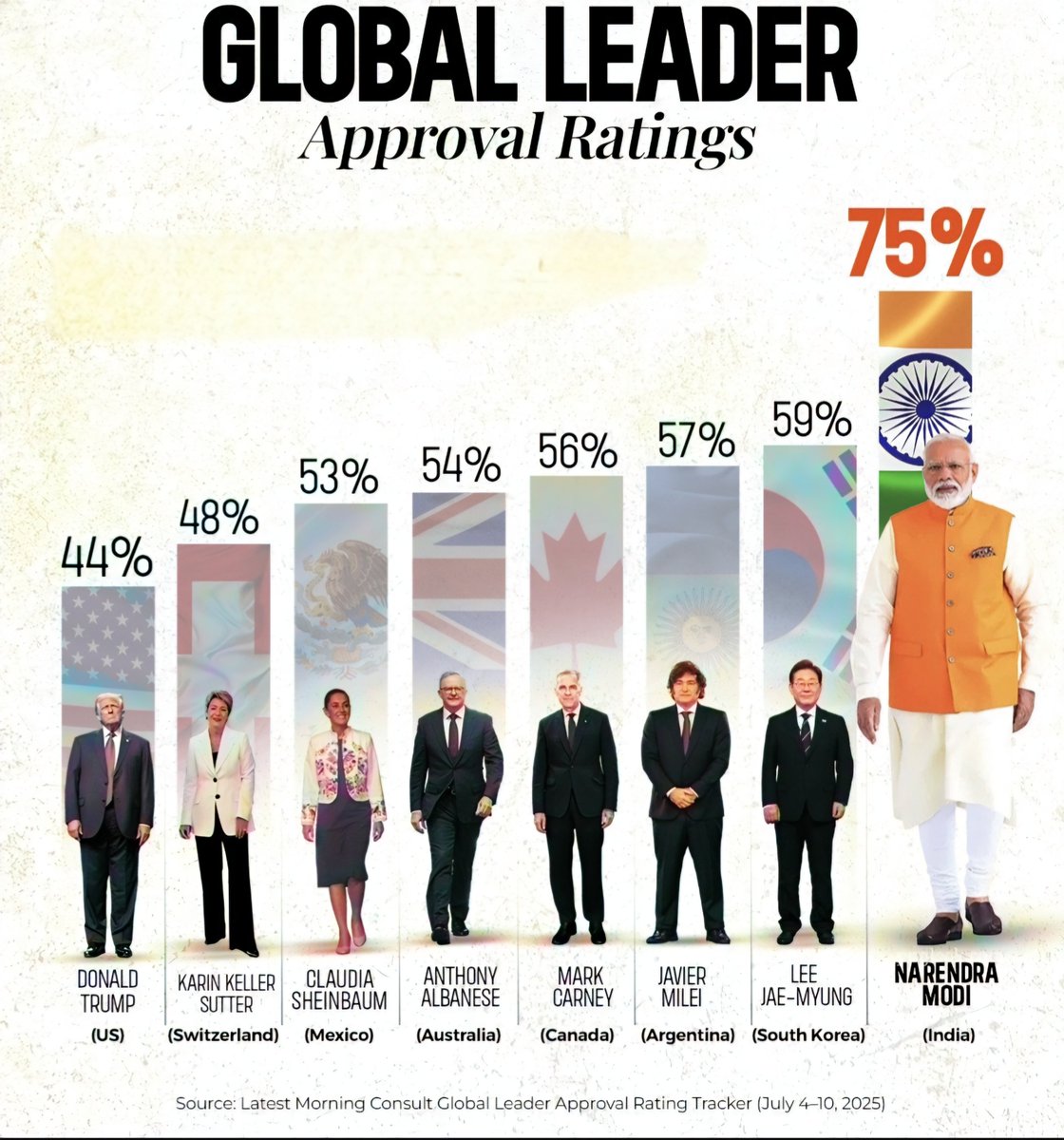
Understanding how global heads of state are perceived by their citizens offers a fascinating glimpse into international politics and leadership trends. As of July 2025, the latest data from the Morning Consult Global Leader Approval Rating Tracker provides an insightful overview of the popularity and effective support of world leaders across different regions.
Narendra Modi Continues to Lead in India with Remarkable Support
Heading the list is Indian Prime Minister Narendra Modi, boasting an impressive 75% approval rating. Modi’s policies, especially in economic reforms and digital infrastructure, have solidified his popularity domestically. India’s growing influence on the global stage and evident public satisfaction reflect substantial confidence in his leadership. Modi’s high approval rating underscores his strong connection with a broad segment of the Indian population, making him a pivotal figure in international politics.
South Korea’s Lee Jae-myung Maintains Positive Momentum
South Korean politician Lee Jae-myung secures the second spot among world leaders, with a commendable 59% approval rate. His focus on economic development and social welfare initiatives has resonated well with citizens. Despite challenges such as regional security concerns, Lee’s leadership appears stable and positively perceived, reflecting South Korea’s resilient democratic spirit and the public’s faith in his governance.
Argentina’s Javier Milei Gains Considerable Popularity
Argentine economist and politician Javier Milei has achieved a strong rating of 57%. Known for his outspoken stance against traditional political establishments and his push for economic liberalization, Milei’s rising popularity indicates a shift in Argentine political sentiments. Many voters are seeking fresh faces and bold policies to tackling ongoing economic issues, and Milei’s appeal is a testament to this changing dynamic.
Canada’s Mark Carney Demonstrates Steady Leadership
Former Bank of England Governor Mark Carney, now prominent in Canadian politics, holds a 56% approval rating. His expertise in finance and economics has played a crucial role in stabilizing Canada’s economic policies amid global uncertainties. Carney’s reputation for pragmatic leadership has earned him solid support among Canadians, especially during economically turbulent times.
Australia’s Anthony Albanese Maintains Broad Support
Australian Prime Minister Anthony Albanese’s approval rate stands at 54%. Widely viewed as a pragmatic and approachable leader, Albanese continues to navigate Australia’s domestic issues, including climate policies and economic recovery post-pandemic. His steady leadership reflects a balanced approach appreciated by a diverse electorate.
Mexico’s Claudia Sheinbaum Rises in Popularity
Mexico’s Claudia Sheinbaum enjoys a 53% approval rating. As Mexico faces ongoing challenges related to economic growth and security, Sheinbaum’s focus on social programs and governmental transparency has contributed to her increasing support. Her leadership signifies a shift towards progressive policies aiming to address longstanding issues.
Switzerland’s Karin Keller-Sutter Reflects Moderate Confidence
Karin Keller-Sutter, a notable Swiss political figure, has an approval rating of 48%. Switzerland’s reputation as a neutral and stable nation is reinforced by her leadership. Although her support is slightly below other global leaders, her pragmatic approach on issues like finance and diplomacy maintains a positive perception among Swiss citizens.
Former President Donald Trump Registers Lower Approval in the U.S.
Former U.S. President Donald Trump’s approval rating has declined to 44%. Despite his continued influence within segments of the American population, wider national support remains limited. His policies and rhetoric continue to polarize opinions, reflecting the ongoing ideological divide in U.S. politics.
Summary: Trends and Insights
The approval ratings showcase the dynamic nature of global leadership, emphasizing regional priorities and public satisfaction. Leaders like Modi and Lee display strong backing, often linked to economic or security concerns, whereas figures like Keller-Sutter reflect the Swiss preference for stability. The data also indicates a notable decline in support for Trump, mirroring broader political shifts and the polarized landscape of American politics.
Conclusion
The 2025 approval ratings reveal a world where leadership effectiveness is closely tied to economic confidence, regional stability, and social policies. As leaders adapt to changing global circumstances, their approval ratings will remain vital indicators of their legitimacy and influence on the world stage. Keep an eye on how these figures evolve in the coming months, shaping the political future of their respective nations and regions.
Source: Morning Consult Global Leader Approval Rating Tracker (July 4-10, 2025)
 ChatGPT
 Perplexity
 Gemini AI
 Grok AI