Select Language:
Top 15 Fastest Human-Made Objects in 2025
1. Light-Gas Gun Projectile – 25,000 km/h
The trusty light-gas guns, used by researchers for high-velocity testing, can propel projectiles up to 25,000 kilometers per hour. These devices are crucial for simulating space debris impacts and testing armor resilience, illustrating human ingenuity in accelerating objects to extreme speeds.
2. Space Shuttle – 28,000 km/h
Since its retirement, the space shuttle remains an icon of space exploration, capable of reaching speeds of approximately 28,000 km/h. Its re-entry and mission profiles have set a benchmark for crewed spacecraft velocity over the decades.
3. Avangard Hypersonic Glide Vehicle – 32,200 km/h
Russia’s Avangard system, a hypersonic glide vehicle, remains one of the fastest military assets, traveling at speeds exceeding 32,000 km/h. Its hypersonic capabilities challenge existing missile defense systems and mark a significant leap in strategic military technology.
4. Falcon Heavy (Second Stage) – 39,600 km/h
SpaceX’s Falcon Heavy’s second stage can reach speeds close to 40,000 km/h, pushing the boundaries of commercial spaceflight. This speed allows payloads to be delivered efficiently to distant orbits and interplanetary destinations.
5. Apollo 10 Command Module – 39,897 km/h
During its lunar mission, NASA’s Apollo 10 command module hit nearly 40,000 km/h in its journey around the Moon, setting a historical record for crewed spacecraft velocity.
6. Stardust Capsule – 46,440 km/h
NASA’s Stardust mission, designed to collect samples from a comet, traveled at 46,440 km/h as it returned to Earth, making it one of the fastest sample return capsules in history.
7. New Horizons – 58,536 km/h
The probe that journeyed past Pluto in 2015, New Horizons achieved speeds over 58,500 km/h relative to the Sun, marking a stellar milestone in interplanetary exploration.
8. Voyager 1 – 61,200 km/h
Voyager 1 continues to accelerate away from Earth, traveling beyond the solar system at approximately 61,200 km/h. Its speed has made it the most distant human-made object in space.
9. Galileo Atmospheric Probe – 172,800 km/h
Launched in the early 2000s to study Jupiter, the Galileo probe entered the planet’s atmosphere at incredible speeds of nearly 173,000 km/h, demonstrating the intense velocities needed for planetary descent missions.
10. Helios 2 – 252,792 km/h
One of the fastest spacecraft in history, Helios 2 approached speeds of over 252,000 km/h as it orbited close to the Sun, providing vital data about the solar environment.
11. Juno Spacecraft – 265,000 km/h
NASA’s Juno, currently exploring Jupiter, reaches astonishing velocities around 265,000 km/h, enabling it to perform high-speed orbital maneuvers throughout its mission.
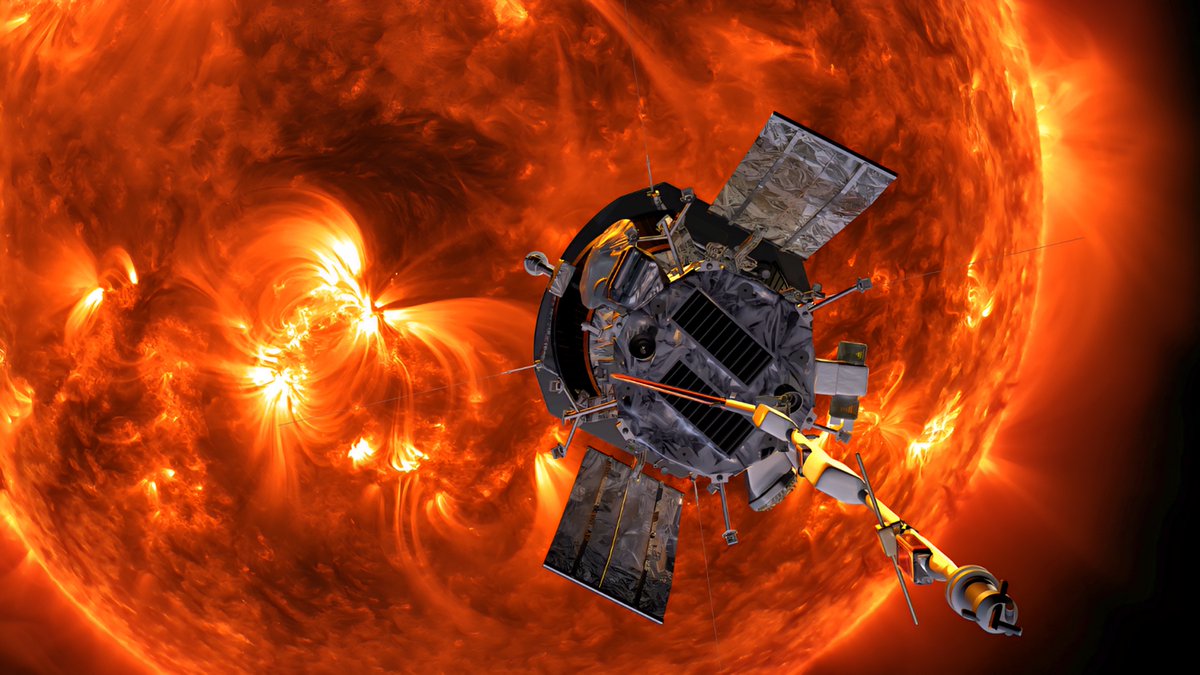
12. Parker Solar Probe – 692,000 km/h
The fastest human-made object ever, the Parker Solar Probe, achieves speeds nearing 692,000 km/h as it streams through the Sun’s corona, providing unprecedented insight into solar phenomena.
13. Manhole Cover (Post-Testing) – 240,000 km/h
During nuclear test simulations, some projectiles or debris have been recorded traveling at up to 240,000 km/h, highlighting the destructive potential of human-made objects at extreme velocities.
14. Juno Spacecraft (Revisited) – 265,000 km/h
Reaching speeds over 265,000 km/h, the Juno spacecraft’s relentless journey underscores the advances in propulsion and orbital mechanics that make interplanetary travel feasible.
15. Helios 2 (Revisited) – 252,792 km/h
Its near-Sun orbit granted Helios 2 the record for the highest velocity of any spacecraft before Juno, enabling close-up solar studies at breakneck speeds.
Note: All speed figures are based on the latest publicly available data as of 2025. Variances can occur based on different measurement standards, mission profiles, and official sources. This list continues to grow as space agencies and military programs push the limits of speed and technology.
(Image caption: Illustration of some of the world’s fastest man-made objects, from aircraft to space probes.)
 ChatGPT
 Perplexity
 Gemini AI
 Grok AI