Select Language:
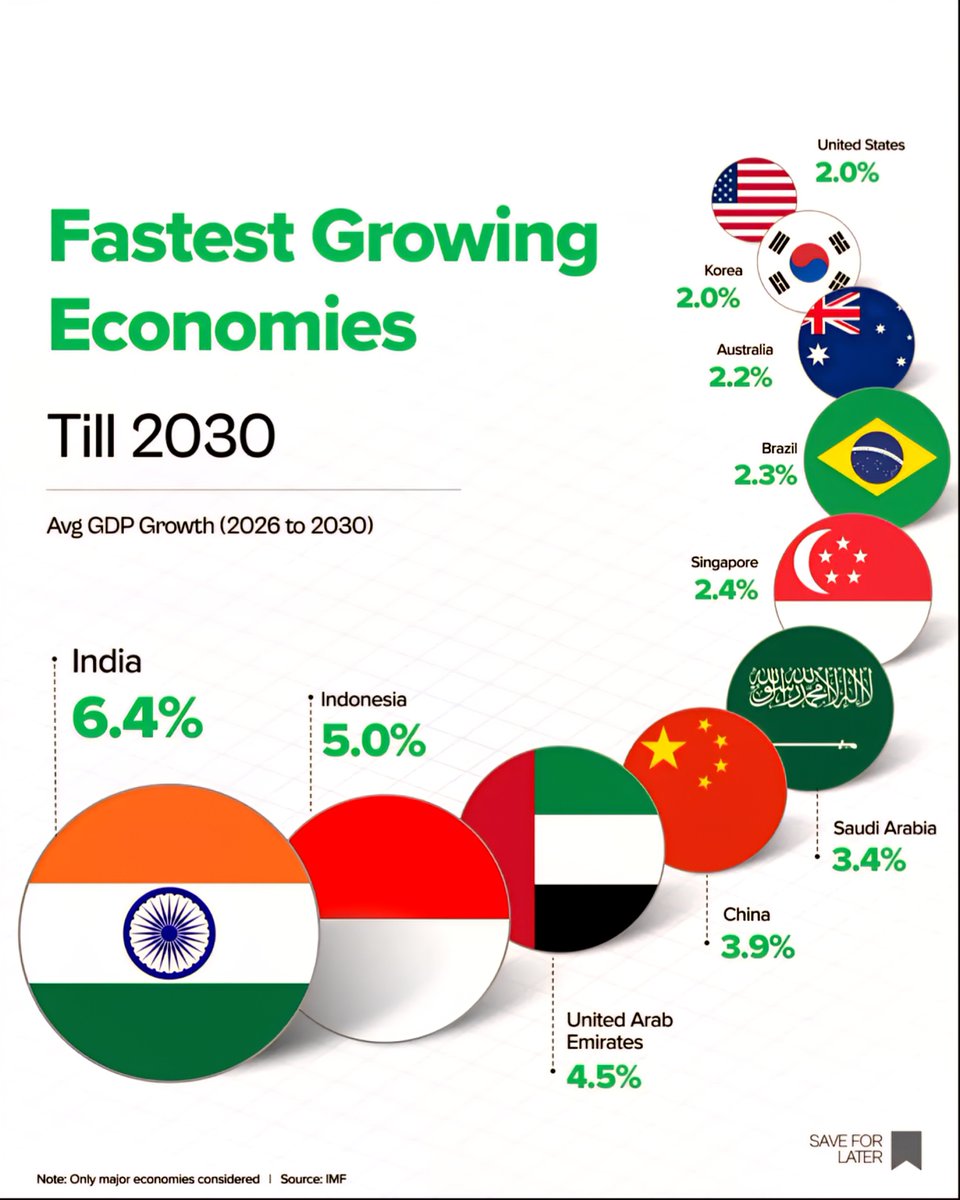
Surge of Global Economies: The Fastest Growing Countries Through 2030
India Leads the Way with Unmatched Growth
India is projected to continue its impressive ascent as the world’s fastest-growing major economy, with an average GDP growth rate of 6.4% between 2026 and 2030. This rapid expansion is fueled by a burgeoning technology sector, expanding middle class, and significant infrastructure development. India’s push towards digital innovation and reforms aimed at boosting manufacturing and services sectors have attracted massive foreign investments, solidifying its status as a global economic powerhouse.
Indonesia’s Rapid Expansion
Following closely, Indonesia is anticipated to grow at an average rate of 5.0%. Its strategic location as Southeast Asia’s economic hub, coupled with investments in infrastructure and a resilient domestic market, positions Indonesia as a critical player in the region’s growth story. The nation’s focus on digital transformation, renewable energy projects, and an expanding export sector contribute significantly to its upward trajectory.
The United Arab Emirates’ Diversification Drive
The UAE is projected to expand by 4.5%, reflecting its successful diversification efforts away from oil reliance. With ambitious projects in tourism, finance, and technological innovation, Abu Dhabi and Dubai are transforming into global business centers. The country’s strategic investments in artificial intelligence, fintech, and renewable energy are pushing its economy forward at a remarkable pace.
China’s Steady Growth Amidst Global Changes
China, holding onto its economic momentum with a 3.9% growth rate, remains a vital part of the global economy. Despite facing geopolitical challenges and shifts in global supply chains, China continues to innovate in sectors like electric vehicles, high-tech manufacturing, and green energy. Its focus on domestic consumption and technological self-reliance ensures sustained growth.
Saudi Arabia’s Vision for a New Economy
Saudi Arabia aims for a 3.4% growth, driven by its Vision 2030 initiative, which encompasses diversification into tourism, entertainment, and technology. Major projects, such as NEOM, a futuristic city, and the expansion of renewable energy capacity, are at the core of its economic strategy to reduce dependence on oil revenues.
Singapore’s Tech and Trade Focus
At a growth rate of 2.4%, Singapore remains a critical global financial and technological hub. Continued investments in smart city initiatives, fintech, and biotechnology keep its economy resilient. The nation’s strategic position as a gateway to Asia and its open trade policies sustain robust economic progress.
Brazil’s Road to Recovery
Brazil is forecasted to grow at 2.3%, amid signs of economic recovery post-pandemic. Its rich natural resources, expanding agricultural sector, and investments in infrastructure play vital roles. Efforts to stabilize political environments and attract foreign direct investment are crucial for maintaining its growth momentum.
Australia’s Resource and Service Sector Expansion
With a projected 2.2% growth, Australia’s economy benefits from high demand for commodities, along with an evolving services sector. Investments in renewable energy and technology are expected to further boost economic resilience in the face of global market shifts.
South Korea’s Innovation Push
South Korea is anticipated to grow by 2.0%, primarily driven by advancements in semiconductors, electronics, and green technology. The country’s focus on innovation, coupled with its strategic partnerships, ensures continued economic stability and growth.
The United States’ Steady Trajectory
Matching South Korea, the U.S. is projected to grow at an average of 2.0%. Its strong innovation ecosystem, leadership in AI and clean energy, and resilient consumer economy lay the groundwork for sustained expansion. Investment in infrastructure and technology continues to underpin its steady growth outlook.
Note: These projections are based on data from the International Monetary Fund (IMF) for the period 2026–2030, considering only major economies. The global economic landscape remains dynamic, with policies and unforeseen events possibly impacting these forecasts.
Source: IMF
 ChatGPT
 Perplexity
 Gemini AI
 Grok AI