Select Language:
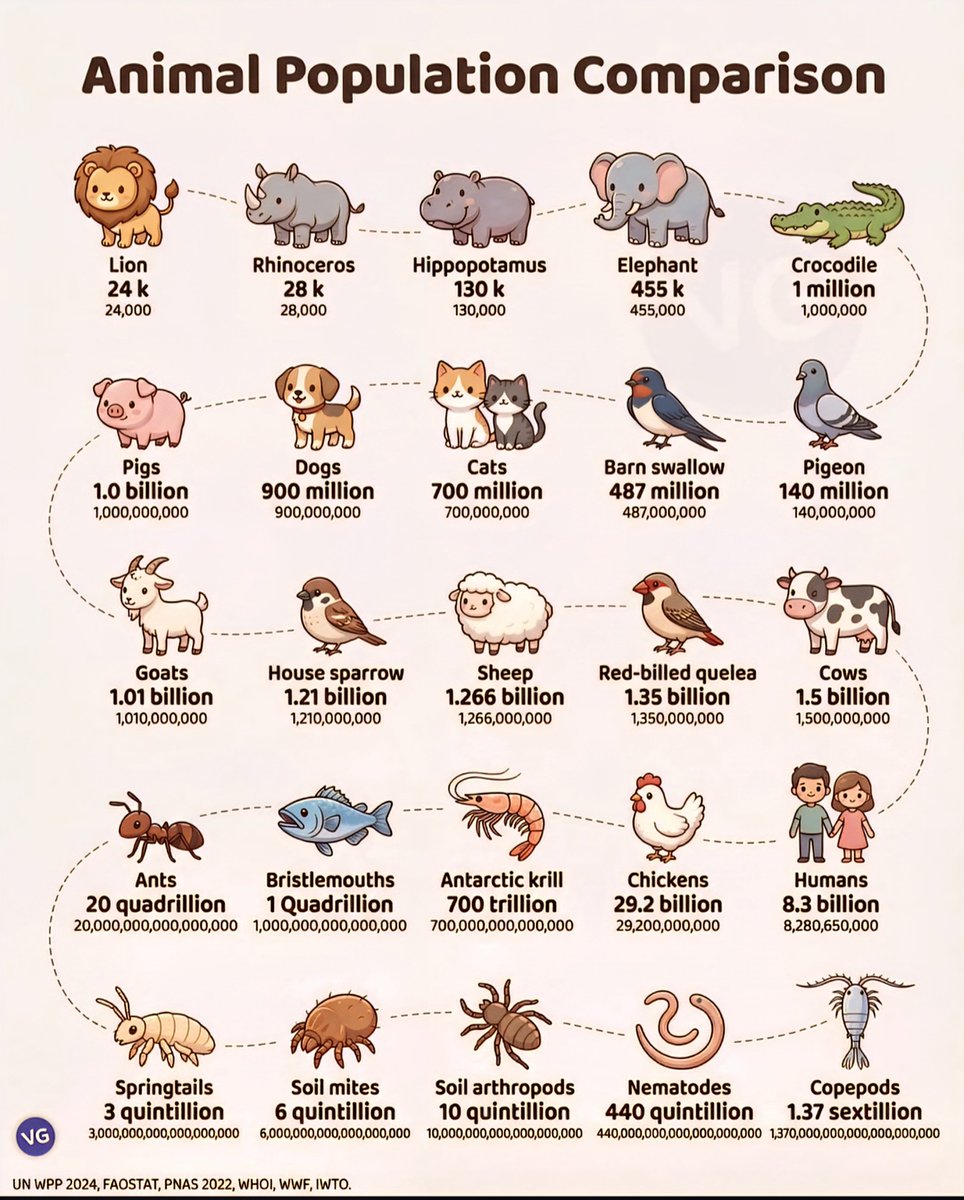
Remarkable Animal Population Counts Around the Globe in 2025
1. The King of the Jungle — Lions
Lions, the iconic symbol of strength and bravery, currently number approximately 24,000 in the wild. Despite their legendary status, their population has been dwindling due to habitat loss and human-wildlife conflicts.
2. Guardians of the Savanna — Rhinoceros
With an estimated 28,000 remaining in the wild, rhinos continue to face serious threats from poaching and illegal wildlife trade. Conservation efforts remain crucial to preventing further decline.
3. The Gentle Giants — Hippopotamuses
An estimated 130,000 hippos roam Africa’s rivers and lakes. These large mammals are vital to their ecosystems, but habitat degradation puts their populations at risk.
4. Massive Presence — Elephants
Worldwide, around 455,000 elephants persist in the wild. While protected areas help, poaching and habitat fragmentation continue to threaten their numbers.
5. The Ancient Reptiles — Crocodiles
Crocodiles boast a population of about 1 million globally. They are resilient survivors but are impacted by habitat encroachment and pollution.
6. Ubiquitous Birds — Pigeons
Pigeons have adapted remarkably well to urban environments, with an estimated 140 million living in cities worldwide, long considered the ultimate city bird.
7. The Swallow’s Swarm — Barn Swallows
Barn swallows boast an impressive population of approximately 487 million. These migratory birds are vital indicators of environmental health.
8. Feline Friends — Domestic Cats
It’s estimated there are around 700 million domestic cats worldwide, beloved companions integral to many households.
9. Man’s Best Friend — Domestic Dogs
With a global population estimated at 900 million, dogs continue to serve as loyal companions, workers, and rescue animals.
10. Pigs — The Meat Industry’s Backbone
Roughly 1 billion pigs are raised worldwide, making pig farming one of the most significant livestock industries.
11. The Hardy Cl of Grazers — Goats
There are approximately 1.01 billion goats globally, valued for their adaptability, milk, and meat production.
12. The Small Bird — House Sparrow
Once common in urban environments, about 1.21 billion house sparrows continue to thrive in cities around the world, although their numbers have declined in some regions.
13. Sheep — Versatile Livestock
With over 1.266 billion sheep globally, they provide wool, meat, and milk, forming an essential part of agriculture in many countries.
14. The Red-billed Quelea
These small birds, often called the most abundant wild bird, number approximately 1.35 billion. They are known for their massive flocks, sometimes causing agricultural damage.
15. Cattle — The Global Staple
Cows currently number around 1.5 billion worldwide, crucial for beef, dairy, and leather industries, shaping the agricultural landscape.
16. Humans — The Dominant Species
The human population has grown to approximately 8.3 billion, significantly impacting ecosystems, wildlife, and the planet’s resources.
17. Chickens — The Farm Favorite
An astounding 29.2 billion chickens are raised annually, making poultry the most populous domesticated animal.
18. Antarctic Krill — Small But Massive
Estimated to be around 700 trillion, krill are tiny but essential to marine food chains, supporting fish, whales, and seabirds.
19. Bristlemouths — Deep Sea Delights
With an estimated population of 1 quadrillion, these tiny fish dominate the deep ocean ecosystem, often considered the most abundant vertebrate on Earth.
20. Ants — The Insect Empire
Ants surpass all other terrestrial animals with approximately 20 quadrillion individuals, playing a vital role in soil aeration and organic material decomposition.
21. Springtails — Hidden Micro-Creatures
Estimated at about 3 quintillion, these tiny soil creatures are crucial for nutrient cycling and maintaining soil health.
22. Soil Mites — Micro-Organisms of the Earth
With roughly 6 quintillion individuals, soil mites contribute to organic matter breakdown and nutrient recycling underground.
23. Soil Arthropods — The Underside of Nature
An estimated 10 quintillion soil arthropods influence soil fertility and plant growth through their activity.
24. Nematodes — The Invisible Farm Workers
Approximately 440 quintillion nematodes inhabit the earth, vital for nutrient cycling and soil health.
25. Copepods — Ocean’s Ubiquitous Drifters
Incredible in number, estimated at 1.37 sextillion, copepods are fundamental to marine ecosystems, supporting a wide range of aquatic life.
All figures are rough estimates sourced from recent studies and reports including JN WPP 2024, FAOSTAT, PNAS 2022, WHOI, WWF, and IWTO via VG.
The insight into these populations highlights the diversity and fragility of life on Earth, emphasizing the importance of continuous conservation efforts and sustainable practices. Maintaining the balance of this intricate web of life is crucial for the planet’s health in 2025 and beyond.
 ChatGPT
 Perplexity
 Gemini AI
 Grok AI