Select Language:
Countries with Descriptive Official Names You Might Not Know About
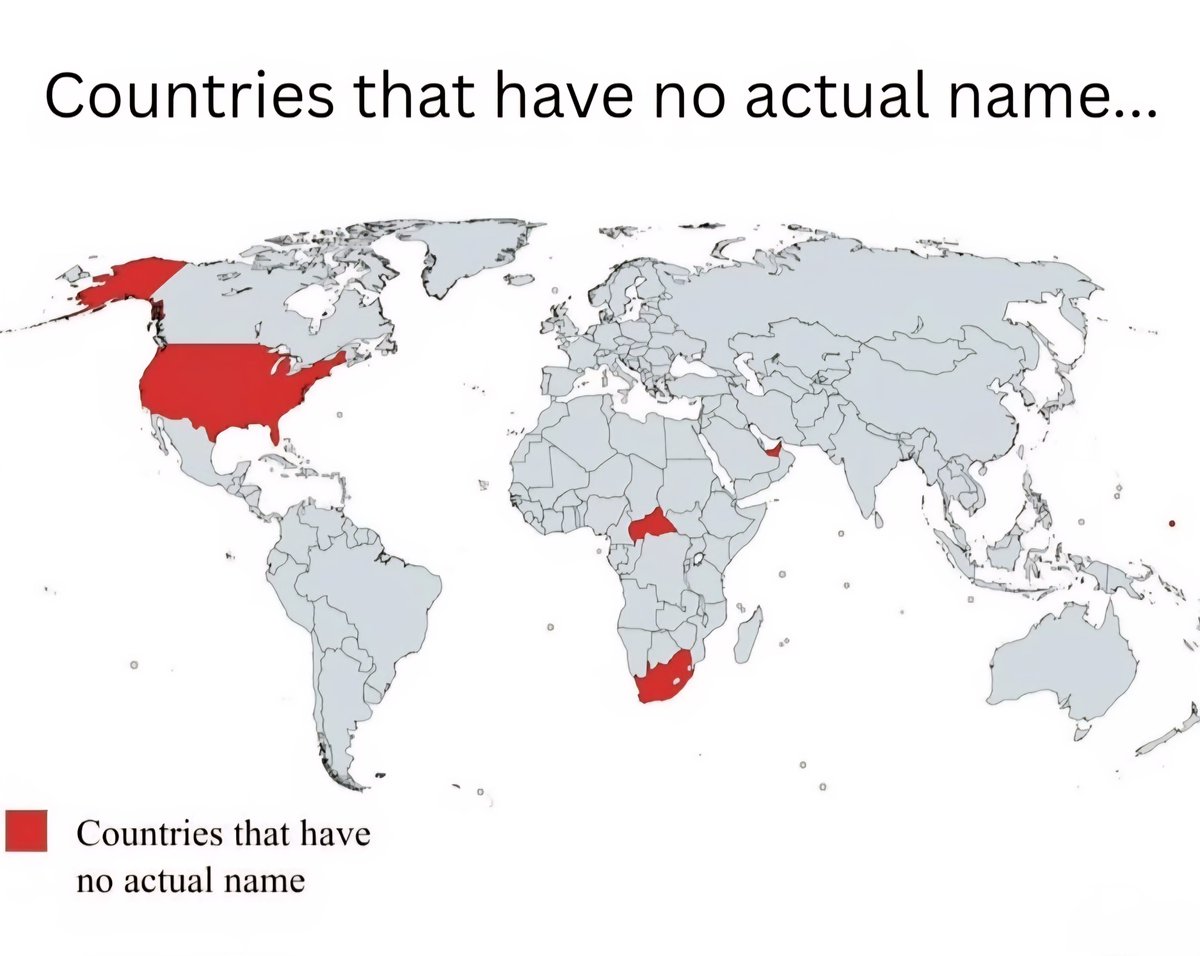
1. The United States of America: A Union of States in the American Continent
While commonly called the United States, the official name emphasizes its nature as a collective of individual states united in a federal system. Unlike some nations with traditional proper names, “United States of America” describes the country’s political structure, serving as a reminder of its federalist foundation and extensive union across the continent.
2. Central African Republic: A Nation in the Heart of Africa
This landlocked country’s official name pinpoints its geographic location. The “Central” signifies its position within the African continent, essentially describing its spatial relationship to neighboring countries. It’s a straightforward descriptor that sets it apart from nations with more poetic or historical names.
3. Republic of South Africa: The Southernmost Nation on the African Continent
South Africa’s official name emphasizes its sovereignty as a republic located in Africa’s southern tip. Unlike countries with historical or cultural names, this designation highlights its political form and geographical position, providing clarity on what the country truly represents.
4. United Arab Emirates: A Federation of Seven Emirates
The name underscores the political structure as a union of emirates—small monarchies or regions—rather than a singular entity. The “United” indicates political unity, while “Arab Emirates” portrays the country as a collection of Arab-identified emirates forming a federation, emphasizing its form of governance rather than historical or cultural uniqueness.
5. Federated States of Micronesia: A Federation of Independent States in the Pacific
This country’s full name illustrates its political organization. It’s a federation composed of several states across Micronesia in the Pacific Ocean, rather than a single, monolithic nation. The name reflects its federal structure and geographic expanse.
Additional Noteworthy Examples
While the above are key examples, many other countries worldwide possess official names that are more descriptive than traditional or culturally derived. These names often serve as functional identifiers based on political systems, geographical features, or regional affiliations.
Some countries incorporate terms like “republic,” “union,” or “federation” to specify government type, while others rely on geographic descriptors to clarify their location. Sometimes, this naming approach simplifies understanding for outsiders unfamiliar with the region’s complexities.
Why Do Some Countries Use Descriptive Names?
This often stems from historical, political, or diplomatic reasons. Newly formed nations post-independence, for instance, may choose names that explicitly describe their system of government or geographic identity to establish clarity and legitimacy.
Additionally, international bodies like the United Nations tend to prefer these descriptive names because they eliminate ambiguity. Instead of poetic or historical titles, these names communicate essential information about the country’s nature, governance, and location.
Final Thoughts
Understanding the nature of country names can offer insights into their history, politics, and geography. While some nations opt for culturally rich or historical titles like “France” or “Japan,” others prefer straightforward, descriptive names such as “The Bahamas” or “South Sudan.” Both naming strategies serve distinct purposes and reflect each country’s unique identity and history.
Have you come across other countries with similarly descriptive official names? Share your knowledge in the comments below!
 ChatGPT
 Perplexity
 Gemini AI
 Grok AI