Select Language:
2025 Global Resource Rankings: The Nations Holding the World’s Largest Reserves
Venezuela Dominates Oil Reserves
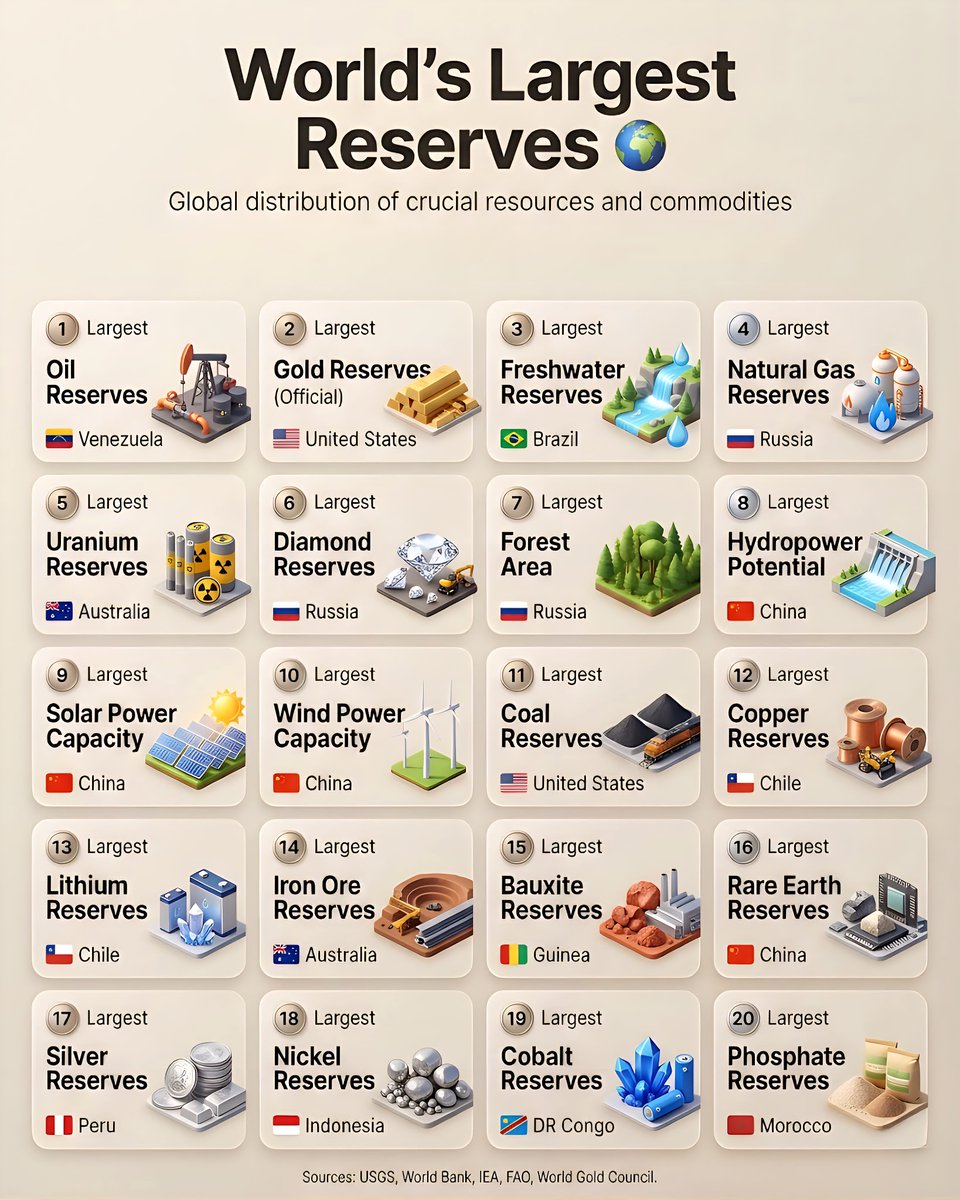
Venezuela continues to lead globally with the largest oil reserves, boasting an estimated 300 billion barrels. This vast resource positions the nation as a key player in global energy markets, although political and economic challenges have impacted its ability to fully capitalize on this wealth. The country’s extensive oil fields, primarily located in the Orinoco Belt, remain a crucial strategic asset for both Venezuela and international energy consumers.
United States Holds the Largest Official Gold Reserves
The United States maintains its status as the nation with the largest official gold reserves, holding an estimated 8,133.5 metric tons stored primarily in Fort Knox. While much of the global economy has shifted towards digital assets, gold remains a vital reserve asset providing financial stability and confidence in the U.S. dollar’s dominance on the world stage.
Brazil Ranks First in Freshwater Reserves
Brazil’s extensive river systems and lakes contribute to its status as the country with the largest freshwater reserves worldwide. The Amazon Basin alone holds an estimated 1.1 million cubic kilometers of freshwater, supporting biodiversity, agriculture, and hydroelectric power generation across the continent.
Russia at the Forefront of Natural Gas Reserves
Russia holds the world’s largest natural gas reserves, estimated at 38 trillion cubic meters. The country’s extensive Siberian fields, such as the Yamal Peninsula and the Urengoy fields, enable Russia to serve as a primary supplier of natural gas to Europe, Asia, and beyond, reinforcing its geopolitical influence in energy markets.
Australia Boasts Largest Uranium Reserves
Australia remains the world’s top holder of uranium reserves, with an estimated 1.7 million tons. Its rich deposits, primarily in South Australia, enable the country to be a leading exporter of nuclear fuel, supporting global energy diversification toward nuclear power.
Russia’s Diamond and Forest Wealth
Russia also leads in diamond reserves, primarily located in the Yakutia region, with an estimated reserve of 1.2 billion carats. Additionally, the country encompasses the largest forest area on Earth, covering approximately 8.1 million square kilometers, which sustains a vast biodiversity and timber industry.
China’s Dominance in Renewable Energy Capacity
China continues to lead the world in renewable energy capacity across multiple sectors. Its hydropower capacity exceeds 350 gigawatts, anchored by the impressive Three Gorges Dam. The country also tops solar power with over 300 gigawatts and wind power capacity surpassing 250 gigawatts, reflecting its commitment to transitioning to cleaner energy sources.
United States’ Coal Reserves
Despite global shifts toward renewable energy, the U.S. still holds the largest coal reserves, estimated at around 250 billion short tons. These reserves have fueled industrial growth historically and remain significant for regional energy supplies.
Chile’s Rich Copper and Lithium Deposits
Chile maintains its position as the world’s leading copper producer, with proven reserves of approximately 200 million metric tons. The nation is also the largest producer of lithium, with vast salt flats in the Atacama Desert containing roughly 7.5 million metric tons of the critical metal used in batteries for electric vehicles.
Australia’s Iron Ore Deposits
Australia’s iron ore reserves are among the largest globally, with Western Australia’s Pilbara region holding about 50 billion tonnes. These deposits underpin the country’s status as a primary global supplier of iron ore for steel production.
Guinea’s Wealth in Bauxite
Guinea is the top holder of bauxite reserves worldwide—containing around 7.4 billion metric tons—making it a key supplier for aluminum production worldwide. The country’s mineral wealth has attracted international investment, aiming to develop its mining sector further.
China’s Rare Earth Elements Production
China dominates rare earth element (REE) production, accounting for over 60% of the global supply. These elements are vital in electronics, renewable energy technologies, and defense applications, bolstering China’s strategic economic position.
Peru’s Silver Reservoirs
Peru boasts the largest silver reserves globally, with an estimated 160,000 metric tons. Its mining sector continues to thrive, contributing significantly to the country’s export economy.
Indonesia’s Nickel Reserves
Indonesia leads in nickel reserves, with approximately 21 million metric tons. The country’s nickel mining is integral to the global electric vehicle supply chain, especially with many nations seeking to diversify their sources.
DR Congo’s Critical Cobalt Reserves
The Democratic Republic of Congo holds the world’s largest cobalt reserves, estimated at 3.5 million metric tons. Cobalt is essential for battery manufacturing, making DRC a pivotal player in electric vehicle supply chains.
Morocco’s Phosphate Reserves
Morocco is the world’s largest phosphate producer, with reserves estimated at over 50 billion tonnes. Phosphates are crucial for global agriculture, fueling fertilizers that support food production worldwide.
This comprehensive overview highlights the immense natural wealth distributed worldwide, shaping economic strategies, geopolitical relationships, and future energy and resource development plans.
 ChatGPT
 Perplexity
 Gemini AI
 Grok AI