Select Language:
The World’s Top Oil Reserves in 2025
Venezuela Dominates as the Leader in Oil Reserves
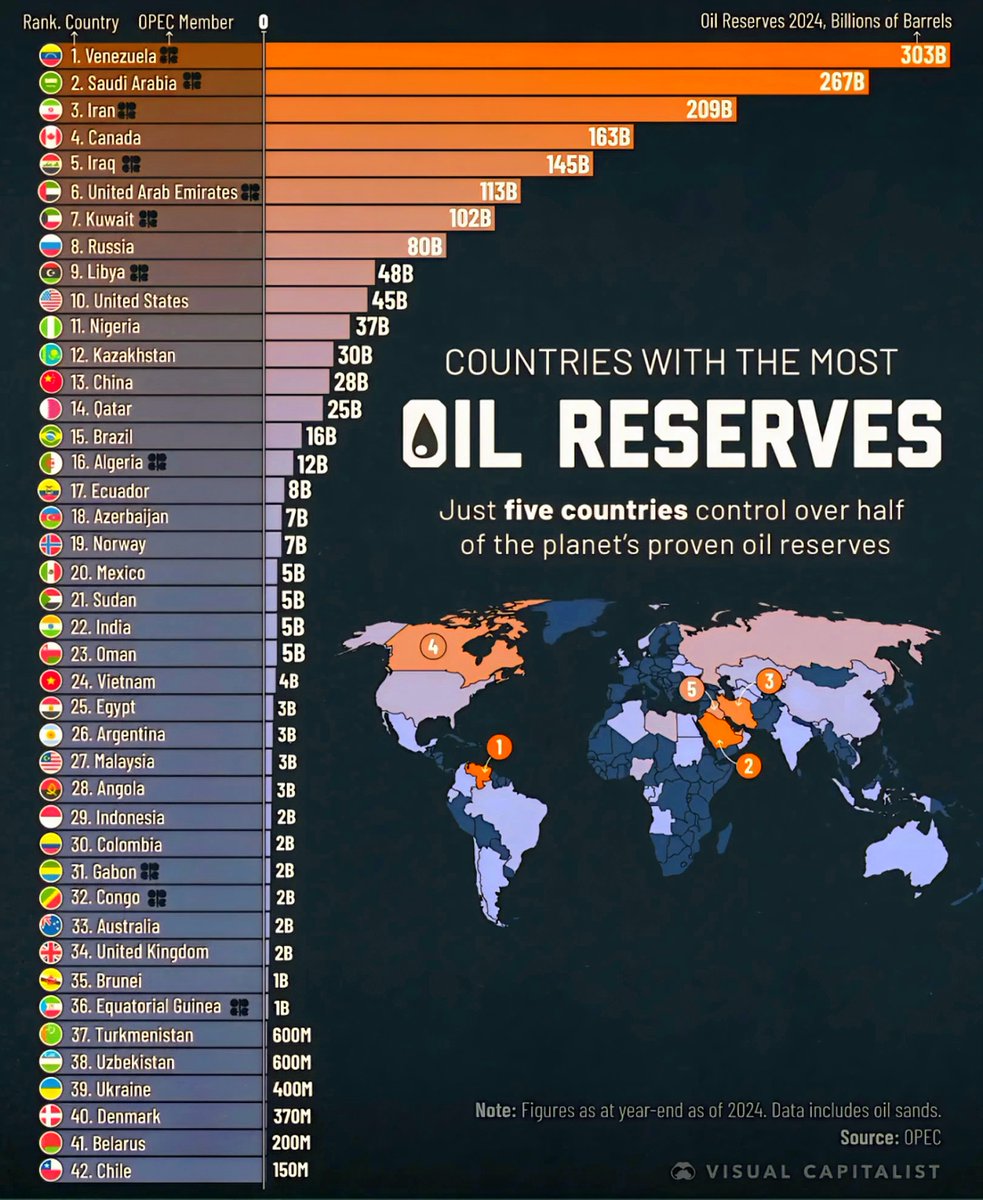
Venezuela remains atop the list with an astonishing 303 billion barrels of proven oil reserves. The South American nation has long been known for its vast oil wealth, although political and economic challenges have impacted its production capabilities. Experts forecast that Venezuela could regain its footing as a dominant oil exporter with strategic investments and policy reforms.
Saudi Arabia Solidifies Its Position as a Global Energy Power
Holding approximately 267 billion barrels, Saudi Arabia continues to be a key player in the global oil scene. Its strategic petroleum reserves not only support domestic energy needs but also influence global oil prices. The country has been actively diversifying its economy, but oil remains a vital resource for its national revenue, making it a crucial stakeholder in energy markets worldwide.
Iran and Canada Compete for Third Place
Iran boasts around 209 billion barrels, making it the third-largest holder of oil reserves globally. Despite international sanctions and economic restrictions affecting its production, Iran’s massive reserves position it as a key future energy player.
Canada follows with approximately 163 billion barrels, primarily stored in oil sands. Its vast reserves have been instrumental in making North America a significant oil-producing region, especially as North American energy independence becomes an increasing focus.
Major Middle Eastern and North African Reserves
Countries like Iraq (145 billion barrels), the UAE (113 billion), and Kuwait (102 billion) comprise the Middle Eastern oil giants. Their strategic locations and rich fields continue to supply energy to global markets. Libya’s reserves stand at 48 billion barrels, though political instability has hampered its production.
The United States and Nigeria’s Growing Reserves
The United States holds an estimated 45 billion barrels, reflecting its expanding production capabilities, notably from shale formations. Nigeria, with 37 billion barrels, remains a prominent African oil producer, though infrastructural challenges persist.
Eurasian and Asian Oil Reserves
Russia has around 80 billion barrels, maintaining its position as a major global energy supplier. Kazakhstan and China follow, with reserves of 30 and 28 billion barrels respectively, highlighting the growing importance of these nations in global energy geopolitics.
South American and Oceanian Oil Reserves
Brazil, with 16 billion barrels, continues to develop its offshore fields. Algeria and Ecuador hold smaller but significant reserves (12 and 8 billion). Australia and the UK, with 2 billion each, are notable for their offshore resources and potential future developments.
Emerging and Smaller Reserves
Nations such as Norway (7 billion), Mexico (5 billion), and India (5 billion) are increasingly investing in exploration and production. Middle Eastern countries like Oman, Vietnam, and Egypt, with reserves ranging from 3 to 4 billion barrels, are also gaining attention for their potential.
The Future of the Oil Landscape
With global commitments to transitioning towards renewable energy and reducing carbon emissions, oil reserves’ strategic value will evolve. Nonetheless, in 2025, these countries’ vast reserves continue to influence geopolitics, economic stability, and energy security worldwide. Nations are also exploring advancements in extraction technology and sustainable practices to optimize their resources responsibly.
Note: All figures are based on data as of the end of 2024, including proven reserves in oil sands and unconventional resources.
 ChatGPT
 Perplexity
 Gemini AI
 Grok AI