Select Language:
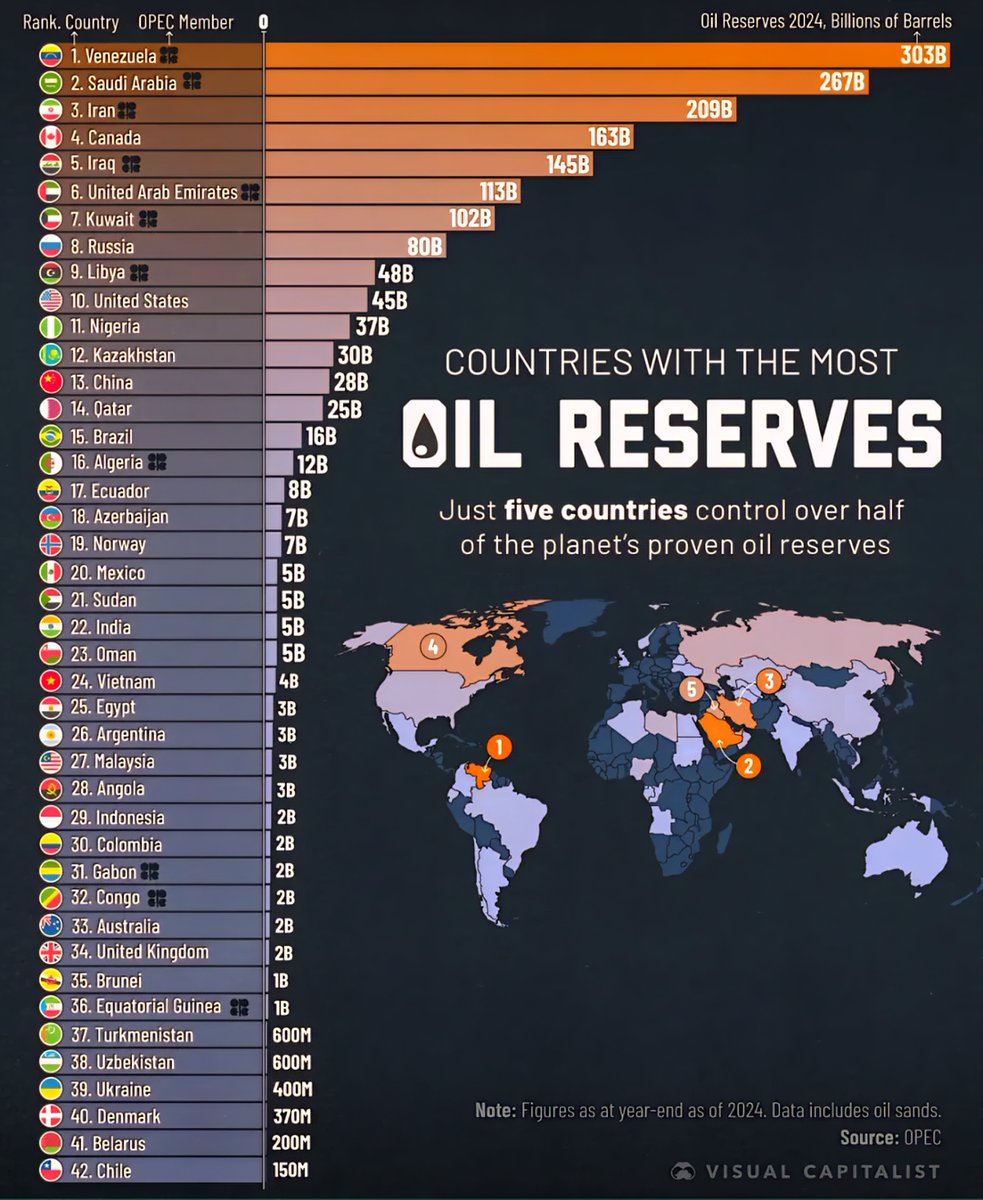
Top Countries Leading the World in Oil Reserves in 2025
Venezuela Reigns as the Global Leader in Oil Reserves
Venezuela boasts the world’s largest proven oil reserves, with an estimated 303 billion barrels. This massive reserve places the South American nation at the forefront of global oil resources, although its production levels have been hampered by political and economic instability. Venezuela’s vast reserves are primarily located in the Orinoco Belt, a substantial area rich in heavy crude oil. Despite its vast wealth of resources, the country’s oil industry faces challenges related to infrastructure, sanctions, and investment.
Saudi Arabia Maintains Its Stature as a Leading Oil Custodian
Saudi Arabia holds approximately 267 billion barrels of oil, positioning it as the second-largest holder of proven reserves worldwide. The nation remains a pivotal player in global oil markets due to its substantial reserves and capacity for high production levels. Saudi Arabia’s oil fields from Ghawar to Safaniyah have been instrumental in maintaining its influence over oil prices and supply stability for decades, making it a critical partner for energy markets worldwide.
Iran’s Significant Reserves amidst Global Market Dynamics
Iran has around 209 billion barrels of proven oil reserves, placing it third on the list. Despite international sanctions and political tensions affecting its oil exports, Iran’s underground reserves remain immense. The country’s potential for increased export capacity exists if geopolitical issues are resolved, which could significantly impact global oil supply and prices.
Canadian Oil Sands Boost Reserves
Canada has the world’s fourth-largest proven oil reserves, totaling roughly 163 billion barrels. The majority of these reserves come from vast oil sands in Alberta. While extraction technology has improved, environmental concerns and high operational costs still impact Canada’s ability to fully leverage its reserves. Canada’s role as an oil supplier continues to grow with ongoing development in the oil sands sector.
Iraq’s Growing Oil Deposits
With approximately 145 billion barrels of proven reserves, Iraq ranks fifth globally. The country’s oil fields are among the largest in the Middle East, and recent investments have aimed to increase its production capacity. Political stability remains a factor in the pace of development, but Iraq’s reserves guarantee its position as a critical oil supplier region.
UAE and Kuwait: Middle Eastern Powerhouses
The United Arab Emirates (113 billion barrels) and Kuwait (102 billion barrels) are essential contributors from the Persian Gulf. The UAE’s reserves are concentrated mainly in Abu Dhabi, with recent investments aimed at boosting production. Kuwait’s mature oil fields continue to be vital to its economy, which is heavily reliant on oil exports.
Russia and Libya Hold Notable Reserves
Russia possesses about 80 billion barrels of oil reserves, reinforcing its status as a leading oil producer. Its expansive field infrastructure supports high extraction volumes, making it a core component of global energy markets. Libya, with 48 billion barrels, remains rich in resources; however, ongoing civil unrest has constrained its ability to fully capitalize on its reserves.
United States: A Growing Oil Power
The U.S. now has approximately 45 billion barrels of proven reserves, reflecting the impact of technological advances like hydraulic fracturing and horizontal drilling. The shale boom has elevated the U.S. from a net importer to a significant exporter, reshaping global energy dynamics.
Noteworthy Reserves in Africa, Asia, and South America
Nigeria (37 billion barrels), Kazakhstan (30 billion), and China (28 billion) showcase the diversity of oil reserves across continents. Brazil, Algeria, Ecuador, and Azerbaijan also possess significant deposits, positioning them as vital players in regional and global energy markets. Countries like Nigeria and Kazakhstan are especially poised for increased production as investments continue to flow into their oil sectors.
Emerging and Small Reserves
Other countries such as Vietnam, Egypt, Argentina, Malaysia, and Angola have smaller but strategically important reserves, often tied to regional stability and development. For instance, Vietnam’s 4 billion barrels and Egypt’s 3 billion are critical for their respective regional economies as they seek to boost local production and reduce import dependence.
Future Outlook and Market Implications
As of 2025, global oil reserves remain a critical factor influencing energy security, prices, and geopolitics. Countries with extensive reserves are better positioned to impact global markets, especially as technological advances and geopolitical developments continue to reshape the landscape. Meanwhile, nations with smaller reserves are increasingly exploring alternative energy sources amid the global shift toward sustainability.
Note: These figures are based on the latest data as of the end of 2024, accounting for oil sands and other forms of unconventional oil extraction. Market dynamics in 2025 continue to evolve, shaping the strategic importance of each nation’s reserves.
Source: OPEC via Visual Capitalist
 ChatGPT
 Perplexity
 Gemini AI
 Grok AI