Select Language:
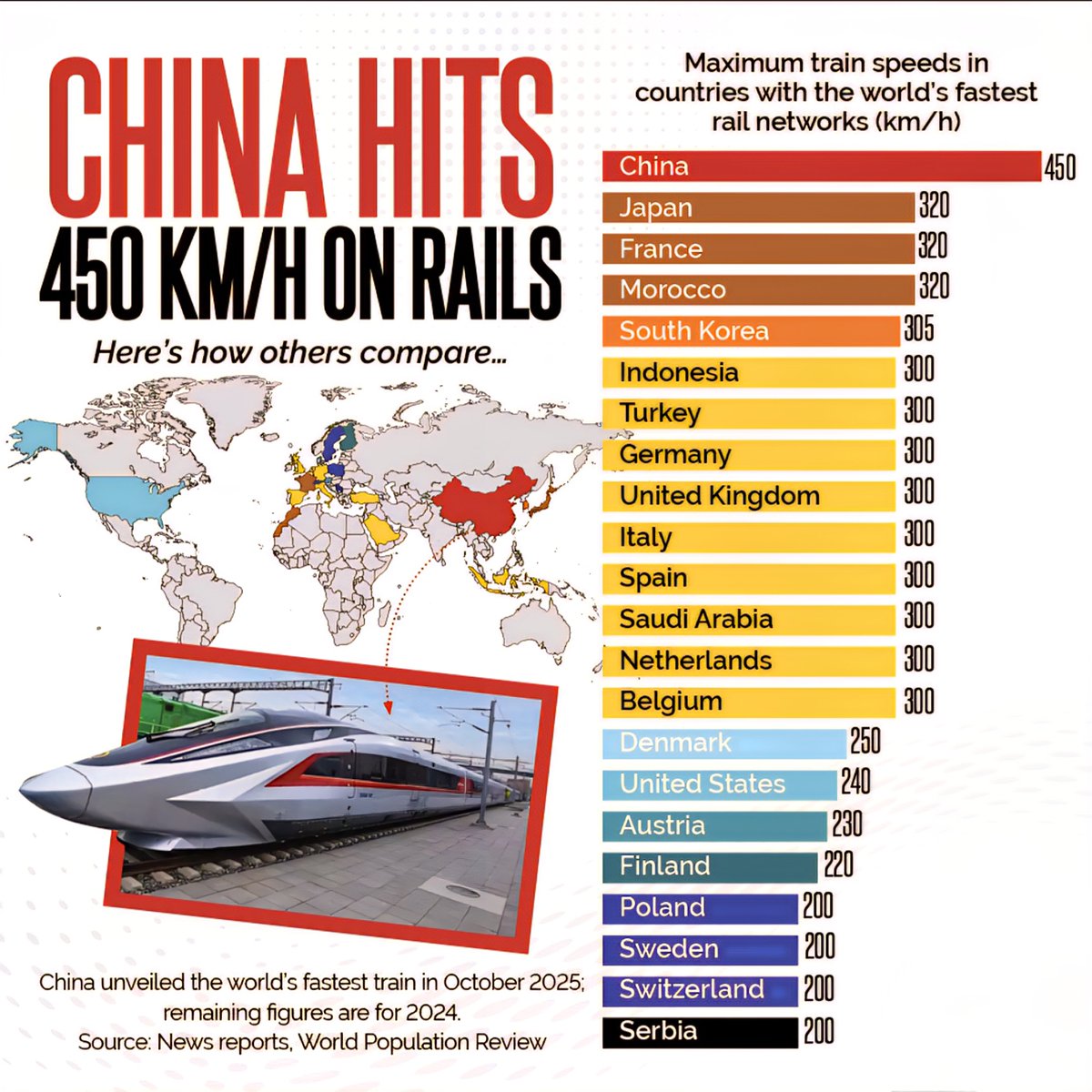
Maximum Train Speeds in Countries 🚆
—
## Japan’s Bullet Trains Reach the Top of the List with Speeds Exceeding 200 MPH
Japan continues to set the benchmark for high-speed rail travel, with certain trains now reaching speeds over 200 miles per hour. The Shinkansen, often regarded as the world’s fastest conventional train, has undergone numerous upgrades, and new models are pushing the limits of rail technology. The latest N700S series, operational on the Tokaido Shinkansen line, clocks in at a top speed of approximately 224 mph during test runs, setting a new record for Japanese rail speed. This technological breakthrough not only enhances commuter travel but also strengthens Japan’s reputation for innovation in transportation.
—
## China’s High-Speed Rail System Expands Beyond 300 MPH
China boasts the most extensive high-speed rail network globally, covering over 40,000 miles. Remarkably, in 2025, China has officially announced the deployment of the new “Fuxian” trains, which can operate at maximum speeds of 319 mph. These trains are part of a strategic plan to reduce travel times between major cities such as Beijing, Shanghai, and Guangzhou. The development of magnetic levitation (maglev) trains has contributed significantly to this achievement, with some experimental lines reaching speeds over 370 mph, promising future high-speed corridors that could revolutionize long-distance travel.
—
## France’s TGV Continues to Impress with Impressive Speeds that Keep It Competitive
France’s iconic TGV trains have long been symbols of high-speed rail travel, with record speeds of over 357 mph recorded in test conditions. In 2025, the operational TGV networks continue to maintain high speeds, averaging around 200 mph for intercity services. The latest TGV M trainsets are equipped with cutting-edge aerodynamics and energy-efficient designs, allowing for faster travel times between Paris and neighboring countries. France’s investments in rail infrastructure aim to keep the TGV as a competitive option for travelers seeking quick journeys without the hassles of air travel.
—
## Spain Pushes Boundaries with the Development of New High-Speed Lines
Spain’s high-speed rail network, known as AVE, remains a crucial component of its transportation infrastructure. In 2025, Spanish rail authorities announced plans to upgrade existing lines and introduce new trains capable of reaching speeds up to 217 mph. The pioneering La Meca-Medina high-speed corridor is set to connect Madrid and the southern city of Medina in just under four hours. These advancements are aimed at boosting tourism, business connectivity, and regional economic growth, reinforcing Spain’s reputation as a leader in high-speed rail in Europe.
—
## United States Making Strides with Upcoming Maglev Projects
The United States continues to develop its high-speed rail ambitions with significant progress on the maglev train project connecting Washington D.C. and Baltimore. Expected to debut in 2026, this train will reach speeds of 311 mph, drastically cutting down travel time between the two cities. The project’s success hinges on technological innovations and substantial federal investments, as it aims to compete with traditional air travel routes. If successful, this development could pave the way for further expansion of high-speed rail networks across the country.
—
—
## Germany’s ICE Trains Maintains Competitive Speeds with Plans For Future Upgrades
Germany’s Intercity Express (ICE) trains remain a vital part of Europe’s rail infrastructure. Currently, ICE trains operate at speeds up to 205 mph in some segments, with plans to introduce next-generation models capable of reaching 230 mph by 2027. These upgrades aim to improve efficiency on the country’s core routes, including connections between Berlin, Munich, and neighboring countries like Austria and Switzerland. Germany’s commitment to sustainable and fast rail travel continues to strengthen its position as a leader in European high-speed transportation.
—
## Australia’s Bullet Trains Still in Planning, but Progress Is Promising
Australia has long been pondering a high-speed rail network to connect its major cities, and in 2025, the project gained renewed momentum. While no high-speed trains are operational yet, feasibility studies indicate potential speeds of up to 185 mph on lines connecting Sydney, Melbourne, and Brisbane. The government’s focus on environmentally friendly transportation and reducing congestion stimulates ongoing investment and planning efforts. If successful, Australia could soon join the ranks of countries with cutting-edge high-speed rail systems.
—
## Conclusion
Across the globe, countries continue to push the boundaries of rail travel, with some reaching astonishing speeds that redefine possibilities. From Japan’s record-breaking bullet trains to China’s maglev marvels, the future of high-speed rail looks faster and more innovative than ever. As infrastructure investments and technological advancements progress, travelers can expect quicker, more efficient journeys, transforming how we move from one destination to another.
—
 ChatGPT
 Perplexity
 Gemini AI
 Grok AI