Select Language:
Top Countries with the Largest Slum Populations in 2025
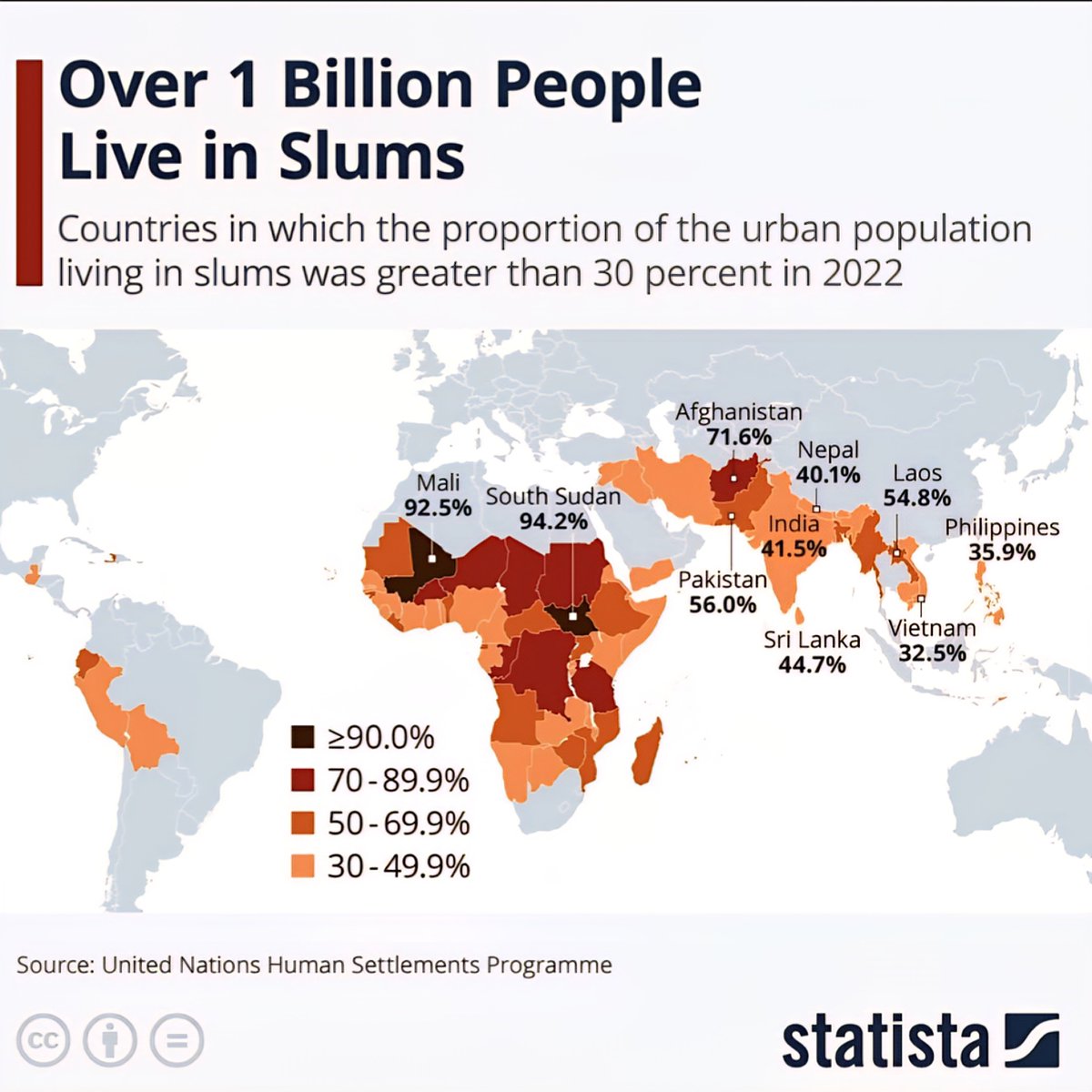
1. India – The Nation with the Highest Slum Density
India continues to top the list with over 100 million people living in urban slums. Major cities like Mumbai, Delhi, and Kolkata are home to sprawling informal settlements where residents face numerous challenges, including limited access to clean water, sanitation, healthcare, and secure housing. Despite rapid urban development, a significant portion of India’s urban expansion still occurs informally, highlighting ongoing issues with urban planning and affordability. The sheer size of India’s population amplifies the scale of its slum problem, making it a focus for both government intervention and international aid programs aimed at improving living conditions.
2. Nigeria – Africa’s Most Urbanized Slum Population
Nigeria ranks as Africa’s leader in slum dwellers, with estimates suggesting over 60 million residents living in informal settlements. Lagos, Nigeria’s economic hub, is notorious for its overcrowded slums, where infrastructure is often inadequate. Residents face challenges such as poverty, unemployment, and exposure to health hazards. Rapid urban migration continues to fuel this growth, with many seeking better opportunities but often ending up in poorly maintained informal neighborhoods. Initiatives to formalize housing and improve infrastructure are critical to addressing Nigeria’s burgeoning slum populations.
3. Pakistan – Rapid Urban Growth and Informal Settlements
Pakistan hosts approximately 30 million people living in slums and informal settlements, primarily in Karachi, Lahore, and Islamabad. These communities grow rapidly due to rural-to-urban migration and a lack of affordable housing options. Residents often struggle with insufficient access to safe drinking water, sanitation, and reliable electricity. The government has launched several initiatives focusing on slum upgrading, but challenges remain due to the sheer scale and complexity of informal settlements.
4. Democratic Republic of the Congo – Urban Scarcity and Poverty
In the Democratic Republic of the Congo, roughly 20 million people live under conditions similar to slum environments, especially in the capital city, Kinshasa. Issues such as poverty, conflict, and inadequate urban infrastructure create environments where basic services are scarce. Many residents live in overcrowded neighborhoods with unstable housing, exposing them to health risks and economic instability. International organizations continue to work on sustainable solutions to improve these living conditions.
5. Bangladesh – Overpopulation and Urban Struggles
Bangladesh’s capital, Dhaka, is experiencing rapid growth, with approximately 15 million residents living in slum or informal settings. Overpopulation combined with poverty has resulted in crowded, unsafe living conditions, where residents often lack essential services. Despite government efforts to develop affordable housing schemes and improve living standards, the demand overwhelmingly surpasses supply. The challenge remains to integrate these communities into the urban fabric through comprehensive planning and investment.
6. Brazil – Urban Inequality and Favelas
Brazil’s famous favelas are home to an estimated 6 million residents, primarily in Rio de Janeiro and São Paulo. While many favelas have seen some improvements, they still face significant issues like violence, poor sanitation, and limited access to health services. Retreating from traditional stigmas, some favelas are becoming hubs for cultural activities and entrepreneurship, but economic disparities persist. Policy efforts focus on social inclusion programs and upgrading infrastructure to enhance quality of life.
7. Mexico – Urban Poverty and Informal Settlements
Mexico has a significant population living in slums or informal settlements, particularly in Mexico City and surrounding regions, totaling around 5 million people. Challenges faced include overcrowding, lack of basic services, and insecure tenure. The government’s ongoing programs aim to upgrade infrastructure and provide formal housing options, but urban poverty remains a persistent issue that requires sustained, multi-sectoral approaches.
8. Egypt – Growth in Informal Urban Housing
Cairo’s sprawling informal neighborhoods house approximately 4 million residents, often with substandard housing conditions. Rapid population growth and economic factors have led to the proliferation of unplanned settlements. Residents frequently confront issues such as inadequate infrastructure, flooding, and limited access to healthcare and education. Urban planners are working to upgrade existing neighborhoods while controlling unregulated expansion.
9. Ethiopia – Emerging Urban Challenges
Ethiopia’s capital, Addis Ababa, faces an increasing number of slum dwellers, estimated at over 3 million. Low-income families settling in informal neighborhoods often live without secure tenure or basic services. Recent government efforts aim to improve housing affordability and infrastructure provision, yet rapid urbanization continues to outpace development efforts.
10. Indonesia – Coastal and Urban Slum Dynamics
Jakarta and other major Indonesian cities are home to millions of residents living in informal settlements. These areas face environmental threats such as flooding and land subsidence, further complicating efforts to improve living conditions. The government is investing in flood mitigation and housing programs, but the challenge remains to balance urban development with the needs of marginalized communities.
Conclusion:
The global challenge of urban slums underscores the necessity for comprehensive urban planning, targeted investments, and inclusive policies. Improving living standards in these densely populated informal settlements is essential for fostering sustainable development, health, and economic stability worldwide in 2025.
 ChatGPT
 Perplexity
 Gemini AI
 Grok AI