Select Language:
The World’s Most Educated Countries: A Look at Higher Education Attainment
According to the latest research from CBRE, the landscape of global education is shifting. The percentage of individuals aged 25 to 64 who hold a bachelor’s degree or higher offers a fascinating glimpse into the educational achievements of various nations. The list reshapes our understanding of where higher education is thriving. Let’s explore some of the most educated countries around the globe.
1. Ireland: Leading the Charge
With a remarkable 52.4% of its population aged 25 to 64 holding a bachelor’s degree or higher, Ireland tops the list. This number translates to approximately 1.8 million educated individuals. Ireland’s emphasis on educational advancement and its robust higher education system play key roles in this achievement.
2. Switzerland: The Power of Quality Education
Switzerland boasts an impressive 46% of its population in this age range with a higher education degree, totaling around 2.7 million people. Known for its high standard of living and world-class universities, it’s no surprise that Swiss citizens value education.
3. Singapore: Small but Mighty
Singapore’s education system is internationally recognized, and its citizens exhibit a substantial educational attainment rate of 45%. About 1.9 million individuals have achieved a bachelor’s degree or higher. The country’s rigorous academic standards and investment in education play pivotal roles in this accomplishment.
4. Belgium: A Commitment to Learning
In Belgium, 44.1% of individuals aged 25 to 64 hold a higher degree, amounting to around 3.3 million people. Belgium’s multilingual educational framework equips its citizens for a diverse range of career paths.
5. United Kingdom: A Tradition of Higher Learning
Home to some of the world’s most prestigious institutions, the UK has 43.6% of its population in this age bracket holding a bachelor’s degree or higher, totaling approximately 19.1 million. Quality education has always been a cornerstone of British society.
6. Netherlands: A Balanced Approach
With 42% of its population holding a bachelor’s degree or higher—that’s about 4.8 million people—the Netherlands is committed to accessible and high-quality education. Dutch universities frequently rank among the best globally.
7. United States: A Diverse Educational Landscape
In the U.S., approximately 40.3% of the population aged 25 to 64—around 78.2 million individuals—hold at least a bachelor’s degree. The availability of a wide range of institutions and programs reflects America’s commitment to higher education.
8. Australia: Education Down Under
Australia has a bachelor’s degree attainment rate of 39.8%, amounting to about 6.9 million people. This country is known for its diverse education system and offers abundant opportunities for both domestic and international students.
9. Israel: A Hub of Innovation
With 39.7% of its population holding a bachelor’s degree or higher (around 2.2 million people), Israel’s educational system focuses on innovation and technology, fostering a culture of continuous learning.
10. Sweden: Quality Over Quantity
Sweden’s focus on quality education has resulted in 39.6% of its population, roughly 2.6 million people, achieving higher education degrees. The Swedish approach emphasizes equality and accessibility in education.
11. South Korea: The Education Superpower
South Korea has made remarkable strides in education, with 39.4% of its population (around 14.4 million individuals) holding a bachelor’s degree or higher. The country’s competitive educational environment significantly influences its citizens’ academic achievements.
12. Taiwan: A Rising Star
Taiwan sees 38.9% of its population aged 25 to 64 with higher education attainment, translating to about 2.0 million people. The focus on technology and innovation in education has contributed to this growth.
13. Poland: Expanding Educational Opportunities
With 37.9% of its population holding higher degrees (approximately 9.0 million), Poland is enhancing its educational landscape, promoting critical thinking and skills development.
14. Denmark: A Strong Educational Tradition
Denmark boasts a 37.7% attainment rate, equating to about 1.4 million individuals. The country is known for its commitment to lifelong learning and high-quality educational institutions.
15. Canada: Diversity in Education
In Canada, around 36.9% of the population holds a bachelor’s degree or higher, totaling approximately 14.8 million individuals. Canada’s multicultural educational environment fosters diverse perspectives and ideas.
The list continues beyond the top 15, showcasing a wide array of nations with varying degrees of educational achievements. Notable mentions include Norway, Finland, Japan, Germany, and Brazil, all contributing figures that reflect their investment in higher education.
As countries continue to prioritize education in their development agendas, the global educational landscape shifts, highlighting the importance of academic achievement in driving economic growth and societal well-being.
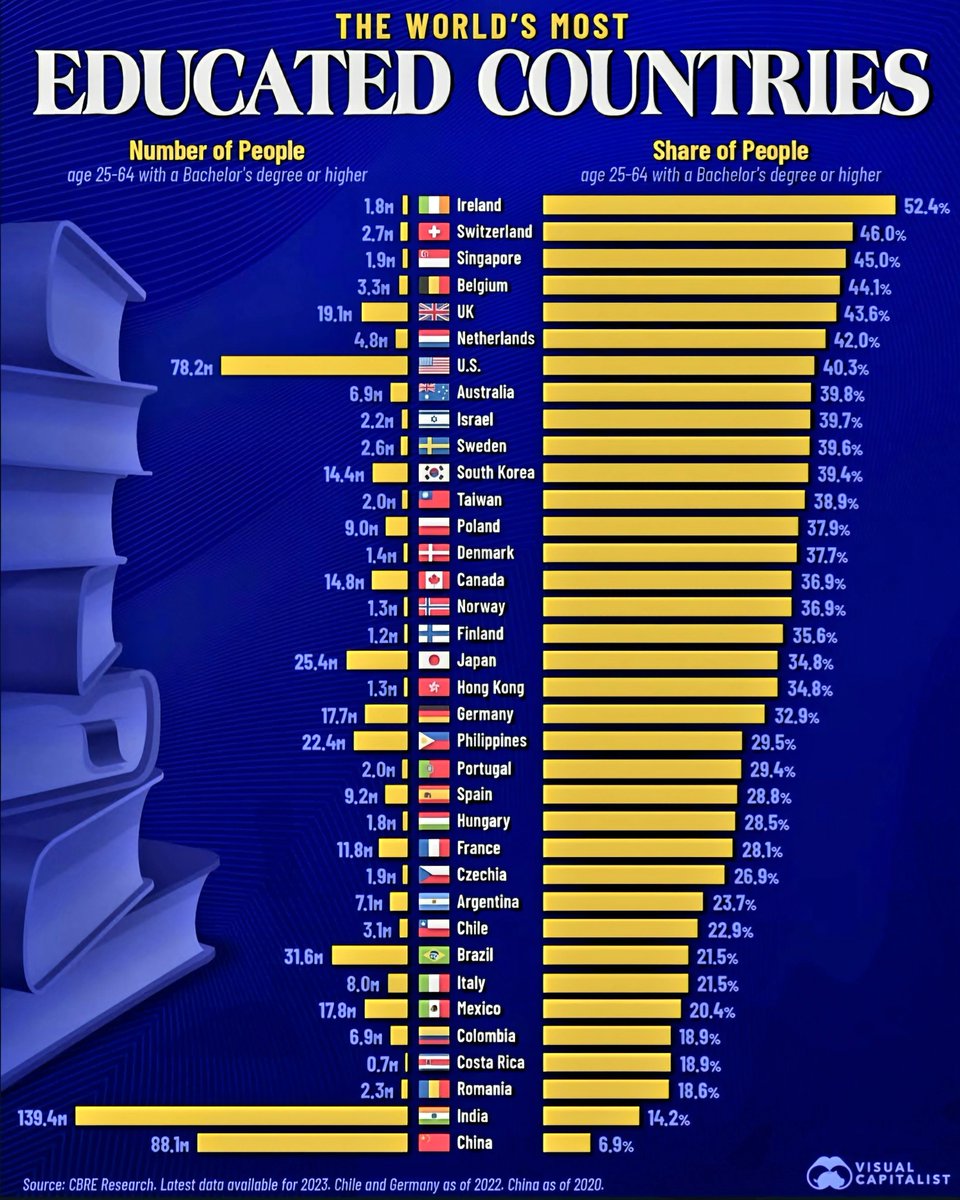
The data compiled emphasizes both the achievements and challenges facing nations worldwide in terms of education. As we move forward, the focus on accessibility and quality in education continues to be paramount for future generations.
 ChatGPT
 Perplexity
 Gemini AI
 Grok AI