Select Language:
Nuclear Arsenal Rankings in 2025: A Global Overview
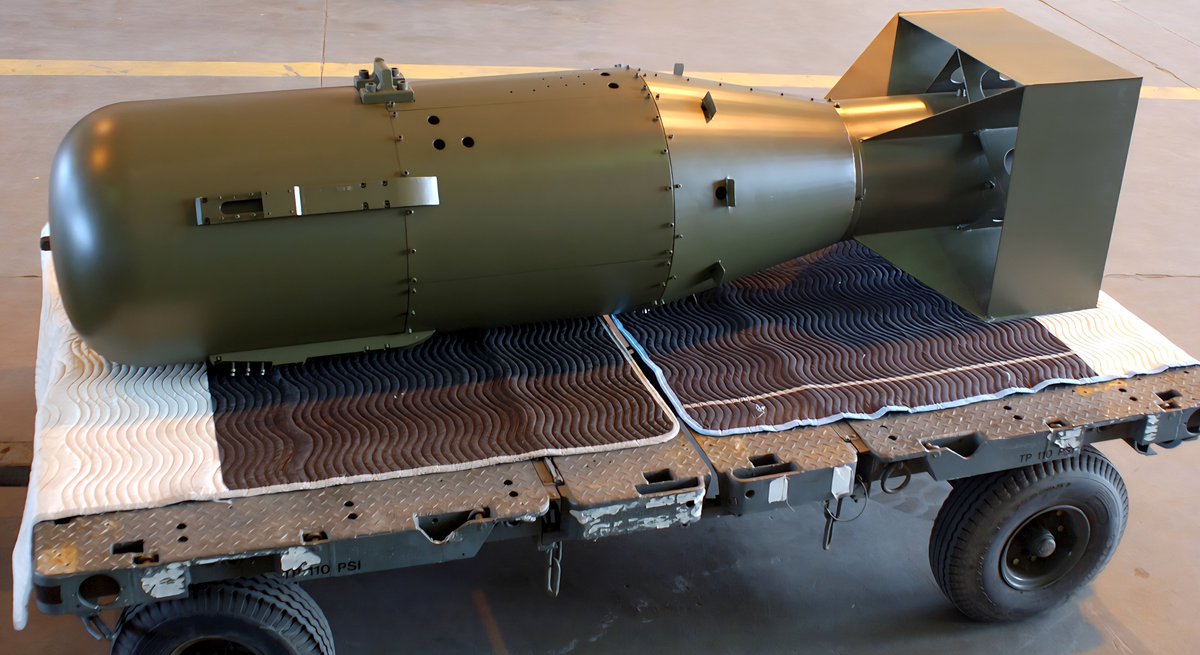
Russia Leads with Over 4,300 Nuclear Warheads
Russia maintains its position as the world’s nuclear superpower, with an estimated 4,309 nuclear warheads. The nation continues to modernize its arsenal, focusing on both strategic and tactical weapons. The increasing sophistication of Russia’s nuclear capabilities raises ongoing concerns over regional security and arms control treaties. Military analysts highlight that Russia’s dominant stockpile underscores its strategic importance on the global stage, balancing against perceived threats from Western nations.
The United States Holds Nearly 3,700 Nuclear Devices
The United States follows, possessing approximately 3,700 nuclear warheads. U.S. military policy emphasizes maintaining a credible deterrent, with significant investments in modernization programs for bombers, submarine-launched ballistic missiles, and land-based ICBMs. While the U.S. continues to engage in arms reduction negotiations, its arsenal remains one of the largest, reflecting its role in global security frameworks. The focus is also on ensuring missile defense systems are capable of intercepting potential nuclear threats.
China’s Growing Arsenal Continues to Expand
China is estimated to have around 600 nuclear warheads, representing a significant increase over previous years. The rapid expansion signifies China’s shift towards a more assertive nuclear policy, aiming to enhance its strategic deterrent. Its development of advanced missile technology and submarine-launched systems suggests a long-term plan to modernize and increase operational capabilities, challenging the traditional nuclear dominance of the US and Russia. Experts warn that this growth could alter global power dynamics, prompting neighboring countries to reassess their security strategies.
France’s Steady Stockpile of 290 Warheads
France maintains approximately 290 nuclear warheads, with a focus on modernization rather than expansion. French nuclear forces are primarily submarine-based, ensuring second-strike capability. The nation continues to emphasize the importance of nuclear deterrence within NATO and maintains the country’s status as a key global nuclear power. France also advocates for arms control measures, supporting international efforts to prevent nuclear proliferation.
The United Kingdom Keeps Its Arsenal at 225
The United Kingdom possesses nearly 225 nuclear warheads, primarily held on submarine-launched ballistic missiles. Its deterrent strategy remains focused on maritime assets, emphasizing stealth and assured second-strike capability. As part of NATO, the UK participates actively in international discussions aimed at controlling nuclear arms and reducing global stockpiles. The UK government emphasizes modernizing its existing systems while maintaining a minimal but effective nuclear deterrent.
India and Pakistan Continue Their Nuclear Rivalry
India’s nuclear arsenal comprises about 180 warheads, reflecting its ongoing efforts to develop strategic and tactical nuclear capabilities amid regional tensions. Pakistan’s stockpile is roughly 170 warheads, emphasizing its posture of deterrence against India. Both nations are modernizing their forces, with Pakistan investing in advanced missile technology and India expanding its delivery systems. The ongoing nuclear competition between these neighboring countries remains a major regional security concern.
Israel’s Estimated 90 Warheads
Israel maintains an estimated 90 nuclear warheads, with the country never officially confirming its arsenal, but widely regarded as possessing nuclear capabilities. Its policy of strategic ambiguity aims to deter regional threats. Israel’s focus is on maintaining a secure second-strike capability through submarine-based systems and land-based missile programs, underscoring its national security priorities amid ongoing Middle Eastern tensions.
North Korea’s Small But Notable Arsenal of 50 Warheads
North Korea’s estimated nuclear stockpile is about 50 warheads. Despite its limited numbers compared to other nuclear states, North Korea continues to advance its missile technology and conduct regular tests. Its goal appears to be developing a credible deterrent against perceived regional threats, especially from South Korea and the United States. Diplomatic efforts to denuclearize North Korea have faced setbacks, with the regime emphasizing its nuclear capabilities as essential to its national security.
Final Takeaway
The global nuclear landscape in 2025 remains complex, with a handful of major powers holding the majority of warheads, while regional players continue to develop and modernize their arsenals. The ongoing modernization efforts, coupled with geopolitical tensions, make nuclear deterrence a central issue for international security. Diplomatic negotiations and arms control treaties will remain critical in shaping the future trajectory of nuclear proliferation and global stability.
 ChatGPT
 Perplexity
 Gemini AI
 Grok AI