Select Language:
Average Age by Countries in 2025
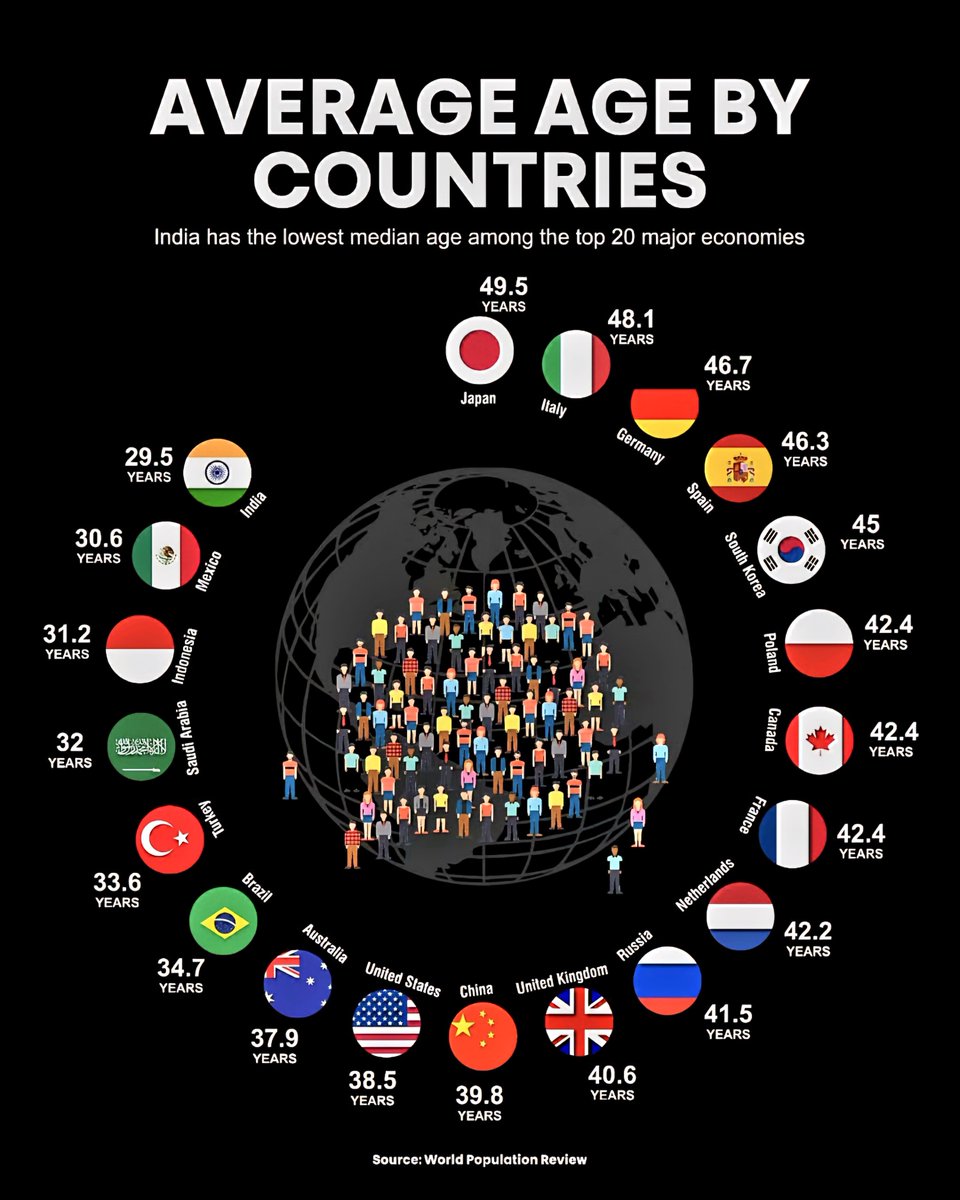
Japan Continues to Lead as the Oldest Country
Japan remains the world’s oldest country in 2025, with an average age nearing 49 years. The nation’s aging population is driven by a combination of low birth rates, high life expectancy, and declining immigration. Japanese society faces mounting challenges in healthcare, social security, and workforce sustainability as the demographic shift continues. Policy makers are increasingly focusing on innovative solutions, such as encouraging increased retirement ages and boosting productivity among older workers, to counteract these demographic trends. The country’s aging population also impacts consumer markets, prompting a surge in senior-friendly services and products. Japan’s example influences other nations grappling with similar aging issues.
Italy’s Population Ages Rapidly, Approaching 47 Years
Italy, traditionally assumed to be one of Europe’s aging nations, registers an average age of nearly 47. The country faces demographic challenges with a shrinking young population and a rising elderly demographic. Italian families are having fewer children, and youth migration to larger cities or abroad further depletes the younger age groups. Healthcare and pension systems are strained by the increasing needs of an aging population, prompting government reforms aimed at encouraging higher birth rates and immigration. As Italy’s demographics shift, economic growth faces headwinds, with consumer spending and labor availability impacted by the aging workforce.
Germany’s Aging Boom Accelerates
Germany’s average age has climbed to approximately 46 years, reflecting the ongoing demographic trend across Western Europe. Factors such as low birth rates and early retirement have contributed to an older population. Germany’s economy faces labor shortages, especially in skilled trades and healthcare sectors, prompting policy shifts to extend working ages and attract immigrant workers. The country is also investing heavily in technological innovation and automation to maintain productivity amidst demographic decline. The aging population impacts healthcare infrastructure and public pension schemes, with reforms aimed at sustainability becoming central in policy debates.
Sweden’s Balanced Demographic Trend
Sweden stands out as an example of a country effectively managing demographic shifts, with an average age around 43 years. The Scandinavian nation benefits from relatively high birth rates and robust immigration policies, which help keep its population aging more gradually. Sweden has prioritized family-friendly policies, including generous parental leave and childcare support, to encourage higher birth rates. Additionally, immigrant integration programs bolster the workforce, helping to sustain economic growth. While Sweden still faces challenges related to aging, its proactive approach provides a model that other countries are beginning to emulate.
United States Experiences Moderate Aging
The United States’ average age has increased to about 39 years, still relatively young compared to many developed nations. The country’s demographic profile is shaped by its diverse immigrant population and higher birth rates. However, the aging of the large baby boomer generation is beginning to influence social systems and healthcare demand. The U.S. government has introduced policies to extend retirement ages and improve healthcare access for seniors. The country’s relatively younger demographic profile offers some buffer against severe workforce shortages, but long-term planning remains critical to adapt to ongoing demographic changes.
South Korea Faces Rapid Aging Challenges
South Korea’s population is aging faster than many other East Asian countries, with the average age rising to approximately 44 years. The country’s low birth rate, coupled with high educational and career-focused lifestyles, has led to fewer young families. This demographic shift threatens South Korea’s economic prospects and strains its healthcare and pension systems. The government has launched initiatives to bolster fertility rates and attract international talent, but successful demographic stabilization remains a complex challenge. South Korea’s experience highlights the urgency of addressing aging in rapidly changing societies.
Brazil’s Youthful Population Still Maintains Lower Average Age
Brazil continues to boast a comparatively young population, with an average age around 32 years in 2025. Despite signs of aging, the country’s large and youthful demographic provides a dynamic labor force and consumer base. However, urbanization and declining fertility rates could alter this trend over the next decade. Brazil’s policymakers focus on education, healthcare, and social programs to sustain economic growth while preparing for eventual demographic shifts. The overall youthful profile offers opportunities, but long-term planning is necessary to address future aging population challenges.
Nigeria’s Growing Population Still Skews Young
Nigeria maintains its status as one of the youngest countries in the world, with an average age of approximately 18 years. Its rapidly growing population presents both economic potential and social challenges. The country’s youthful demographic provides a significant labor force for future economic development, but also demands investments in education, healthcare, and infrastructure. As Nigeria’s population continues to grow, its policymakers aim to balance fostering economic opportunities with managing the social costs of rapid population growth. Nigeria’s demographic trajectory will heavily influence regional stability and development in the coming decades.
Note: Demographic trends are dynamic, influenced by policy changes, healthcare advancements, and socio-economic factors. Monitoring these will be crucial for planners and governments worldwide as they navigate the complexities of aging populations and youthful demographics alike.
 ChatGPT
 Perplexity
 Gemini AI
 Grok AI