Select Language:
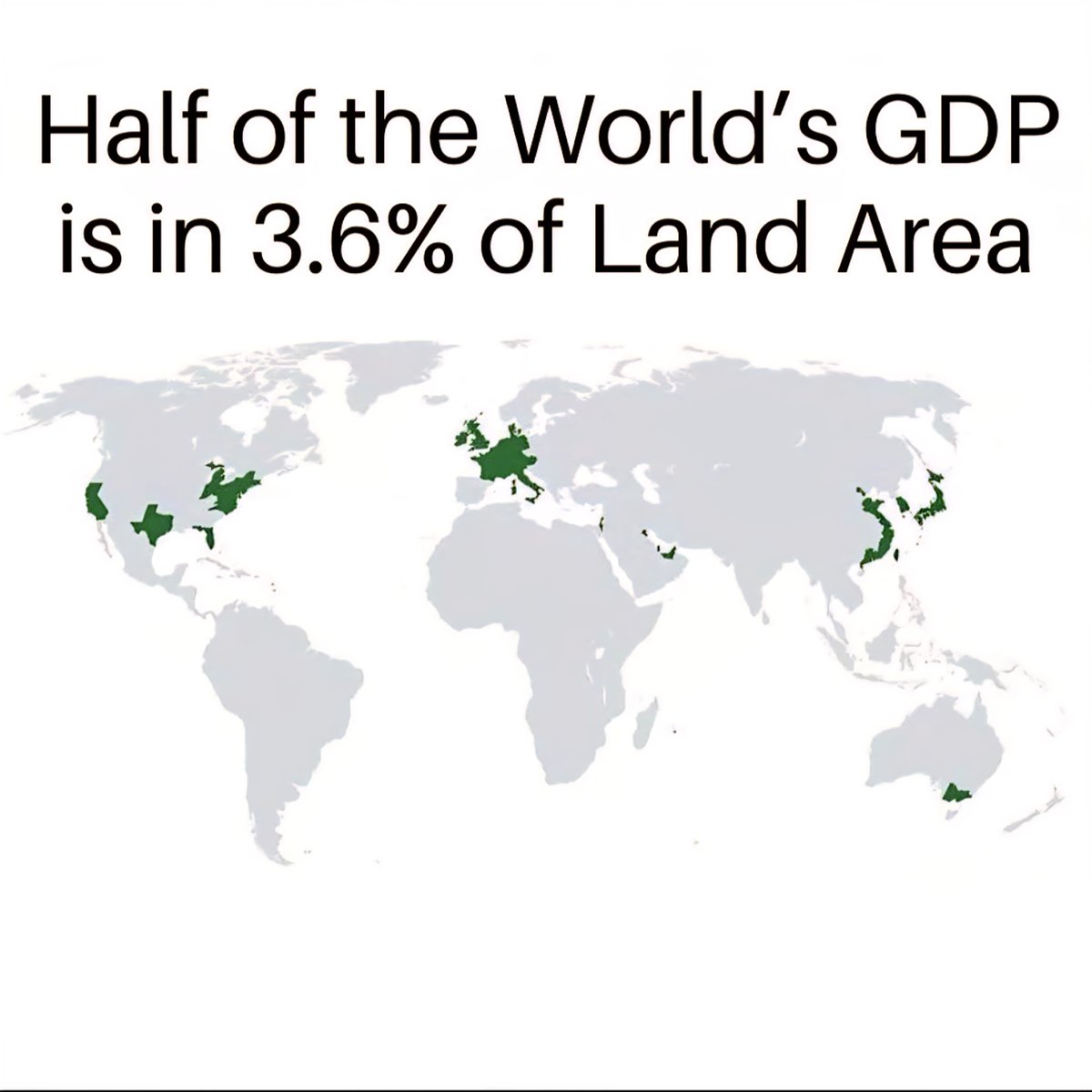
Half of the World’s GDP is Concentrated in Just 3.6% of Land Area
1. The Astonishing Wealth Distribution Across Small Areas
In 2025, economic experts highlight a startling fact: nearly 50% of the world’s Gross Domestic Product (GDP) is generated within a mere 3.6% of the planet’s land area. This striking imbalance underscores how a small fraction of land powers the majority of global economic activity, emphasizing the concentration of wealth and industry in specific urban and regional hubs.
2. Urban Centers Dominate Economic Output
Major metropolitan areas such as New York City, Tokyo, London, and Shanghai dominate the global economy. Collectively, these urban giants host financial districts, corporate headquarters, and technological innovation hubs, which collectively generate half of global GDP. These cities benefit from dense infrastructure, skilled labor pools, and innovation ecosystems that fuel economic productivity.
3. The Role of Special Economic Zones and Financial Districts
Special economic zones (SEZs) and financial districts are critical contributors to this disproportionate economic output. For instance, Manhattan’s Financial District, the City of London, and Tokyo’s Marunouchi district act as the nerve centers for global finance and commerce, contributing billions to the worldwide economic pie every year.
4. Economic Disparities Among Countries
Countries like the United States, China, Japan, and the United Kingdom house much of this concentrated economic activity. The United States alone accounts for approximately 25% of global GDP, most of it emanating from dense urban hubs. These regions benefit from advanced infrastructure, large markets, and capital accessibility, reinforcing global wealth polarization.
5. Impact on Rural and Less Developed Regions
While urban centers contribute the lion’s share of income, rural and less-developed regions make up the remaining 96.4% of land but generate far less of the world’s economic output. This disparity highlights ongoing challenges in equitable development, infrastructure, and investment in non-urban areas, which lag behind their metropolitan counterparts.
6. Environmental and Urban Planning Concerns
The intense economic concentration also raises environmental and sustainability concerns. Overcrowding, pollution, and strain on local resources are common in these bustling economic hubs. Urban planners and policymakers are increasingly debating ways to balance growth with sustainability, aiming to distribute economic opportunities more evenly.
7. The Future of Global Economic Geography
Innovations such as remote work, digital economies, and infrastructural development in emerging markets suggest this land-area concentration might evolve. Still, urban centers will likely retain their economic dominance due to existing infrastructure, global networks, and financial systems. However, efforts to bolster rural economies could gradually shift some of this heavy concentration.
8. The Economic Power of Landmarks and Infrastructure
Iconic landmarks like New York’s Wall Street, London’s Canary Wharf, Tokyo Tower, and Shanghai Tower symbolize the economic corridors that drive global GDP figures. The concentration of transportation hubs, communication networks, and financial institutions in these areas creates a powerful economic magnetism that draws investment and talent globally.
9. Policy Implications and Urban Development Strategies
Governments worldwide are prioritizing smart city initiatives, sustainable urban planning, and infrastructure investment to manage economic concentration’s challenges. Balancing growth while preventing excessive overcrowding and pollution remains a critical policy focus for 2025 and beyond.
10. The Broader Lesson in Global Economic Planning
This extreme concentration of economic activity in tiny land patches underscores the importance of diversifying economic infrastructure worldwide. Strengthening connectivity and incentivizing development in less dense areas could help distribute economic benefits more equitably, ensuring global growth that is both sustainable and inclusive.
As the world continues to evolve, understanding the dynamics of economic concentration offers valuable insights into future growth, environmental sustainability, and social equity. While urban centers will remain vital, the challenge lies in creating a more balanced global economic landscape that benefits everyone.
 ChatGPT
 Perplexity
 Gemini AI
 Grok AI