Select Language:
Countries Spanning Two Continents: A Closer Look
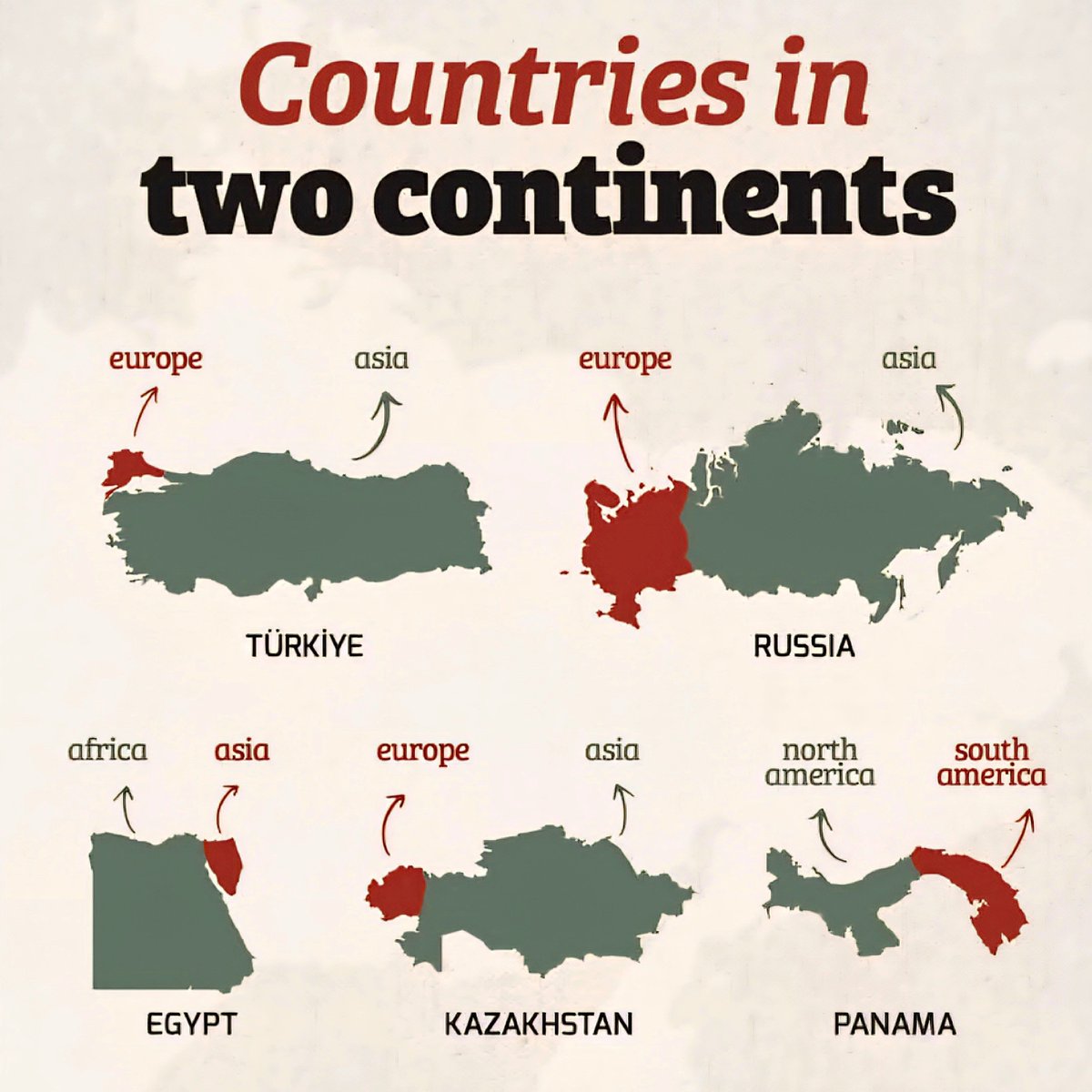
1. Turkey: The Crossroads of Europe and Asia
Turkey is often regarded as the most well-known country situated in both Europe and Asia. The nation’s unique geography spans the Anatolian Peninsula in Asia and a smaller part in southeastern Europe. Istanbul, the country’s largest city, straddles the boundary between the two continents, serving as a vibrant hub of culture, commerce, and history. Historically, Turkey has served as a crossroads for civilizations, blending influences from East and West. The Bosporus Strait is a defining geographical feature that separates Istanbul into two distinct parts, representing the divide between continents. With its diverse landscape and rich history, Turkey continues to be a fascinating example of a country that bridges two worlds.
2. Russia: The Vast Eurasian Landmass
Russia is the largest country on the planet and spans across both Europe and Asia. The Ural Mountains are considered the traditional boundary between the European and Asian parts of Russia, stretching from the Arctic Ocean down south to Kazakhstan. While much of Russia’s landmass lies in Siberia, the country’s cultural, political, and economic centers are predominantly in European Russia, including Moscow and Saint Petersburg. The Eurasian country’s immense size ensures that it embodies a blend of Eastern and Western influences, shaping a complex identity. Russia’s strategic position allows it to connect the continents of Europe and Asia, making it an influential player on both global stages.
3. Kazakhstan: The Central Asian Bridge
Kazakhstan is often recognized as the heart of Eurasia, straddling both Central Asia and Eastern Europe. Its western regions lie closer to Europe, specifically near the Ural River, while its eastern parts extend into the vast expanses of Central Asia. The country’s capital, Nur-Sultan, is situated in the northern part of Kazakhstan, close to the boundary zone, emphasizing the nation’s role as an Asian-European frontier. Rich in natural resources like oil, gas, and minerals, Kazakhstan plays a significant role in regional geopolitics. Its cultural heritage reflects the influence of Turkic peoples as well as Russian history, making it a melting pot of traditions from both continents.
4. Georgia: A Mountainous Gateway
Nestled at the crossroads between Eastern Europe and Western Asia, Georgia exemplifies a small yet geopolitically significant country that bridges two regions. Positioned in the South Caucasus, Georgia’s landscape is characterized by mountains, lush valleys, and strategic passes. Tbilisi, its capital, is a vibrant city reflecting a mix of European and Asian cultural influences. Historically, Georgia has been a vital link along trade routes such as the Silk Road, serving as a bridge between the two continents. Its strategic location continues to shape its political and economic relations with neighboring nations and beyond.
5. Azerbaijan: The Transcaucasian Connector
Bordered by the Caspian Sea and situated in the South Caucasus, Azerbaijan is another transcontinental country connecting Europe and Asia. The country’s territory includes diverse landscapes, from mountains in the north to plains in the south. The capital city, Baku, stands as a modern metropolis with deep historical roots, blending Islamic traditions with Russian influences. Azerbaijan’s important energy resources, along with its position at the crossroads of key trade routes, make it an essential player in regional geopolitics. Its cultural heritage is rich, combining Turkic, Persian, and Russian elements.
6. Egypt: A Transcontinental Nation in Africa and Asia
While traditionally considered part of Africa, Egypt’s Sinai Peninsula extends into Western Asia, making it a transcontinental country. The strategic Suez Canal, located at the meeting point, is a critical maritime route connecting the Mediterranean Sea to the Red Sea. Egypt’s cultural history dates back thousands of years to ancient civilizations, but its modern geopolitical importance is bolstered by its location as a gateway between two continents. The capital, Cairo, remains a hub of history, culture, and economic activity, playing an influential role in both African and Middle Eastern affairs.
Summary
Countries that span two continents offer a fascinating glimpse into the interconnectedness of the world. From Turkey’s historic crossroads to Russia’s vast expanse, each nation embodies a blend of diverse cultures, histories, and geopolitical significance. As global dynamics evolve, these nations continue to serve as vital links, shaping regional and international relations well into 2025 and beyond.
 ChatGPT
 Perplexity
 Gemini AI
 Grok AI