Select Language:
Countries Spanning Two Continents: A Detailed Look at Transcontinental Nations in 2025
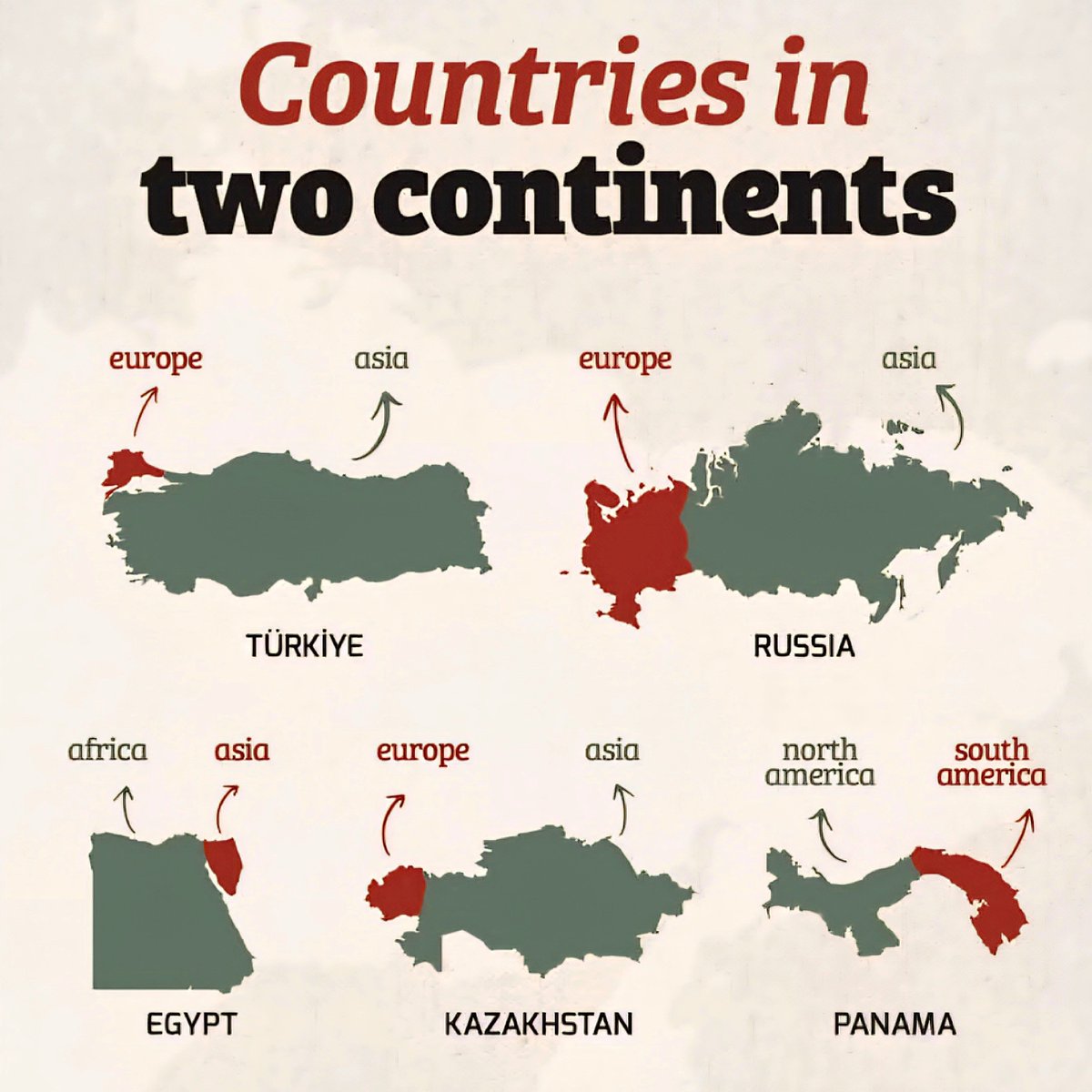
1. Turkey: The Bridge Between Asia and Europe
Turkey remains the most prominent example of a transcontinental country, uniquely positioned with its territory divided between Asia and Europe. The majority of Turkey’s landmass lies in Anatolia, while a smaller portion – the Turkish Thrace region – is situated in southeastern Europe. This geographic position has historically given Turkey strategic importance, serving as a cultural and economic bridge between the two continents.
Istanbul, Turkey’s largest city, straddles the Bosporus Strait, physically connecting the two continents. The city’s role as a cultural melting pot and a hub for international trade underscores Turkey’s dual identity. The country continues to leverage its geographic position to foster diplomatic relations and enhance regional connectivity, especially after its accession discussions with the European Union.
2. Russia: The Eurasian Giant
Russia spans the entirety of Northern Asia and Eastern Europe, making it the largest country in the world with extensive territories across two continents. The European part of Russia encompasses major cities like Moscow and Saint Petersburg, acting as political, economic, and cultural centers. Conversely, the Asian segment—a vast expanse from the Ural Mountains to the Far East—is rich in resources and sparsely populated.
Despite its transcontinental status, Russia navigates complex geopolitical dynamics, balancing its European affiliations and Asian partnerships. Infrastructure projects such as the Trans-Siberian Railway exemplify efforts to strengthen transcontinental connectivity, boosting trade routes between the continents and fostering economic development.
3. Kazakhstan: The Heart of Eurasia
Kazakhstan, the world’s ninth-largest country, straddles the boundary between Europe and Asia. Approximately 60% of its territory is situated in Asia, with the remainder in Europe. The Ural River often marks the dividing line, although the boundary isn’t universally agreed upon. Almaty, the country’s largest city, lies in the southeastern part, while Nur-Sultan (formerly Astana) is located in the northern region.
Kazakhstan’s strategic location enhances its importance in regional connectivity initiatives, especially within the Belt and Road Initiative spearheaded by China. Its diverse culture, blending Turkic and Russian influences, reflects its position at the crossroads of continents.
4. Georgia: A Crossroads for Continents and Cultures
Georgia, located at the crossroads of Eastern Europe and Western Asia, is often categorized as a transcontinental country. While its eastern regions are traditionally considered part of Asia, its western parts are in Europe. The country serves as a key transit point for international trade and energy pipelines connecting Europe and Asia.
Tbilisi, Georgia’s capital, embodies the nation’s cultural diversity and history as a bridge between civilisations. Its strategic location continues to play a vital role in regional geopolitics, especially in energy security and trade relations in the Caucasus.
5. Azerbaijan: Between the Caspian and the Caucasus
Azerbaijan is situated between the Caspian Sea and the Caucasus Mountains, straddling both Europe and Asia. While geographically bordered by the Caspian Sea to the east and the Caucasus to the north, politically and culturally, it aligns more with Western Asia and the Middle East.
The capital, Baku, is a thriving economic hub, especially within the energy sector due to its significant oil and gas reserves. Azerbaijan’s strategic location makes it a key player in regional transit routes, including the North-South and East-West corridors, connecting European markets with Central Asia and the Middle East.
6. Cyprus: An Island in a Regional Crossroads
Although geographically isolated in the Eastern Mediterranean, Cyprus is often included in discussions of transcontinental countries. The island’s political landscape is complex — with Greek Cypriots and Turkish Cypriots sharing governance under a divided government. Generally recognized as a European Union member, Cyprus’s proximity to the Middle East also gives it regional significance.
Its strategic position has historically made it a focal point for regional diplomacy and military interests, especially considering ongoing conflicts and security concerns in nearby Syria and the Middle East.
7. The Geopolitical Significance of Transcontinental Countries in 2025
The countries spanning two continents are more than just geographic curiosities—they are pivotal in shaping regional stability, economic corridors, and diplomatic relations. As global powers seek to extend influence through infrastructure projects, alliances, and trade agreements, these nations often find themselves at the heart of international strategies.
For instance, Turkey’s role in NATO and its bid for European Union membership continue to influence European security dynamics. Similarly, Russia’s control over Eurasian transit routes impacts energy security and trade across continents. Kazakhstan and Azerbaijan’s roles in energy transit routes make them crucial links between resource-rich Central Asia and global markets.
In addition, the geopolitical tensions involving Georgia and Azerbaijan reflect broader regional conflicts and alliances, while Cyprus’s strategic location in the Mediterranean underscores its importance in Mediterranean and Middle Eastern geopolitics.
By understanding the geographic and strategic significance of these nations, policymakers and global investors can better navigate the complex geopolitical landscape of 2025. These countries not only serve as cultural and historical crossroads but also continue to shape the future of international trade, energy security, and regional stability.
(Note: Date references are current as of 2025, reflecting the latest geopolitical developments and infrastructure projects.)
 ChatGPT
 Perplexity
 Gemini AI
 Grok AI