Select Language:
Extreme Poverty Around the World: Which Countries Are Still Struggling?
1. Sub-Saharan Africa Continues to Face Severe Poverty Challenges
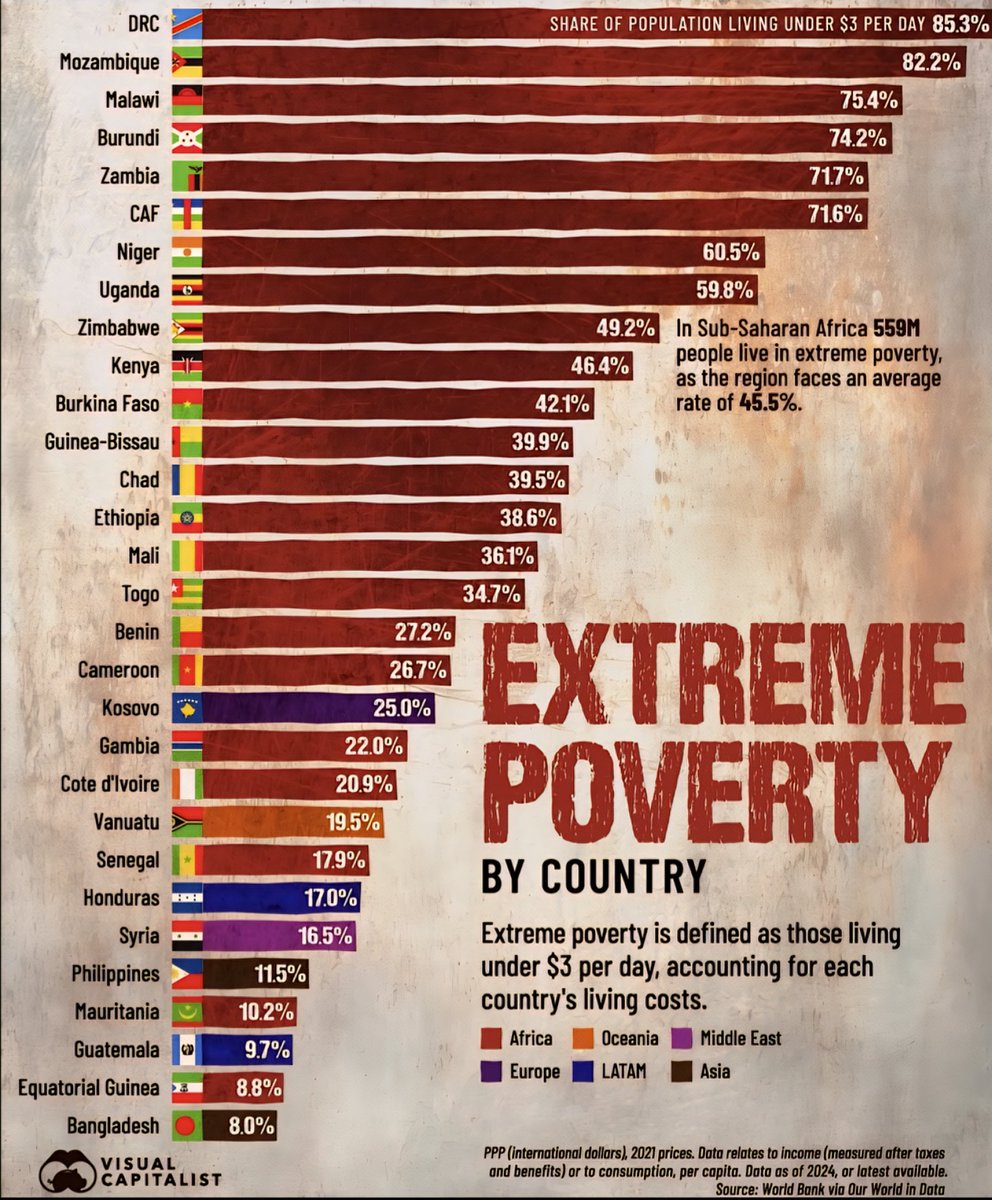
Despite gradual progress in recent years, sub-Saharan Africa remains the region with the highest concentration of countries living under extreme poverty, defined as living on less than $3 per day. Nations like Nigeria, the Democratic Republic of Congo, and Madagascar still grapple with widespread hardship. Economic struggles, political instability, and climate shocks significantly hinder efforts to elevate people out of poverty. Rural communities are especially vulnerable, often lacking access to basic services such as clean water, healthcare, and education.
2. South Asia Still Home to Millions Living on Less Than $3
While nations like India and Bangladesh have achieved significant economic strides, pockets of extreme poverty persist. In India, millions of people living in remote rural areas under the poverty line face multiple hardships, from food insecurity to inadequate healthcare. Bangladesh also faces challenges, especially in its northern regions, where impoverished communities struggle with inaccessible infrastructure and limited employment opportunities. Efforts to improve social safety nets are ongoing but need further expansion to reach the most vulnerable.
3. Latin America’s Hidden Poverty Pockets
Though Latin American countries like Brazil and Haiti have made progress in reducing overall poverty levels, pockets of extreme poverty remain. Haitian communities, in particular, experience severe hardship, often lacking clean water, decent housing, and reliable employment. Similarly, in parts of Brazil’s Amazon region, indigenous populations face economic marginalization and limited access to essential services, perpetuating cycles of poverty.
4. Southeast Asia’s Lingering Economies
Countries such as Myanmar and Cambodia continue to have sizable populations living on less than $3 per day. Political conflicts, economic disparities, and insufficient infrastructure development contribute to ongoing hardship in these regions. Rural farmers and ethnic minorities are disproportionately affected, often living without critical access to healthcare, education, and stable income sources. International aid and development projects are underway, but progress remains uneven.
5. Pacific Island Nations Facing Unique Challenges
Small island nations like Papua New Guinea and the Solomon Islands are also affected by extreme poverty. Geographic isolation, climate change, and limited resources compound difficulties, making it hard for communities to secure basic needs. These nations often depend heavily on agriculture and subsistence fishing, with limited access to global markets, which hampers economic growth and reduces the chances of escaping poverty.
6. The Role of Political Instability and Climate Change
Many countries with high rates of extreme poverty are also battling political unrest and environmental issues. Political instability discourages investment and disrupts development initiatives, prolonging impoverishment. Meanwhile, climate change disproportionately impacts poor communities, especially those reliant on agriculture and natural resources. Floods, droughts, and other climate-related disasters wipe out crops and livelihoods, perpetuating a cycle of poverty.
7. International Efforts to Alleviate Poverty Are Pivotal
Global organizations, governments, and non-profits are intensifying efforts to reduce extreme poverty. Initiatives focus on expanding access to education, healthcare, and sustainable livelihoods. Microfinance programs, infrastructure development, and social safety programs are scaling up in the most affected countries. However, sustained political commitment and increased funding are essential to make significant strides in eradicating extreme poverty worldwide.
As the world advances technologically and economically, understanding where the most vulnerable communities still live is vital. Progress has been made, but millions of people still face the daily reality of living under $3, highlighting the ongoing need for targeted development efforts and international cooperation in 2025.
 ChatGPT
 Perplexity
 Gemini AI
 Grok AI