Select Language:
Major Economic Concentrations in a Tiny Land Area
1. A Small Portion of the Globe Holds Nearly Half of the World’s GDP
It’s astonishing to learn that just 3.6% of the Earth’s land area accounts for nearly 50% of the global gross domestic product (GDP). This tiny fraction of land, mainly concentrated in some of the world’s wealthiest cities and regions, wields enormous economic power and significantly influences global markets. This disparity underscores how economic activity is heavily skewed towards specific urban hubs and regions with advanced infrastructure, technology, and capital.
2. The Powerhouses: Key Regions Driving Global Wealth
Major urban centers such as New York City, Tokyo, London, and parts of China’s coastal provinces are prime examples of this concentrated economic activity. These regions have dense populations, sophisticated financial districts, and innovative industries that bolster their hefty share of the world economy. Despite their small geographical size, these cities serve as international economic hubs, hosting global corporations, stock exchanges, and financial institutions which attract investment from around the world.
3. Why Such Concentration Exists
The core reason behind this stark imbalance lies in the combined effects of urbanization, technological innovation, and infrastructure development. These regions have established themselves as centers of commerce, technology, and finance, which creates a self-perpetuating cycle of wealth accumulation. High population densities foster innovation and productivity, which in turn attract even more investment, talent, and business.
4. Implications for Global Equality and Development
This uneven distribution of economic power has significant implications worldwide. Countries and regions outside these economic centers often struggle with slower growth, higher unemployment, and less access to technological advancements. The concentration of wealth can lead to geopolitical tensions, as less developed regions seek to emulate or challenge the dominance of these economic giants.
5. Environmental and Social Challenges
Focusing such an enormous portion of global wealth into a small land area also comes with environmental and social costs. Urban congestion, pollution, housing affordability issues, and infrastructure strain are common challenges faced by these concentrated regions. Meanwhile, rural and less developed areas are often left behind, exaggerating disparities both within and between countries.
6. The Future: Will the Concentration Persist or Shift?
Experts predict that this pattern of economic concentration may continue or even intensify unless significant policies are adopted to promote balanced growth. The rise of digital economies and remote work could gradually decentralize wealth, enabling less developed areas to participate more fully in global commerce. Governments worldwide are exploring innovative strategies to distribute economic activity more evenly, such as investing in infrastructure and technology in underdeveloped regions.
7. Visualize the Impact
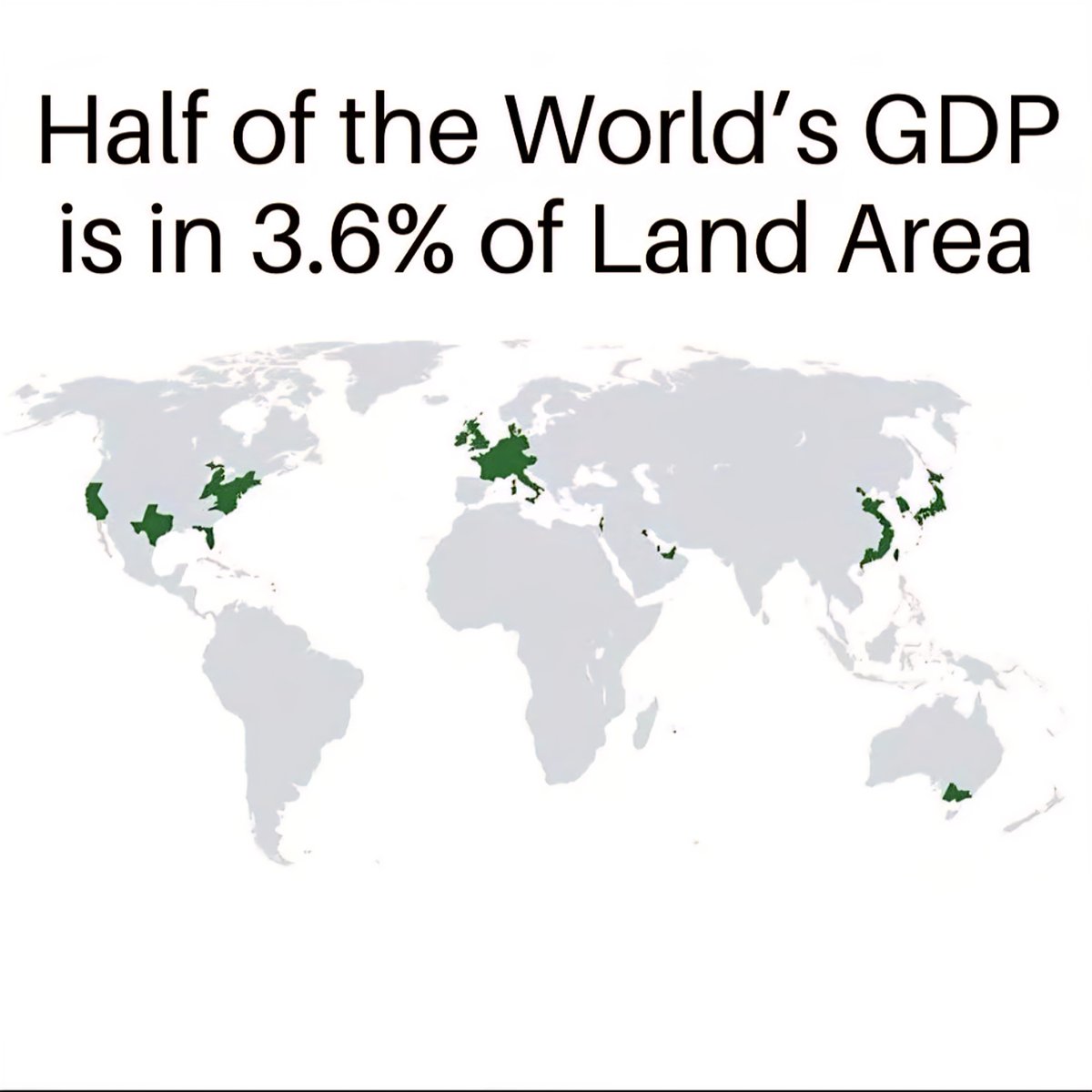
This map visually illustrates the dense pockets of economic activity concentrated in a small fraction of the Earth’s surface. It highlights how these elevated hotspots dominate the global economic landscape, shaping the future of international trade and development.
8. Conclusion: A Call for Global Balance
As the world continues to evolve, the remarkable disparity in economic distribution urges policymakers, business leaders, and communities alike to rethink development priorities. Striving for a more equitable economic system involves not only fostering growth in underdeveloped regions but also leveraging technology to bridge the gap. Achieving balance in economic power centers is essential for ensuring sustainable, inclusive global prosperity in 2025 and beyond.
 ChatGPT
 Perplexity
 Gemini AI
 Grok AI