Select Language:
Top Countries by Population in 2025: A Closer Look
1. India Leads the World with Over 1.46 Billion Residents
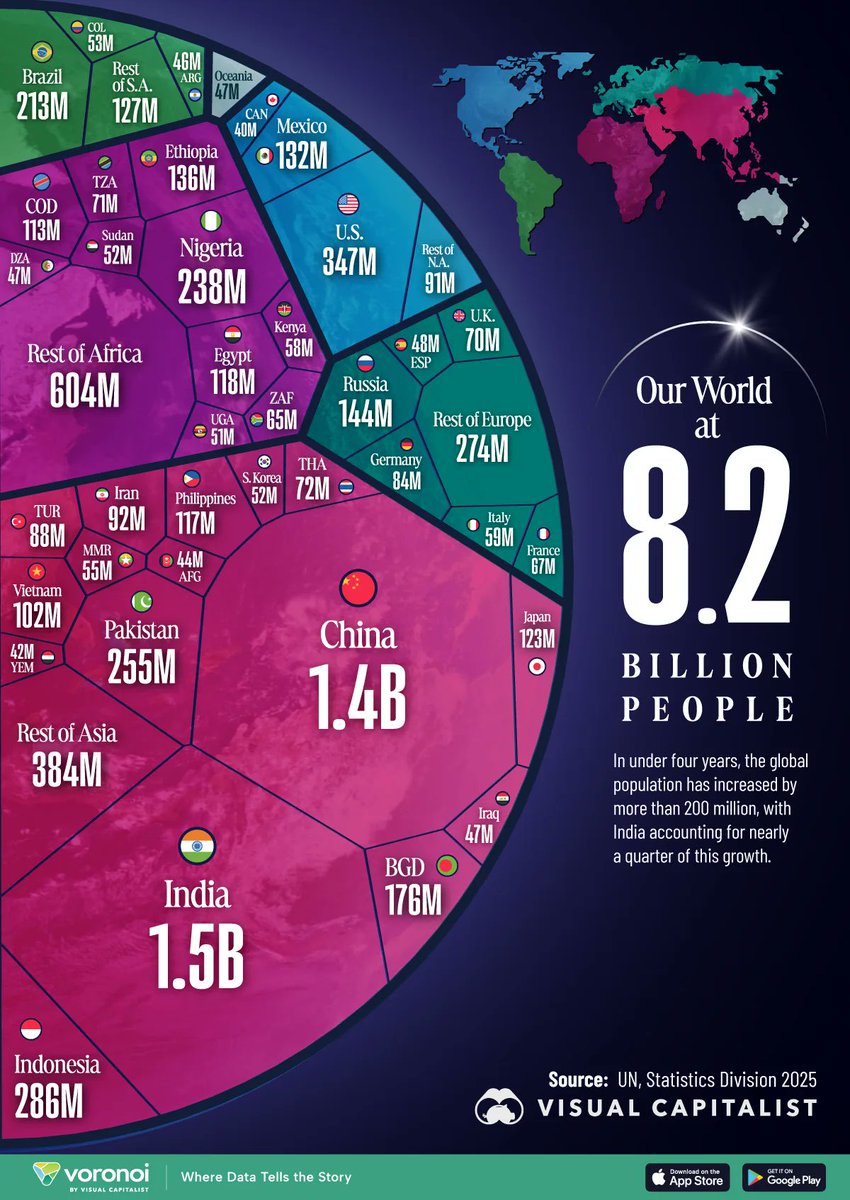
India continues to hold its position as the most populous country globally, with approximately 1.46 billion people. Its staggering population accounts for nearly 18% of the world’s total, emphasizing the nation’s immense influence on global demographics. Rapid urbanization, economic shifts, and health initiatives are shaping the population landscape as India navigates challenges related to resource management and infrastructure growth.
2. China Holds Steady with Over 1.4 Billion People
Despite a declining growth rate, China remains the second most populous country, housing approximately 1.42 billion individuals. After decades of strict population control policies, the country is witnessing demographic shifts, including a gradually aging population and a recent surge in birth rates. These changes are prompting the government to alter policies and focus on sustainable population strategies.
3. The U.S. Experiences Population Growth Near 350 Million
The United States maintains its third-place ranking with an estimated 347 million residents. The nation benefits from diverse immigration patterns and higher birth rates compared to other developed countries. Urban centers like New York, Los Angeles, and Houston continue to expand, fueling economic development and cultural diversity.
4. Indonesia and Pakistan Round Out the Top Five
Indonesia’s population hits approximately 286 million, making it the most populous country in Southeast Asia. Its rapidly growing urban regions like Jakarta face infrastructure pressures, prompting nationwide development initiatives.
Pakistan, with around 255 million residents, is experiencing demographic momentum, which presents both opportunities in a burgeoning youth demographic and challenges related to education, healthcare, and economic stability.
5. Nigeria Sets the Stage as Africa’s Most Populous Nation
Nigeria’s population reaches approximately 238 million, making it the dominant country on the African continent. Its youthful demographics and rapid population growth are expected to propel Nigeria into a significant global position in the coming decades, though governance and sustainability remain key challenges.
6. The Americas and Europe’s Population Trends
Brazil remains South America’s largest country with around 213 million people, experiencing steady growth but facing urban congestion in cities like São Paulo and Rio de Janeiro.
In North America, the U.S. is the primary demographic anchor. Meanwhile, countries like Germany (84 million), South Korea (52 million), and Japan (123 million) are witnessing aging populations, prompting policy reforms to sustain economic vitality.
7. Diverse Demographics in Africa and Asia
Countries such as Ethiopia (136 million), the Philippines (117 million), and Egypt (118 million) are experiencing significant population increases driven by high birth rates and improved healthcare systems.
Conversely, nations like Russia (144 million), Iran (92 million), and Turkey (88 million) reflect varied growth patterns, influenced by urban migration and fertility rates.
8. Population Growth in Middle Eastern and Oceanic Countries
Saudi Arabia has a population of about 35 million, with growth driven by expatriate communities and high birth rates.
Oceania’s Australia maintains 27 million residents, predominantly concentrated along coastal cities, with increasing multicultural influence shaping societal structures.
9. The Impact of Population Dynamics on Global Resources
The expanding populations in countries like India, Nigeria, and Pakistan play a critical role in global resource allocation, environmental sustainability, and geopolitical stability. As these nations grow, international cooperation becomes essential to ensure equitable development and ecological preservation.
Understanding these demographic trends is vital for policymakers, businesses, and communities worldwide. The shifting population landscape directly affects economic growth, labor markets, urban planning, and environmental strategies. As we advance into 2025, the world watches how these numbers shape the future of global society.
 ChatGPT
 Perplexity
 Gemini AI
 Grok AI