Select Language:
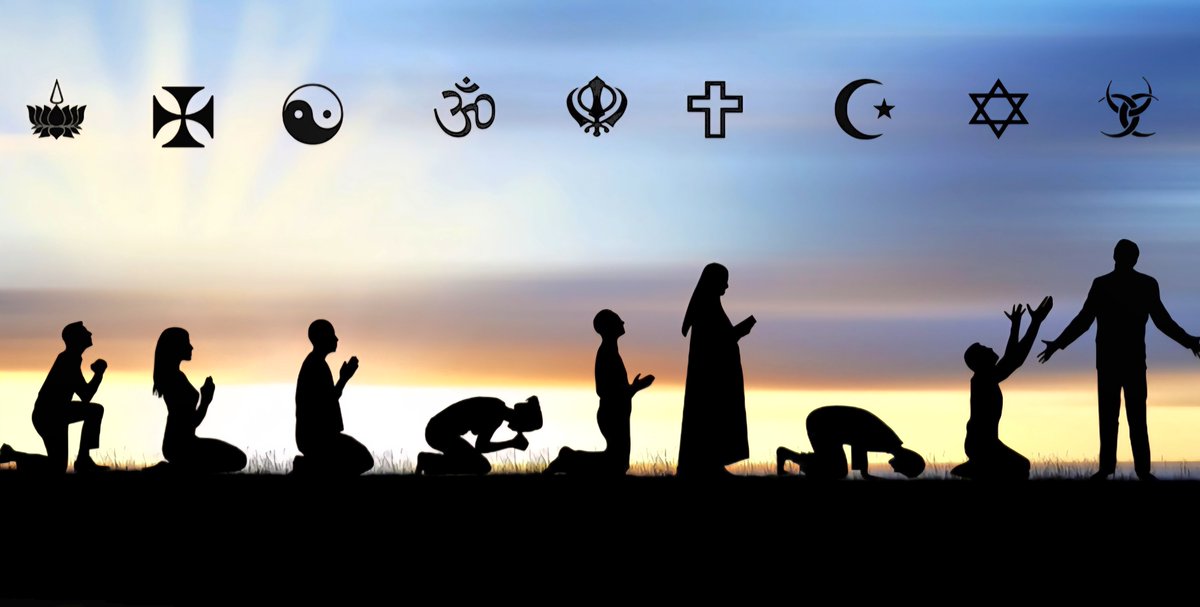
Top Religious Affiliations in 2025: A Global Overview
India’s Predominance of Hinduism
India remains the country with the highest percentage of Hindus, with nearly 80% of the population practicing the religion. Hinduism plays a pivotal role in shaping cultural traditions, festivals, and societal norms across the South Asian nation.
Japan: The Unaffiliated Majority
A striking 60% of Japan’s population identifies as unaffiliated with any religion, reflecting a trend towards secularism and spiritual indifference that has grown over the past decade, marking Japan as a unique case of religious non-attachment in Asia.
The U.S.: Christianity’s Leading Role
Christianity continues to be the dominant faith in the United States, with approximately 63% of Americans identifying as Christians. This includes Protestants, Catholics, and other denominations, underscoring the religion’s deep roots in American history and culture.
Pakistan: An Overwhelming Muslim Majority
With approximately 97% of its population adhering to Islam, Pakistan remains one of the most religiously homogeneous countries, where Islamic practices and traditions significantly influence governance and daily life.
Nigeria’s Religious Landscape
Nigeria presents a diverse religious picture, with Islam practiced by about 50.5% of the population. The country’s religious composition is a mix of Islam, Christianity, and indigenous beliefs, often leading to vibrant cultural interchanges but also tensions.
Bangladesh: A Muslim Nation
Bangladesh is predominantly Muslim, with around 90% of its people adhering to Islam. The religion profoundly influences the country’s legal system, cultural celebrations, and national identity.
South America’s Christian Majority
Brazil leads South America with 88% of its population identifying as Christian, mostly Catholic, making Christianity a central part of Brazilian life, festivals, and community activities.
Russia’s Religious Composition
In Russia, Christianity is the leading faith, with approximately 72% adherence, primarily Russian Orthodoxy, which has historically shaped national identity and cultural heritage.
Mexico: A Holy Land for Christians
With 82% of its population practicing Christianity, Mexico boasts a rich tradition of Catholicism, evident in its vibrant religious festivals and historic churches.
Indonesia’s Large Muslim Population
Indonesia stands out with its Muslim population constituting about 87% of its residents, making it the country with the largest Muslim community globally.
Egypt and Turkey: Muslim Strongholds
Egypt’s Islam adherents comprise roughly 90% of the population. Turkey’s nearly 98% Muslim population reflects its deep Islamic roots, although the country maintains a secular government.
Iran: The Islamic Republic
Iran’s population is about 99% Muslim, primarily Shia, shaping its political system and international relations significantly.
The Philippines: Christian in Asia
Despite being in Asia, the Philippines has a predominantly Christian population, with about 90% identifying as Christians, mainly Catholics, influencing its social and political fabric.
Ethiopia: A Major Christian Nation
Ethiopia’s Christianity percentage is around 60%, with the Ethiopian Orthodox Church being historically significant and central to the nation’s identity.
Vietnam and South Korea: Significant Unaffiliated Populations
Vietnam sees roughly 70% of its population as unaffiliated with any religion, while South Korea reports about 56%, indicative of a broader regional trend.
European Religious Trends
- Germany and France: Christianity remains prominent, with 55% and 47% adherence respectively.
- Italy and Spain: Both countries maintain strong Christian identities, with Italy at 80% and Spain at 70%.
- The UK reports close to 49% of its population as Christian.
- North Korea remains an outlier, with nearly everyone declaring no religious affiliation.
Islamic Nations at the Forefront
Countries like Saudi Arabia (100%), Iran (99%), Afghanistan (99%), and Tunisia (99%) showcase overwhelmingly Muslim populations, often intertwined with national governance and cultural life.
Israel and the Jewish Faith
In Israel, approximately 74% of the population are adherents of Judaism, underscoring its role as the Jewish homeland.
A Mixed Religious Tapestry in Asia and Africa
- South Korea and Vietnam display growing secularism or unaffiliated populations.
- Sub-Saharan Africa remains vibrant with countries like Kenya and Tanzania exhibiting around 85-60% Christian adherence, reflecting the rapid growth of Christianity on the continent.
Religious Diversity in Oceania and the Americas
- Australia and Canada have mixed religious identities, with Christianity being significant but not majority.
- South American countries such as Argentina, Colombia, Venezuela, and Peru mainly practice Christianity, with adherence hovering between 70-90%.
Overall Observations
While some nations have clear religious majorities, others are experiencing a decline in religious affiliation, with increasing secularism and unaffiliated populations reshaping the global religious landscape in 2025. Religious beliefs continue to influence politics, culture, and societal norms, adapting to new generations and shifting societal values.
Sources: Pew Research Center, World Population Review (2025 Estimates)
Note: The figures provided are estimates and subject to change; for the most current data, consult official and updated sources.
 ChatGPT
 Perplexity
 Gemini AI
 Grok AI