Select Language:
BRICS and Beyond: A 2025 Breakdown of Member Economies and Strategic Partners
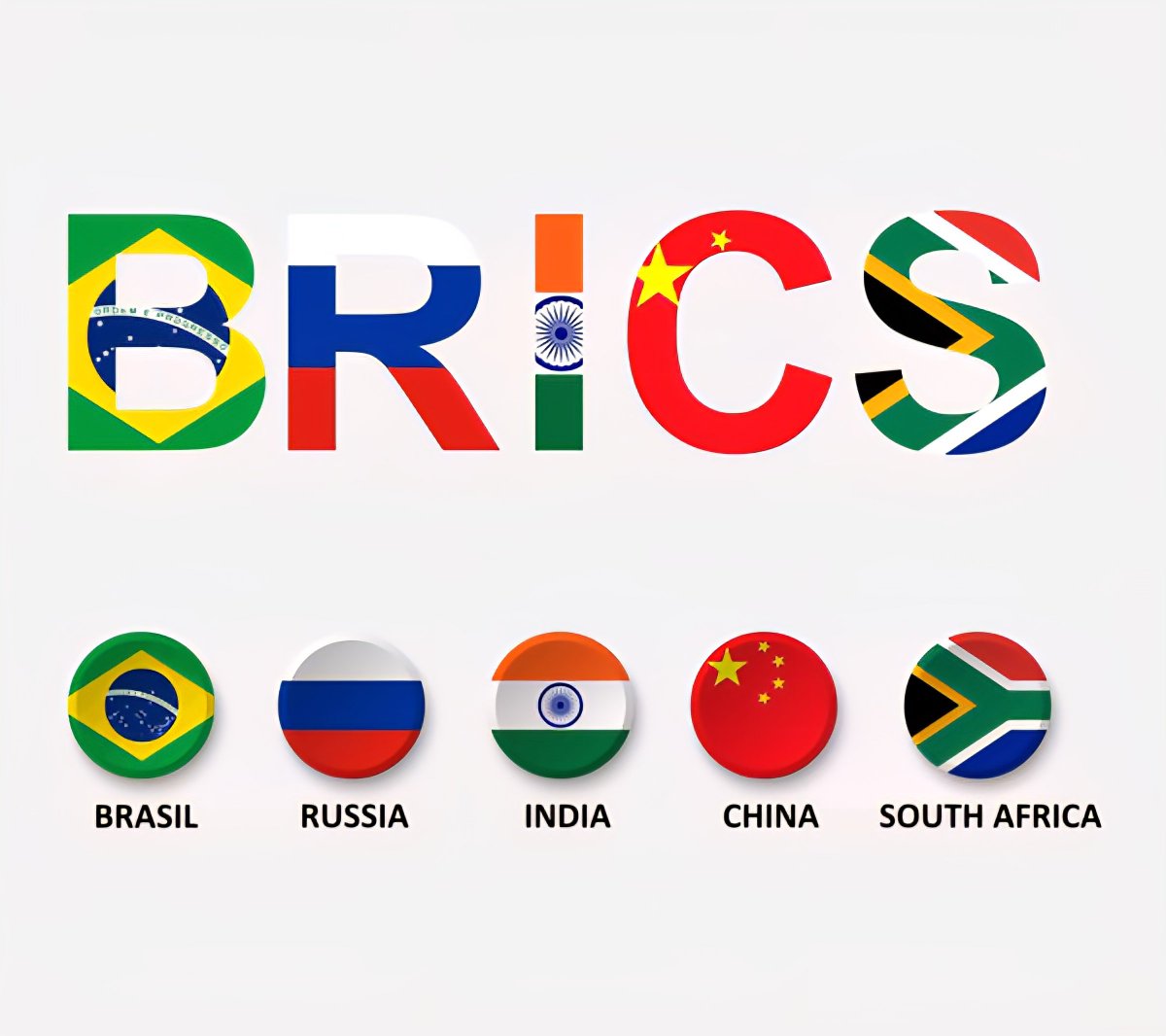
1. Brazil — $2.29 Trillion
Brazil remains a key player within BRICS, wielding an economy valued at $2.29 trillion. Its diverse sectors, from agriculture to manufacturing, continue to bolster its standing on the global stage.
2. Russia — $2.51 Trillion
Russia’s economy, estimated at $2.51 trillion, holds significant influence due to its vast natural resources, particularly energy exports, which shape its economic trajectory and BRICS relations.
3. India — $4.51 Trillion
India is rapidly emerging as a global economic powerhouse, with its GDP reaching $4.51 trillion. The nation’s technology, services, and manufacturing sectors contribute to its expansive growth.
4. China — $20.65 Trillion
Dominating as the largest economy among BRICS members, China’s economy has hit an impressive $20.65 trillion, underscoring its pivotal role in global trade, infrastructure, and innovation.
5. South Africa — $452 Billion
South Africa’s economy, valued at $452 billion, serves as the regional hub for Africa, with key sectors such as mining, finance, and tourism driving its economic activities.
6. Egypt — $402 Billion
Egypt’s economy, at $402 billion, is anchored by sectors like energy, agriculture, and tourism, positioning it as a crucial strategic partner in the Middle East and Africa.
7. Ethiopia — $126 Billion
Ethiopia, with a GDP of $126 billion, continues its rapid economic development, focusing on infrastructure, agriculture, and manufacturing to boost growth.
8. Iran — $358 Billion
Iran’s economy, valued at $358 billion, faces complex geopolitical challenges but remains significant due to its vast natural resources and strategic location.
9. United Arab Emirates — $603 Billion
The UAE’s $603 billion economy benefits from robust finance, trade, and tourism sectors, positioning it as a vital economic hub in the Gulf region.
10. Indonesia — $1.55 Trillion
With a GDP of $1.55 trillion, Indonesia is Southeast Asia’s largest economy, driven by its manufacturing, agriculture, and services sectors.
Officially Invited to Join BRICS but Not Yet Full Members
11. Saudi Arabia — $1.32 Trillion
Saudi Arabia has received a formal invitation to join BRICS, bringing an economy valued at $1.32 trillion, with key industries rooted in oil and energy sectors.
BRICS+ Strategic Partners: Countries with Extensive Economic Ties
12. Nigeria — $296 Billion
Africa’s largest economy, Nigeria, boasts a $296 billion GDP, with oil, agriculture, and telecommunications as its pillars.
13. Bolivia — $57 Billion
Bolivia’s economy, valued at $57 billion, is primarily driven by natural resources, especially minerals and agriculture.
14. Cuba — Data Not Available
Cuba’s economic figures are currently not publicly available, but its strategic position within the Caribbean remains notable.
15. Kazakhstan — $303 Billion
Kazakhstan’s $303 billion economy benefits from energy exports, agriculture, and mining.
16. Malaysia — $472 Billion
Malaysia’s diverse economy, at $472 billion, thrives on electronics, manufacturing, and palm oil exports.
17. Thailand — $559 Billion
Thailand’s $559 billion economy is a regional leader, with strong manufacturing, tourism, and agriculture sectors.
18. Belarus — $74 Billion
Belarus, valued at $74 billion, is a key logistics hub with a focus on manufacturing and agriculture.
19. Uganda — $66 Billion
Uganda’s economy, at $66 billion, is expanding through agriculture, services, and emerging industries.
20. Uzbekistan — $136 Billion
Uzbekistan’s growth, with a GDP of $136 billion, centers around natural resources, agriculture, and textiles.
21. Vietnam — $492 Billion
Vietnam boasts a resilient $492 billion economy, driven by exports in electronics, textiles, and manufacturing.
Countries Seeking Membership in BRICS
22. Azerbaijan — $79 Billion
Azerbaijan’s economy primarily revolves around oil and natural gas, totaling $79 billion.
23. Bahrain — $49 Billion
With a GDP of $49 billion, Bahrain’s economy hinges on finance, tourism, and oil.
24. Bangladesh — $478 Billion
Bangladesh’s textile and manufacturing sectors fuel a burgeoning economy worth $478 billion.
25. Kuwait — $155 Billion
Kuwait’s economy, valued at $155 billion, is dominated by oil production and refining.
26. Pakistan — $413 Billion
Pakistan’s economic potential is reflected in its $413 billion GDP, with agriculture, textiles, and technology sectors.
27. Palestine — Data Not Available
Economic data is limited, but Palestine remains a strategic regional actor.
28. Senegal — $36 Billion
Senegal’s economy is growing, led by agriculture, mining, and tourism.
29. Sri Lanka — $101 Billion
Sri Lanka’s $101 billion economy relies heavily on tourism, tea exports, and textiles.
30. Syria — Data Not Available
Ongoing conflicts have limited access to comprehensive economic data.
31. Zimbabwe — $39 Billion
Zimbabwe’s economy, at $39 billion, centers on agriculture, mining, and manufacturing.
Countries Interested in Joining BRICS
32. Angola — $115 Billion
Angola’s economy of $115 billion benefits from oil, diamonds, and minerals.
33. Cameroon — $58 Billion
Cameroon’s economy, at $58 billion, hinges on agriculture, oil, and services.
34. Central African Republic — $3 Billion
A developing economy focused on natural resources and agriculture.
35. Democratic Republic of the Congo — $82 Billion
Rich in minerals, with an economy valued at $82 billion.
36. Republic of the Congo — $16 Billion
Primarily driven by oil and logging.
37. Ghana — $91 Billion
Ghana’s economy, at $91 billion, benefits from gold, cocoa, and oil exports.
38. South Sudan — $4 Billion
Despite challenges, South Sudan is significant due to oil reserves.
39. Sudan — $33 Billion
Sudan’s economy relies on agriculture and oil production.
40. Tunisia — $57 Billion
Tunisia’s economy is based on manufacturing, agriculture, and tourism.
Countries Considering Expansion:
41. Colombia — $439 Billion
With its diversified economy, Colombia shows interest in joining.
42. El Salvador — $38 Billion
Small but growing economy centered around services and exports.
43. Nicaragua — $22 Billion
Focuses on agriculture and tourism.
44. Peru — $321 Billion
A regional leader in mining, with growth driven by mineral exports.
45. Afghanistan — $19 Billion
Despite instability, Afghanistan maintains an economy valued at $19 billion.
46. Iraq — $267 Billion
Oil-rich Iraq’s economy relies heavily on oil exports.
47. Laos — $17 Billion
A developing nation focused on agriculture and hydroelectric power.
48. Myanmar — $67 Billion
Economy based on agriculture, natural resources, and textiles.
To summarize, the geopolitical landscape of 2025 remains dynamic, with numerous nations vying for increased influence within BRICS and beyond. The evolving economic profiles of these countries highlight a shifting global power balance, emphasizing increased collaboration among emerging markets. As nations continue to formalize memberships and strategic partnerships, global economic structures are expected to adapt accordingly.
Source: IMF Nominal GDP Estimates, 2026
 ChatGPT
 Perplexity
 Gemini AI
 Grok AI