Select Language:
BRICS Countries in 2025: A Deep Dive into Their Economic Powerhouse and Global Ambitions
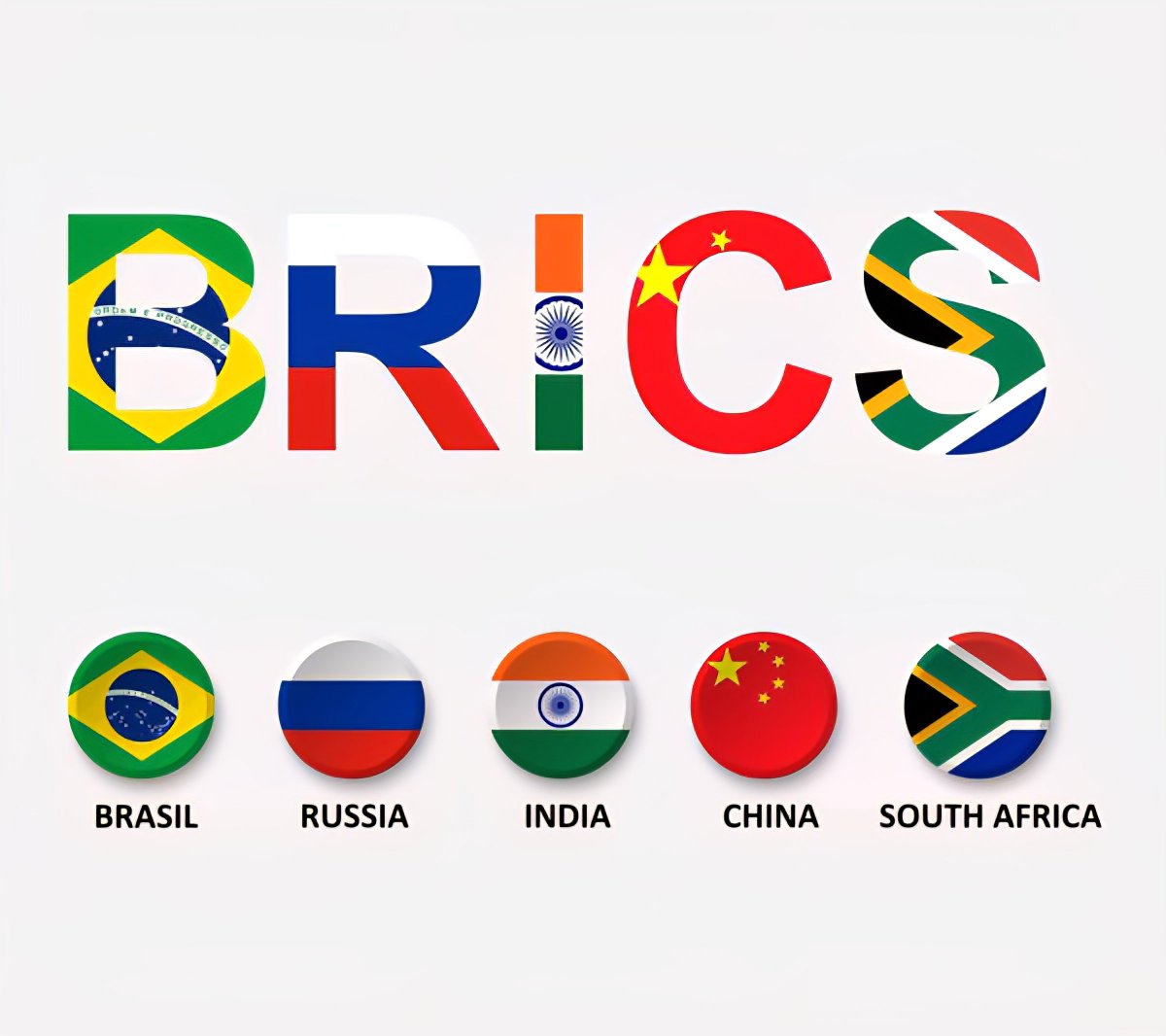
The BRICS alliance continues to be a significant force in shaping the future of global economics. Comprising some of the world’s most influential emerging markets, these nations showcase a dynamic mix of economic strength, strategic ambitions, and regional influence. Here’s a detailed look at the current status of BRICS members, observers, and aspirants as of 2025:
Full BRICS Members and Their Economic Might
-
Brazil
With a GDP of approximately $2.13 trillion, Brazil remains the largest economy in South America, leveraging its vast natural resources and agricultural exports to maintain its regional influence.ADVERTISEMENT -
Russia
Standing at about $2.08 trillion, Russia’s economy benefits from its energy exports, particularly oil and gas. Its strategic location and resource wealth keep it pivotal within BRICS. -
India
Among the giants, India leads with a robust GDP of $4.19 trillion. Its rapidly expanding tech sector and population of over 1.4 billion make it a central figure in global markets. -
China
As the top economy in BRICS and the second-largest globally, China’s GDP hits $19.23 trillion, reaffirming its status as a worldwide manufacturing, innovation, and export hub. -
South Africa
With a GDP of approximately $410 billion, South Africa continues to serve as Africa’s economic hub, rich in minerals and diversified industries. -
Egypt
The Egyptian economy, valued at about $347 billion, highlights North Africa’s economic versatility, driven by tourism, agriculture, and energy. -
Ethiopia
At roughly $117.5 billion, Ethiopia is one of Africa’s fastest-growing economies, underpinned by agriculture, textiles, and manufacturing sectors.ADVERTISEMENT -
Iran
With an economy around $341 billion, Iran’s strategic position and natural resources sustain its regional importance despite international sanctions. -
United Arab Emirates (UAE)
Valued at $548.6 billion, the UAE stands out for its advanced infrastructure, it’s energy sector, and a thriving financial and tourism industry. -
Indonesia
The largest economy in Southeast Asia, Indonesia’s GDP of $1.43 trillion highlights its resilient manufacturing, agriculture, and digital sectors.
Countries Officially Invited to Join BRICS but Not Yet Full Members
- Saudi Arabia
Valued at $1.08 trillion, Saudi Arabia’s inclusion reflects its rising influence through strategic economic diversification plans like Vision 2030.
BRICS+ Strategic Partners and Collaborators
Some countries maintain close partnerships with BRICS or are designated as strategic allies, expanding the group’s global reach:
- Nigeria — $188.3 billion
- Bolivia — $56.3 billion
- Kazakhstan — $300.5 billion
- Malaysia — $445 billion
- Thailand — $546 billion
- Vietnam — $491 billion
Other notable partners include Belarus, Uganda, Uzbekistan, and Vietnam, each recognized for their unique economic contributions and strategic value.
Countries That Have Applied for BRICS Membership
Several nations are actively seeking entry into BRICS, reflecting their aspirations for enhanced economic cooperation:
- Azerbaijan — $78.9 billion
- Bangladesh — $467 billion
- Pakistan — $411 billion
- Colombia — $427.8 billion
- Peru — $303 billion
While some of these countries have not yet shared comprehensive economic data, their political will signals a desire to join an influential bloc.
Countries Expressing Interest in Joining BRICS
An even larger group of nations is showing interest, indicating the group’s expanding appeal:
- Angola — $113.3 billion
- Ghana — $88.3 billion
- Sudan — $31.5 billion
- Tunisia — $56.3 billion
- Afghanistan — approximately $18.4 billion
- Iraq — $258 billion
Their interests are driven by a desire for greater influence, investment opportunities, and regional development partnerships.
Countries Still Waiting in the Wings or with Partial Data
Some nations, including Sri Lanka, Syria, and Laos, either lack comprehensive economic data or have yet to formally approach BRICS for membership. Future memberships depend on geopolitical shifts, economic performance, and regional stability.
The Expanding Horizon of BRICS
BRICS is no longer limited to the initial five member countries. The group’s openness to new members and strategic partners demonstrates its aim to shape a multipolar world order. The bloc continues to be a potent force in global economics and geopolitics, influencing everything from trade policies to regional alliances.
As the world’s economic landscape shifts, the importance of these nations—and their collective power—only grows. The ongoing expansion and the diverse economic profiles make BRICS a group to watch closely in 2025 and beyond.
Note: The economic data derived from the IMF’s 2025 reports, reflecting nominal GDP figures. The group’s evolving membership signals its strategic importance in the global arena.
 ChatGPT
 Perplexity
 Gemini AI
 Grok AI