Select Language:
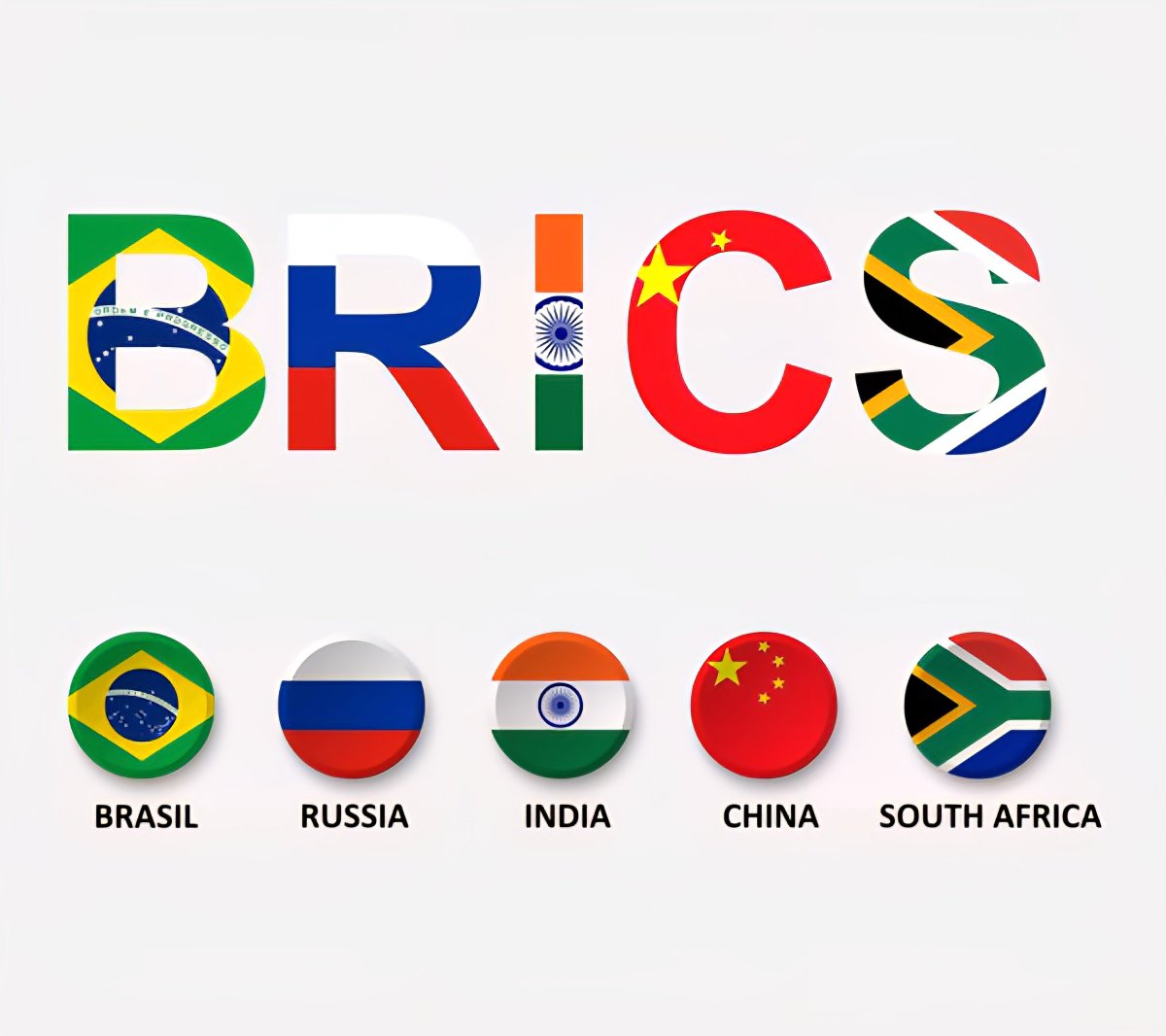
BRICS in 2025: Full Members and Worldwide Aspirations
Brazil – $2.13 Trillion
Brazil remains a noteworthy economic force in the BRICS alliance, contributing approximately $2.13 trillion to the group’s combined GDP. Its diverse economy spans agriculture, mining, manufacturing, and services, positioning it as a significant player in South America and beyond.
Russia – $2.08 Trillion
Russia’s economy, valued at roughly $2.08 trillion, continues to be influential, primarily driven by natural resources such as oil and natural gas. Despite geopolitical challenges, Russia maintains its status as a major BRICS stakeholder.
India – $4.19 Trillion
India’s impressive growth pushes its GDP to an estimated $4.19 trillion. The nation’s fast-paced technological advancements, expansive workforce, and expanding consumer markets bolster its role within BRICS.
China – $19.23 Trillion
Leading the group with a staggering GDP of $19.23 trillion, China remains the world’s second-largest economy. Its manufacturing prowess and global trade influence position it as a pivotal member of BRICS.
South Africa – $410.34 Billion
South Africa’s economy, valued at approximately $410 billion, is a vital conduit for Africa’s economic ambitions. It serves as the continent’s gateway to global markets and remains a key BRICS member.
Egypt – $347.34 Billion
Egypt’s economy, worth about $347 billion, has experienced steady growth. Its strategic location and growing service and manufacturing sectors make it a significant participant.
Ethiopia – $117.46 Billion
Ethiopia continues its rapid economic development, with a GDP nearing $118 billion, driven by agriculture, manufacturing, and infrastructure development.
Iran – $341.01 Billion
Iran, with a GDP estimated at $341 billion, faces international sanctions but remains a key Middle Eastern nation within BRICS, leveraging its strategic position and resource wealth.
United Arab Emirates – $548.60 Billion
The UAE’s diversified economy, valued at approximately $549 billion, is marked by thriving financial services, tourism, and trade sectors.
Indonesia – $1.43 Trillion
Indonesia’s economy, estimated at $1.43 trillion, is Southeast Asia’s largest, with a growing middle class and robust manufacturing and services sectors.
Countries Officially Invited but Not Yet Full Members
Saudi Arabia — With an economy valued at about $1.08 trillion, Saudi Arabia is officially invited to join BRICS, signaling a potential expansion of influence into the Gulf region as it seeks to diversify its economy away from oil dependence.
BRICS+ Strategic Partner Nations
The group’s partners include nations like Nigeria, Bolivia, and Vietnam, with varying economic sizes and strategic importance. For example, Nigeria’s GDP is around $188 billion, and Vietnam’s is nearly $491 billion, reflecting the diverse economic landscapes that BRICS+ aims to embrace.
Nations Applying for Membership
Several economies are actively seeking to join BRICS, such as Bangladesh ($467 billion GDP), Pakistan ($411 billion), and Colombia ($428 billion). Their applications indicate a strategic approach to expanding influence across Asia, Africa, and Latin America.
Countries Showing Interest in Joining
Numerous nations, including Angola, Ghana, and Peru, have expressed interest in becoming BRICS members. For instance, Angola’s GDP stands at approximately $113 billion, highlighting the group’s growing appeal among resource-rich or emerging economies seeking greater global influence.
Noteworthy Data and Trends
The year 2025 marks a significant period for BRICS as it considers expansion and influence beyond its traditional members. Countries like Azerbaijan, with approximately $78.9 billion GDP, and Peru, with over $303 billion, are representing the expanding aspirations of this diverse economic alliance. However, several nations such as Cuba, Sri Lanka, and Syria still lack comprehensive economic data or have not yet expressed concrete plans for membership, reflecting ongoing geopolitical and economic considerations.
This dynamic landscape illustrates how BRICS is evolving from a coalition of emerging economies into a broad-based alliance with strategic ambitions to challenge Western dominance and reshape global economic governance.
Sources: IMF, Nominal GDP 2025 Estimates
Note: All figures are approximate and based on current data as of 2025.
 ChatGPT
 Perplexity
 Gemini AI
 Grok AI