Select Language:
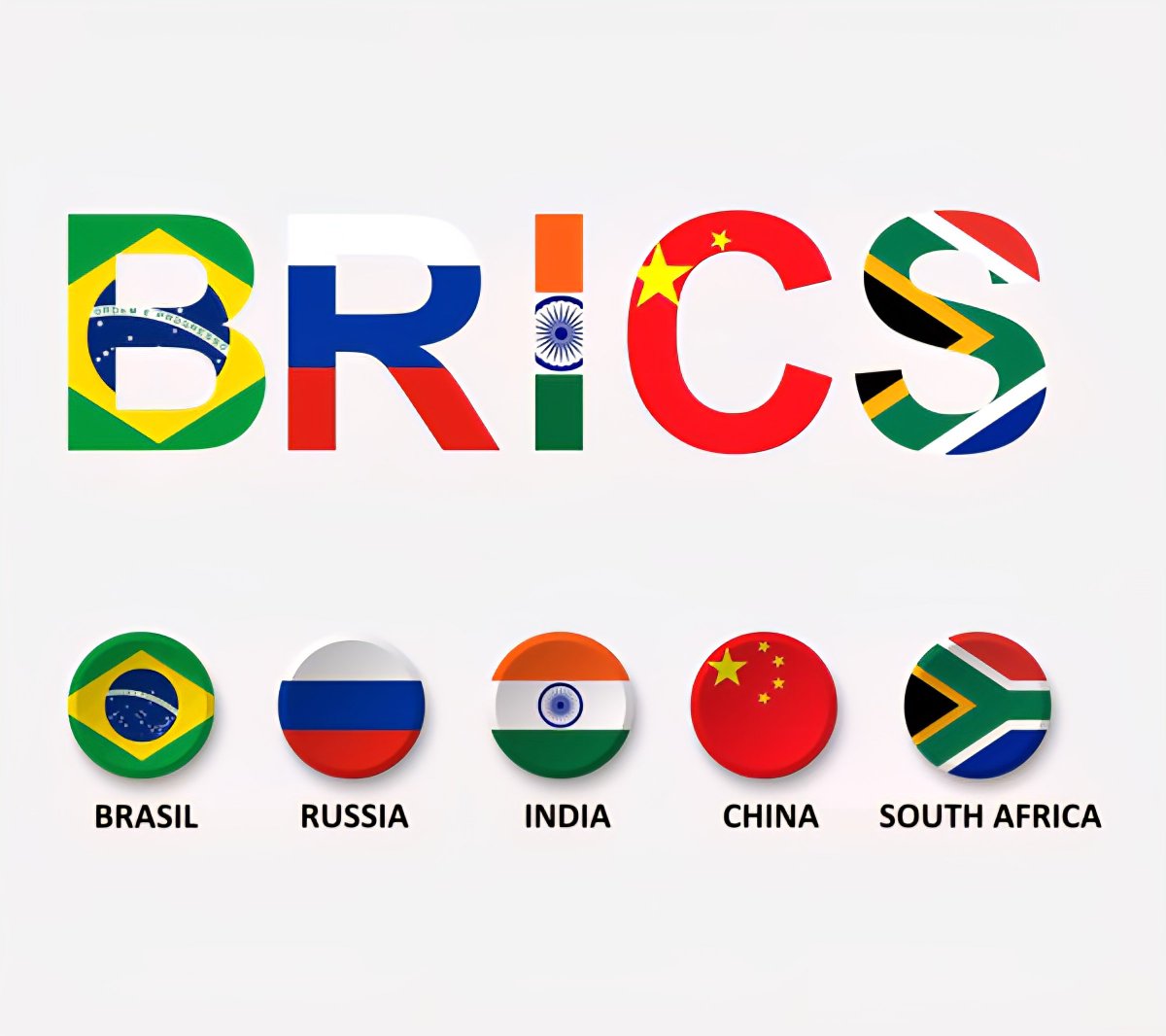
BRICS 2025: A Deep Dive into Member Economies and Global Influence
Brazil: The Largest Latin American Economy
Brazil holds a prominent position within BRICS, boasting a GDP of approximately $2.29 trillion. Its diverse economy spans agriculture, manufacturing, and services, making it an influential player in South America. Despite facing political and economic challenges, Brazil’s strategic natural resources and expanding markets continue to fuel its growth.
Russia: A Key Player with Vast Resources
With a GDP around $2.51 trillion, Russia remains a major force within BRICS. Its economy heavily depends on energy exports, particularly oil and natural gas. The country’s geopolitical strategies and natural resource management significantly impact global markets, positioning Russia as a central figure in the alliance.
India: The Fastest-Growing Major Economy
India’s economy, valued at roughly $4.51 trillion, is one of the fastest-growing globally. Its expanding technological, manufacturing, and service sectors drive its impressive growth trajectory. India’s demographic dividend and youthful population further bolster its future potential as a global economic leader.
China: The Largest Economy in BRICS
Leading the group, China’s nominal GDP exceeds $20.65 trillion. As the world’s manufacturing hub and a major trader, China’s influence permeates every aspect of BRICS initiatives. Its ongoing technological advancements and infrastructure projects keep it at the forefront of global economic affairs.
South Africa: Africa’s Economic Hub
South Africa’s GDP stands at approximately $452 billion. It’s a vital gateway to the African continent with developed mining, finance, and tourism sectors. South Africa’s geopolitical position amplifies its importance within BRICS’s strategic partnership framework.
Egypt: The New Middle Eastern Powerhouse
Egypt, with an economy valued at about $402 billion, is emerging as an influential Middle Eastern economy. Its strategic position, large population, and ongoing infrastructure projects support its role in regional stability and cooperation.
Ethiopia & Iran: Rising Economies
Ethiopia, valued at $126 billion, continues its rapid development driven by agriculture, industry, and services. Iran, with a GDP around $358 billion, leverages its energy sector while navigating complex geopolitical sanctions, making it a pivotal economy within BRICS conversations.
UAE & Indonesia: Key Strategic Partners
The United Arab Emirates, with a GDP of $603 billion, is a financial and trade hub, leveraging its diversified economy. Indonesia, representing $1.55 trillion, is Southeast Asia’s largest economy and a significant contributor to BRICS’s expanding footprint in Asia.
Officially Invited, Not Yet Full Members
Saudi Arabia: The Oil Giant
Saudi Arabia, with an economy around $1.32 trillion, is officially invited to join BRICS but has yet to become a full member. Its strategic oil reserves and regional influence could significantly shift BRICS dynamics once complete accession occurs.
BRICS+ Strategic Partners: Countries with Expanding Influence
Nigeria & Vietnam: Rising African and Asian Influencers
Nigeria, with nearly $296 billion in GDP, is Africa’s largest economy and a crucial partner for natural resources. Vietnam, valued at $492 billion, has become a manufacturing and exports powerhouse in Southeast Asia.
Other Notable Partners
Countries like Malaysia, Thailand, and Belarus are strategically important in their respective regions, offering a mix of natural resources, manufacturing capabilities, and geopolitical influence that bolster BRICS’s global presence.
Candidate Countries: Seeking Membership
Bangladesh & Pakistan: The South Asian Front
Bangladesh, with a GDP around $478 billion, is a rapidly developing manufacturing hub, especially in textiles. Pakistan, valued at ~$413 billion, is an important regional player with a strategic position and expanding economy.
Ghana & Colombia: Western African and Latin American Aspirants
Ghana’s economy (around $91 billion) and Colombia’s ($439 billion) highlight BRICS’s interest in Africa and Latin America, aiming to diversify and strengthen its global alliances.
Interest Continues to Grow
Countries Like Angola, Sri Lanka, and Peru are exploring membership pathways, emphasizing BRICS’s expanding global influence in Africa, Asia, and Latin America.
Conclusion
BRICS continues to evolve as a powerful economic alliance, comprising diverse economies with varying strengths—from resource-rich giants like China and India to emerging markets like Bangladesh and Colombia. As more nations express interest, the group’s influence on global economic governance is expected to grow even stronger in the coming years.
Sources: IMF Nominal GDP Estimates, 2026
 ChatGPT
 Perplexity
 Gemini AI
 Grok AI