Select Language:
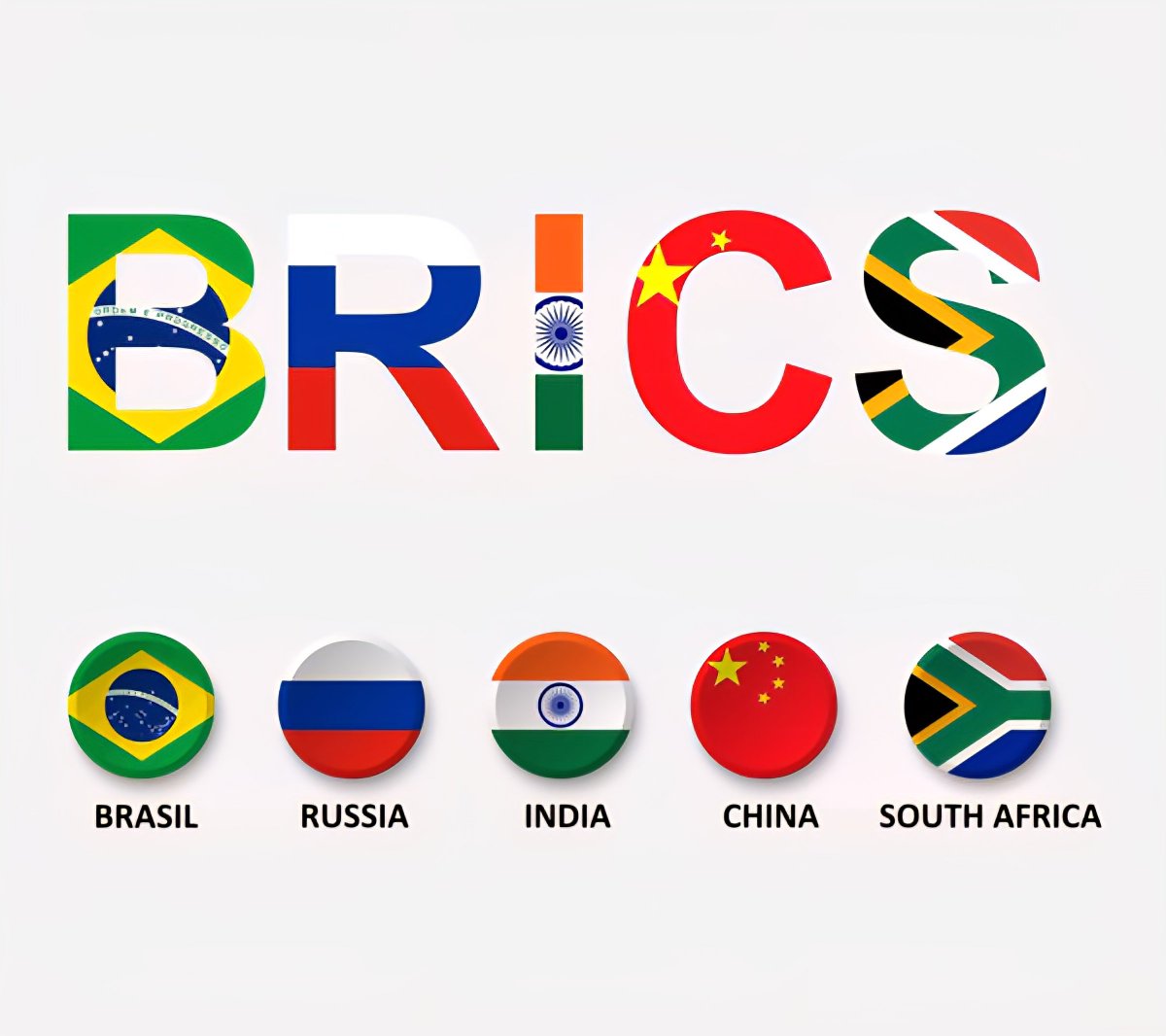
BRICS Nations and Their Economic Power in 2025
Brazil’s Growing Economic Footprint – $2.13 Trillion
Brazil remains one of the leading economies within the BRICS alliance, with a nominal GDP of approximately $2.13 trillion. The nation continues to leverage its vast natural resources and agricultural exports to bolster its economic standing. Despite facing political and economic challenges, Brazil maintains a prominent role in the bloc’s strategic initiatives in Latin America.
Russia’s Steady GDP – $2.08 Trillion
Russia’s economy, valued at around $2.08 trillion, holds a critical position in BRICS, primarily due to its energy exports—especially oil and natural gas. As geopolitical dynamics evolve, Russia is actively seeking to diversify its markets and deepen economic cooperation within the group to offset sanctions and sanctions-related challenges.
India: A Growing Powerhouse – $4.19 Trillion
India’s economy continues its rapid expansion, with a GDP of approximately $4.19 trillion, making it the second-largest economy in BRICS after China. Key sectors such as technology, manufacturing, and services dominate its growth trajectory. India’s strategic role is expanding, with ambitions to become a primary global economic driver by 2030.
China’s Economic Dominance – $19.23 Trillion
China, the largest economy within BRICS, boasts a staggering GDP of over $19.23 trillion. Despite facing economic slowdowns and regulatory challenges, China’s manufacturing, export, and technological sectors remain robust. Its influence on global trade and geopolitics continues to grow as it consolidates its position as an economic superpower.
South Africa: A Vital African Anchor – $410.34 Billion
South Africa’s economy, valued at approximately $410.34 billion, serves as a vital link to Africa within the BRICS framework. It is rich in mineral resources and plays a pivotal role in regional stability and economic development across the continent.
Egypt – An Emerging Market Player – $347.34 Billion
Egypt’s economy has shown resilience, reaching a GDP of roughly $347.34 billion. Its strategic geographic location and diversified economy are positioning it as an influential member, especially as it seeks to attract foreign investment and enhance regional trade.
Ethiopia: Rapid Growth in East Africa – $117.46 Billion
Ethiopia’s economy continues to grow rapidly and now stands at around $117.46 billion. Its focus on infrastructure, agriculture, and manufacturing is fueling economic development and positioning it as an emerging leader within Africa.
Iran’s Strategic Economic Role – $341.01 Billion
Iran’s economy, valued at approximately $341 billion, faces ongoing sanctions but remains influential due to its strategic location and energy resources. Iran seeks to strengthen regional ties and diversify its economy to bypass some restrictions.
United Arab Emirates (UAE) – $548.60 Billion
With a GDP nearing $549 billion, the UAE stands out as a financial hub in the Middle East, leveraging its oil wealth, tourism, and global financial services to expand its economic influence within BRICS and beyond.
Indonesia – A Key Southeast Asian Economy – $1.43 Trillion
Indonesia’s economy, valued at around $1.43 trillion, is among the fastest-growing in Asia. Its dynamic manufacturing, natural resources, and vast domestic market make it an essential player within the group’s strategic plans for regional and global integration.
Countries Officially Invited to Join BRICS (But Not Yet Full Members)
Saudi Arabia – $1.08 Trillion
Saudi Arabia’s invitation signals recognition of its economic significance, primarily through its oil exports and regional influence. Its full membership is anticipated to enhance BRICS’ reach into the Middle East.
Strategic Partners (BRICS+ and Other Collaborations)
- Nigeria, Bolivia, Cuba, Kazakhstan, Malaysia, Thailand, Belarus, Uganda, Uzbekistan, Vietnam* are among the countries recognized as strategic partners, bringing diverse economic strengths and regional influence to the block.
Nations Applying for BRICS Membership
- Countries like Azerbaijan, Bahrain, Bangladesh, Kuwait, Pakistan, and others have formally applied, signaling an interest in deeper integration with the bloc’s economic and geopolitical strategies.
Countries Showing Interest in Joining BRICS
Numerous nations such as Angola, Cameroon, Ghana, and Colombia have expressed their interest, demonstrating BRICS’ growing appeal as an economic partnership and a counterbalance to Western-led geopolitical alliances.
The Future of BRICS in 2025
As of 2025, BRICS continues to evolve, with nations across Africa, Asia, and the Middle East eyeing membership. The bloc’s broad economic diversity—from resource-rich nations to emerging tech hubs—positions it as a formidable global coalition.
While China and India maintain economic dominance, other members like Brazil and South Africa contribute regional influence and stability. Invitation of new members like Saudi Arabia and potential expansion through aspirant countries suggest that BRICS aims to solidify its role as a counterweight to traditional Western economic powerhouses.
This diverse lineup promises an increasingly complicated but potentially impactful future, where geopolitical alliances and economic strategies intertwine to reshape the global power landscape.
Source: IMF, Nominal GDP Data – 2025
 ChatGPT
 Perplexity
 Gemini AI
 Grok AI