Select Language:
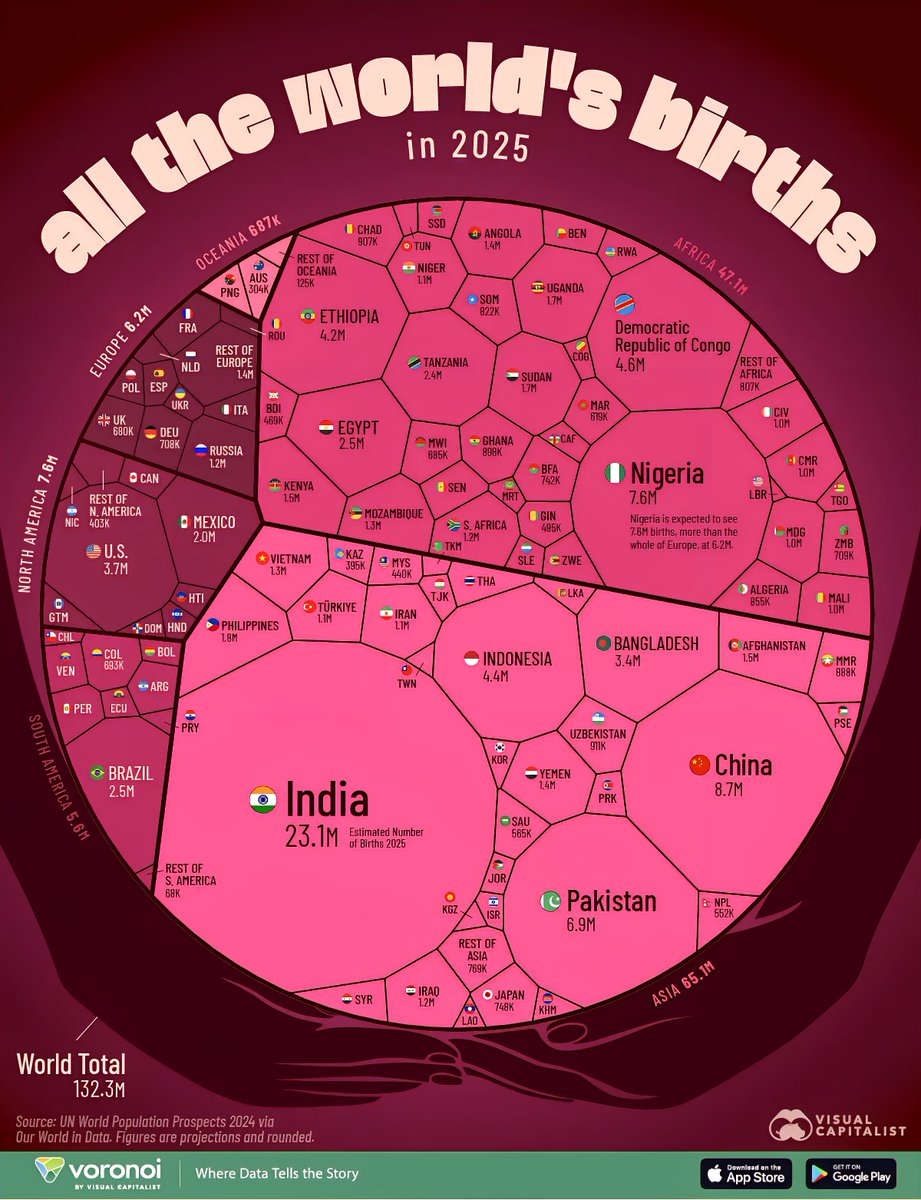
2025 Global Births Breakdown: The Year in Numbers
India Continues Its Population Boom
In 2025, India leads the world with a staggering 23.07 million births. The country’s population growth remains unmatched, accounting for nearly 18% of all global births this year. The nation’s large family sizes and cultural norms continue to drive this high birth rate, shaping India’s demographic landscape well into the future.
China Maintains Its Place in the Top 3
Despite a declining population growth trend, China reports approximately 8.71 million births in 2025. The country’s efforts to balance population growth, including policies encouraging larger families, seem to have stabilized its birth numbers for now.
Africa’s Rapid Population Expansion
Nigeria, Africa’s most populous country, reports 7.64 million births this year, cementing its status as Africa’s demographic powerhouse. Nigeria’s growth is driven by high fertility rates, with many families having multiple children.
Following Nigeria, Pakistan and the Democratic Republic of Congo are notable participants in the continent’s population surge, with 6.91 million and 4.56 million births respectively. These figures highlight Africa’s ongoing contribution to global population expansion.
North America’s Births Stabilize
The United States hits approximately 3.66 million births in 2025, a number that reflects a modest recovery post-pandemic. While still lower than historic highs, this indicates a shift toward steady reproduction rates in North America.
South Asia’s Significant Contributions
Bangladesh, with 3.44 million births, and neighboring countries like Vietnam and Indonesia are also sizable contributors to the global birth count, demonstrating consistent family expansion within this densely populated region.
South America’s Growing Population Trends
Brazil and Argentina continue their demographic growth, with 2.53 million and 508,000 births respectively. South America’s birth rates remain relatively stable, maintaining the region’s demographic significance.
Europe’s Steady but Slowing Growth
Germany, France, and the United Kingdom each report around 700,000 births, indicating a slowdown compared to previous decades. Europe’s aging populations mean that birth rates, while steady, are not high, but they contribute significantly to continent-wide growth.
Asia’s Diverse Birth Patterns
Japan’s birth count reaches about 748,000, reflecting persistent low fertility rates. Conversely, countries like Thailand and South Korea report 572,000 and 246,000 births respectively, highlighting regional variances across Asia.
Emerging Trends and Demographic Shifts
- Youth-Populated Countries: Nations like Nigeria, Pakistan, and the Democratic Republic of Congo continue to have the highest birth tolls, emphasizing their youth-centric populations and potential for economic growth or strain.
- Aging Populations: In contrast, European nations face declining birth rates, fueling concerns over workforce shortages and aging societies.
- Global Contributions: Other countries in Africa and Asia make up the majority of births, with over 27 million combined, underscoring the continued importance of these regions in shaping future population trends.
Global Total Births
This year, approximately 132.31 million babies have been born worldwide, representing a significant aspect of global development and population dynamics. The data emphasizes that despite declining birth rates in certain regions, the world’s population continues its upward trajectory, driven primarily by Africa and Asia.
Summary Table of the Top 10 Birth Countries in 2025
| Country | Estimated Births |
|---|---|
| India | 23.07 million |
| Nigeria | 7.64 million |
| China | 8.71 million |
| Pakistan | 6.91 million |
| Democratic Republic of Congo | 4.56 million |
| Indonesia | 4.44 million |
| Ethiopia | 4.18 million |
| United States | 3.66 million |
| Bangladesh | 3.44 million |
| Brazil | 2.53 million |
These figures underscore the ongoing demographic shifts shaping the 2025 global birth landscape. Population growth in developing nations remains robust, with potential implications spanning economies, urban development, healthcare, and social services worldwide.
Note: All figures are projections based on the UN World Population Prospects 2024 and rounded for clarity.
 ChatGPT
 Perplexity
 Gemini AI
 Grok AI