Select Language:
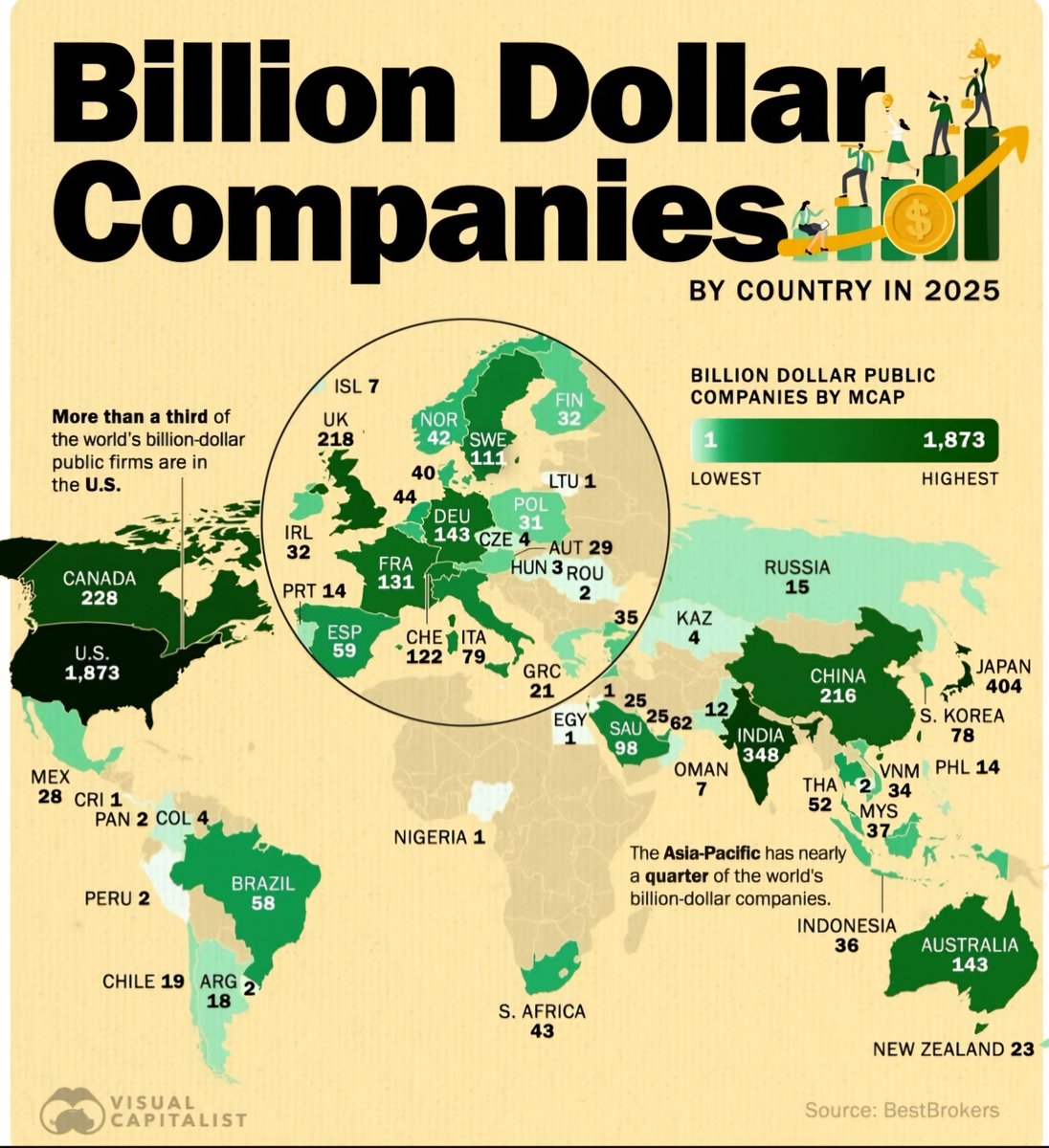
Billion-Dollar Companies by Country in 2025
1. The United States Continues to Lead the Pack
In 2025, the United States remains the powerhouse of the global economy with a staggering number of billion-dollar companies. Silicon Valley’s tech giants continue to dominate, with companies like Apple, Amazon, Microsoft, and Alphabet maintaining their billion-dollar valuations and expanding into new sectors like artificial intelligence and space exploration. The financial services sector is also thriving, with major banks and fintech firms reaching new heights. The U.S.’s entrepreneurial ecosystem fuels innovation, resulting in the addition of new startups crossing the billionaire threshold each year.
2. China’s Rapid Economic Growth and Rising Billionaire Firms
China holds its position as a major economic hub, boasting an impressive roster of billion-dollar companies. The country’s focus on technological advancement and infrastructure development has produced giants like Alibaba, Tencent, and Baidu, who continue to lead in their respective fields. Additionally, China is experiencing a surge in renewable energy firms and electric vehicle manufacturers, further diversifying its billionaire landscape. The government’s strategic investments and policies foster an environment for rapid growth, making China a formidable contender on the global stage.
3. European Countries Carving Out Their Space
Europe’s energy, luxury, and automotive sectors lead the region’s billionaire companies. Germany’s automotive industry, with firms like Volkswagen and BMW, remains robust and innovative. France’s luxury brands—LVMH and Chanel—continue to generate billion-dollar valuations through brand expansion and digital transformation. The UK maintains its financial services prominence, even as post-Brexit adjustments reshape its landscape. Increasing investment in renewable energy and fintech is pushing several European companies into billionaire status, reinforcing Europe’s role as an influential market.
4. India’s Explosive Growth in Tech and Commerce
India’s emergence as an economic heavyweight is reflected in its growing list of billion-dollar companies. E-commerce platforms, digital payment providers, and tech startups are experiencing explosive growth. Companies like Flipkart, Paytm, and newer fintech entrants have achieved billion-dollar valuations, driven by a large, young demographic embracing digital solutions. The government’s focus on digital infrastructure and entrepreneurship supports this upward trajectory, positioning India as a key player in the global billion-dollar company landscape.
5. Other Notable Countries Making a Mark
- Japan: Known for its automotive and electronics companies, Japan continues to see legacy firms like Toyota and Sony attract billion-dollar valuations, alongside innovative startups in robotics and healthcare.
- South Korea: Leading in technology and entertainment, South Korea’s companies like Samsung and entertainment giants are reaching new billionaire thresholds thanks to global consumer demand and innovation.
- Brazil: As Latin America’s largest economy, Brazil’s energy and agriculture sectors produce billion-dollar companies, with increasingly active fintech, tech, and health startups gaining recognition.
- Canada: Strong in natural resources and technology, Canadian companies are expanding globally, with renewable energy and AI firms crossing the billion-dollar mark.
6. The Role of Innovation and Policy in Shaping the Billion-Dollar Landscape
Across all countries, innovation remains the key driver for companies reaching billion-dollar valuations. Governments supporting startups with favorable policies, including tax incentives and investment funds, contribute significantly to this growth. The integration of sustainable practices and digital transformation is critical as companies navigate regulatory environments and consumer demands. As 2025 progresses, the global map of billion-dollar companies continues to evolve, driven by technological breakthroughs and economic policies.
The landscape of billion-dollar companies in 2025 demonstrates a dynamic global economy, with each country leveraging its unique strengths to foster high-value businesses. The competition and collaboration among these nations are set to shape the future of global commerce for decades to come.
 ChatGPT
 Perplexity
 Gemini AI
 Grok AI