Select Language:
The 75 Countries Leading in Average IQ in 2025
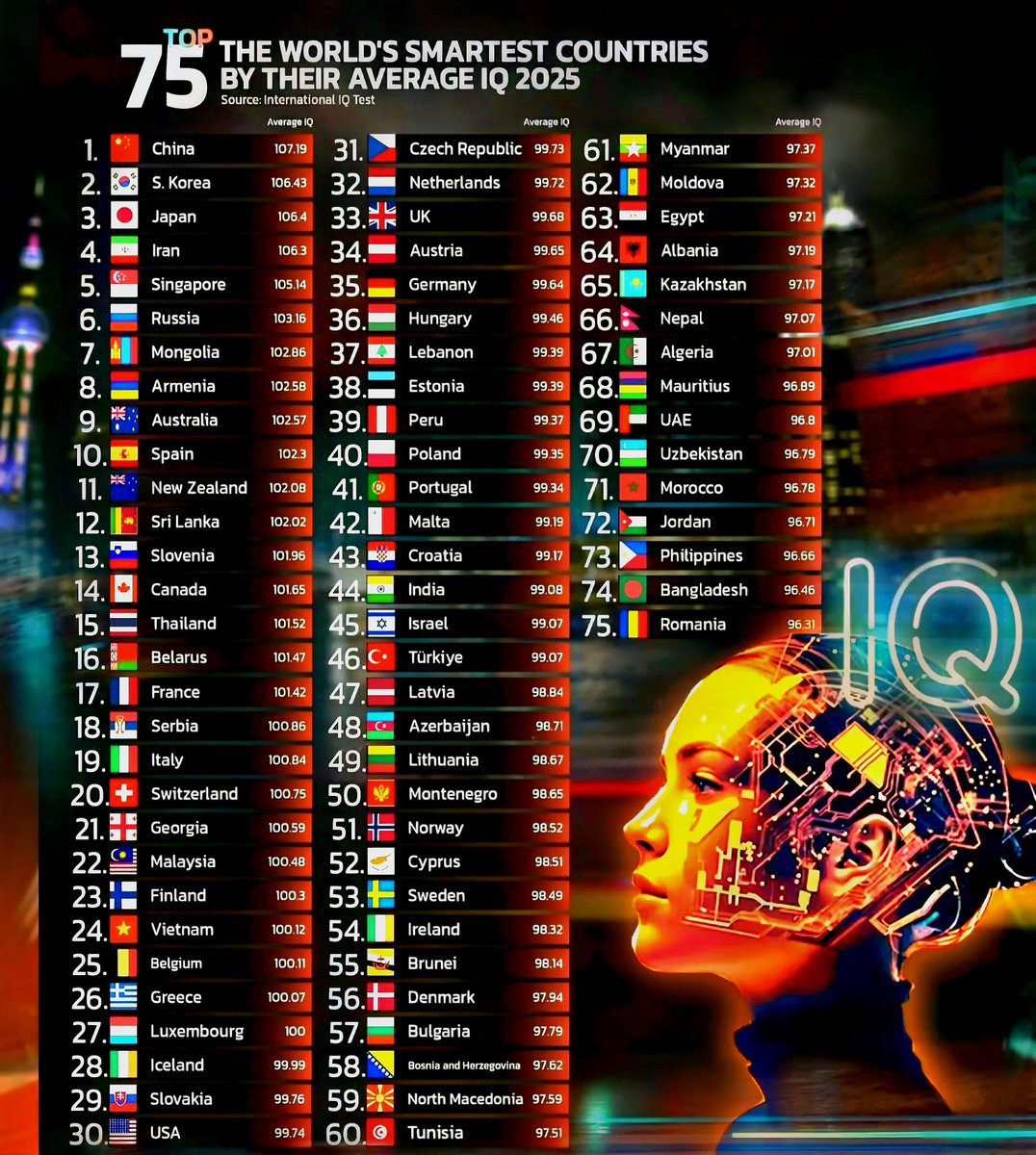
1. Singapore: Consistently at the Top
Singapore continues to hold its position at the top of the list in 2025, boasting an impressive average IQ of 106. The country’s emphasis on quality education, technological innovation, and rigorous academic standards contribute significantly to its high cognitive metric. This small nation-state’s focus on STEM education and research infrastructure is a model for many countries aiming to boost intellectual development.
2. Hong Kong: A Bright Competitor
Hong Kong ranks second with an average IQ of 105. Its strong educational system, bilingual education policies, and vibrant economy foster an environment ripe for intellectual growth. The city’s high standard of living and investment in early childhood development also play vital roles in fostering high cognitive abilities among its population.
3. South Korea: Tech-Savvy and Clever
South Korea maintains its position with an average IQ of 104, thanks largely to a culture that values education and technological advancement. With world-leading technology companies and a rigorous academic environment, South Korea continues to produce highly intelligent citizens prepared to excel in global markets.
4. Japan: Tradition Meets Innovation
Japan’s average IQ remains at 104, reflecting its well-sustained reputation for educational excellence and innovation. The country’s disciplined education system, investment in research, and cultural emphasis on group success contribute to its intelligence ranking.
5. Taiwan: A Rising Star
Taiwan has seen its IQ average rise slightly to 103. Its strong emphasis on education reform, technological research, and innovation has propelled it upward on the list. The country’s growing investments in higher education and science foster an environment where knowledge and intelligence flourish.
6. Switzerland: Leading in European Intelligence
Switzerland holds firm at an average IQ of 102. Its renowned universities, research institutions, and high standard of living support a highly educated and capable population. The country’s multilingual environment and emphasis on critical thinking nurture cognitive development across the board.
7. Netherlands: A Cultural Hub of Knowledge
The Netherlands maintains an average IQ of 102, driven by its renowned educational system, renowned universities, and forward-thinking policies. Its progressive approach to education and research fosters innovation and sharpens analytical skills among its citizens.
8. Germany: Engineering and Science Excellence
Germany ranks eighth with an average IQ of 102. Its strong industrial base, research universities, and focus on technical education cultivate a highly skilled and intelligent workforce. The country’s commitment to R&D keeps it at the forefront of scientific innovation.
9. Australia: Education and Diversity
Australia’s average IQ of 102 reflects its strong higher education institutions, multicultural environment, and focus on research and development. The nation attracts international talent, further elevating its intellectual capital.
10. Canada: Progressive and Knowledge-Driven
Canada maintains an average IQ of 102, emphasizing inclusive education, scientific research, and innovation policies. Its bilingual education system and welcoming stance towards immigrants contribute to a culturally rich and intellectually vibrant society.
Additional Highlights from the Top 75 Countries
Many other nations have made significant strides in cognitive development and educational excellence in 2025. Countries like Estonia, Hong Kong, and Finland have steadily maintained high IQ averages, emphasizing early childhood education, technological innovation, and robust health systems. Conversely, some nations continue to work towards improving their educational infrastructure and economic stability to see improvements in average IQ scores over the coming years.
Global Trends and Future Outlook
Experts predict that countries investing heavily in education, technology, and healthcare will continue to see rises in average IQ scores over the next decade. There is also a growing focus on reducing disparities in educational access, which could lead to more equitable intelligence development worldwide. As nations strengthen their pipelines of skilled and innovative workers, their positions on global IQ rankings are likely to shift, highlighting the importance of continued investment in human capital.
Note: The data reflects the most recent updates for 2025, recognizing that intelligence metrics are influenced by multiple social, economic, and educational factors. These rankings are not definitive measures of a nation’s overall worth but serve as indicators of cognitive development trends.
 ChatGPT
 Perplexity
 Gemini AI
 Grok AI