Select Language:
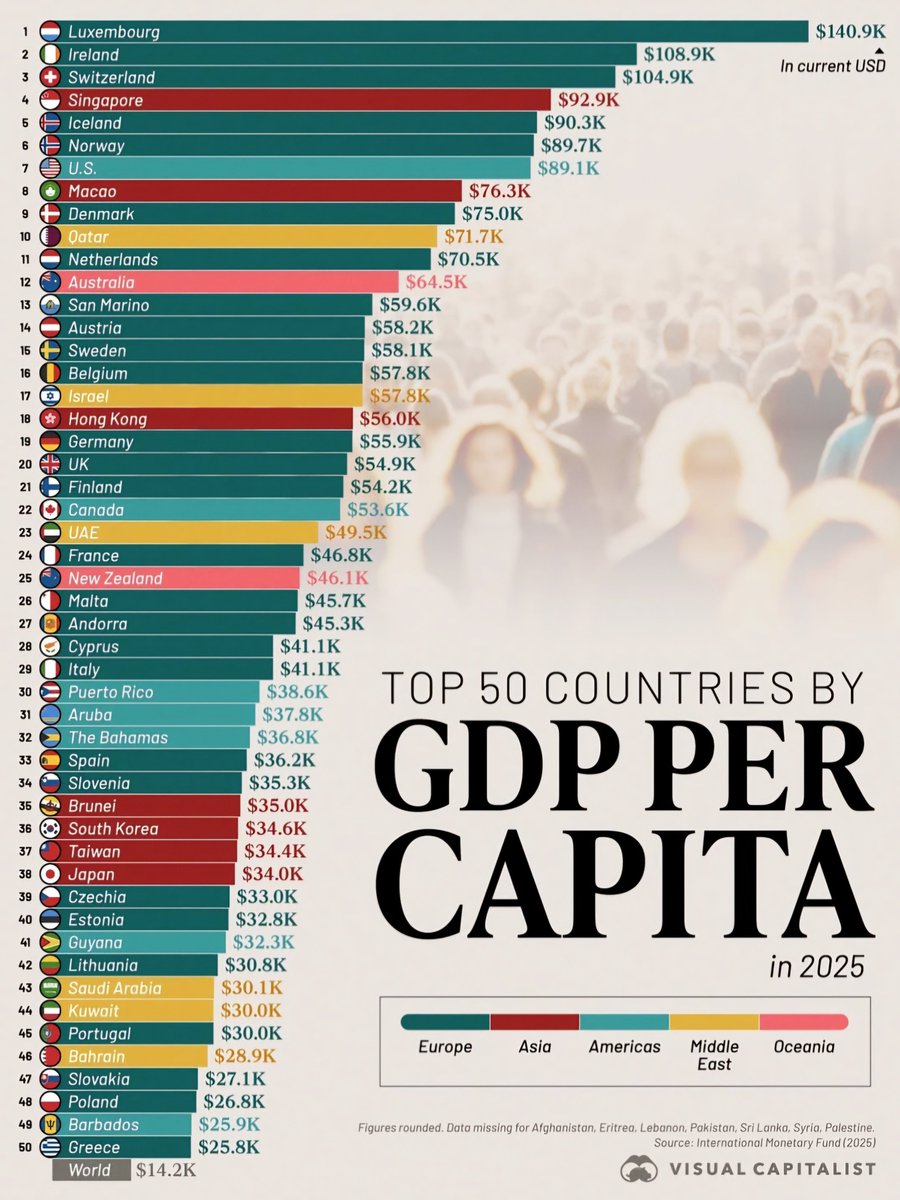
Top 50 Wealthiest Countries by GDP Per Capita in 2025
1. Luxembourg – A Tiny Nation’s Massive Wealth
Topping the list once again, Luxembourg’s impressive GDP per capita of $135,600 reflects its status as a global financial hub. Known for its vibrant banking sector, favorable tax laws, and high standard of living, Luxembourg continues to attract international wealth and investment. The country’s strategic location in Western Europe further solidifies its role as a key economic powerhouse on the continent.
2. Switzerland – A Model of Stability and Prosperity
With a GDP per capita of $128,400, Switzerland remains among the wealthiest nations in the world. Renowned for its banking secrecy, pharmaceutical industry, and luxury watchmaking, Switzerland’s economy is characterized by stability and innovation. The country’s high-quality education system and political stability contribute to its affluent status.
3. Ireland – Leading the EU’s Economic Surge
Ireland’s GDP per capita has surged to $122,700 in 2025. The country’s attractive corporate tax rates continue to draw multinational corporations, particularly in tech and pharmaceuticals. Dublin has emerged as a major European tech hub, fostering a skilled workforce that boosts Ireland’s economic prosperity.
4. Norway – Wealth of Natural Resources
Thanks to its rich reserves of oil and gas, Norway’s GDP per capita now stands at $119,500. The nation’s prudent management of natural resources and its strong welfare system underpin ongoing economic growth. Norway’s focus on renewable energy and sustainable practices also position it as an economic leader in environmental stewardship.
5. Singapore – Asia’s Financial Powerhouse
Singapore’s strategic location and business-friendly environment have helped it maintain a GDP per capita of $115,200. The city-state is a global financial hub, with robust industries in electronics, chemicals, and biomedical sciences. Its excellent infrastructure, low corruption levels, and skilled workforce contribute to its wealth.
6. United States – The Largest Economy Still Among the Top
The USA boasts a GDP per capita of $113,400 in 2025. Its vast natural resources, technological innovation, and diverse economy keep it at the forefront. Silicon Valley continues to drive technological advancements, while entertainment and finance sectors generate substantial wealth for its citizens.
7. Denmark – A Leader in Quality of Life
Denmark’s GDP per capita reached $102,800, reflecting its highly developed economy and social system. The nation’s focus on sustainability, renewable energy, and innovation maintains its high living standards. Denmark’s comprehensive social welfare programs ensure widespread prosperity.
8. Netherlands – A Global Trade and Logistics Hub
With a GDP per capita of $98,600, the Netherlands benefits from its strategic port city of Rotterdam and strong export sector. Innovation in agriculture and a thriving tech scene support sustained economic growth. The Dutch emphasis on sustainable practices enhances its economic resilience.
9. Australia – Rich in Resources and Innovation
Australia’s GDP per capita of $96,400 underscores its abundant natural resources, including minerals and energy. The country’s robust service sector, tourism industry, and focus on education make it a regional economic leader with a high standard of living.
10. Sweden – A Model of Innovation and Welfare
Sweden’s GDP per capita has increased to $94,700. Its innovative tech sector, sustainable energy initiatives, and comprehensive social systems foster a prosperous economy. The country’s emphasis on social equality and environmental responsibility contribute to its wealth.
The list continues, highlighting other nations thriving through various industries, innovative policies, and strategic economic planning. In 2025, these countries exemplify the convergence of natural resources, strategic global positioning, technological innovation, and social policies in achieving remarkable economic prosperity.
Note: Figures are based on the latest economic analyses for 2025 and may vary slightly as new data becomes available.
 ChatGPT
 Perplexity
 Gemini AI
 Grok AI