Select Language:
The Most Influential Countries in 2025: What’s Shaping Global Power
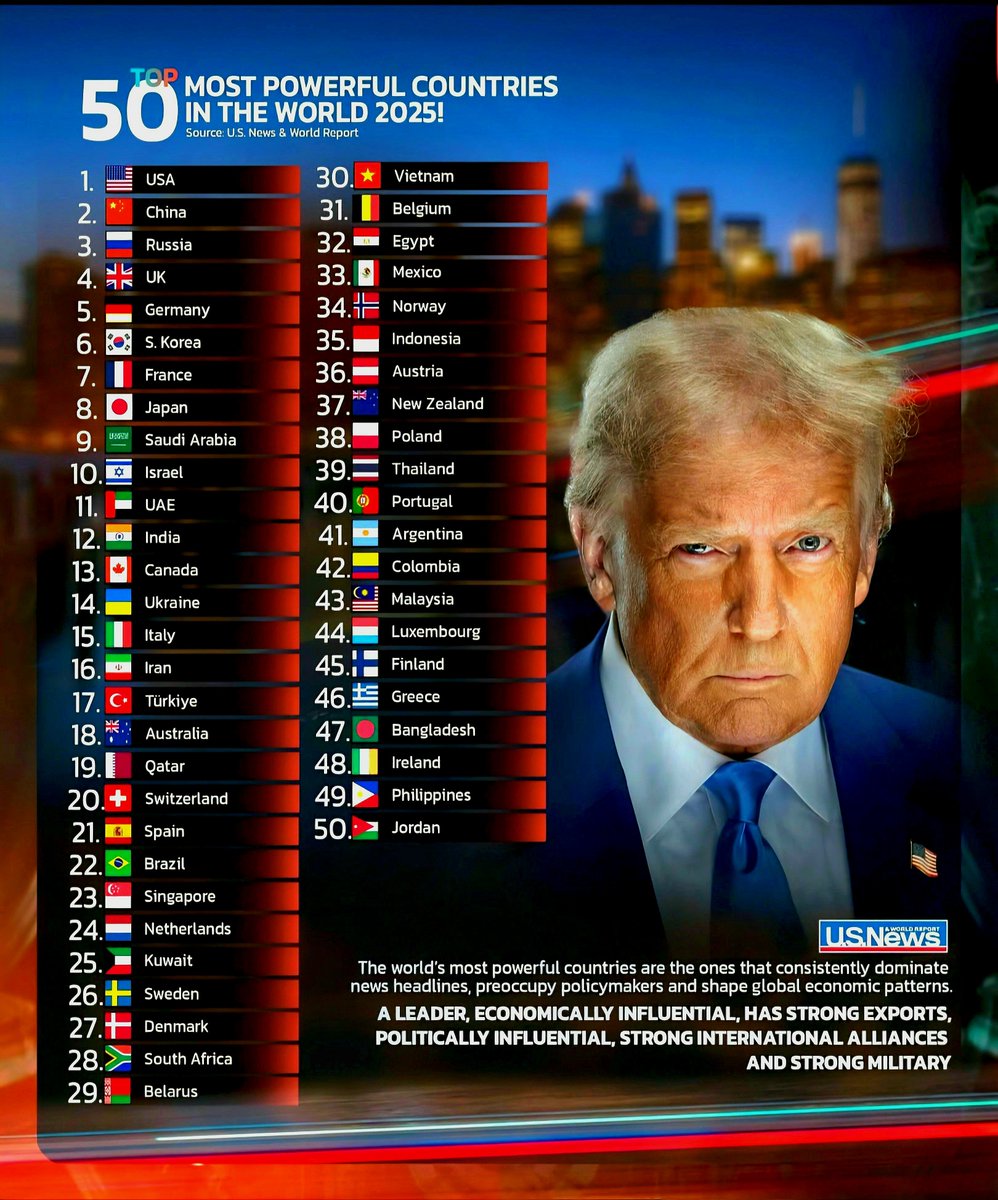
In 2025, the landscape of global influence continues to evolve, with technological advancements, geopolitical shifts, and economic strength playing crucial roles. Here’s a comprehensive look at the countries making the biggest impact this year.
1. The United States: Still the Undisputed Leader
Despite increasing competition, the United States maintains its position at the top of the world’s most powerful countries. Its military prowess, innovation capacity, and significant economic influence dominate the global stage. The US continues to lead in technological innovation, military strength, and cultural influence, reaffirming its leadership role worldwide.
2. China: The Rising Superpower
China has solidified its position as a formidable global power, thanks to rapid economic growth, technological advancements, and expanding military capabilities. Its Belt and Road Initiative continues to extend its influence across Asia, Africa, and Europe. China’s increasing dominance in artificial intelligence, renewable energy, and 5G technology demonstrates its strategic push for global leadership.
3. Russia: Maintaining Strategic Power
Russia remains a key player in global geopolitics, especially with its strategic military presence and energy resources. Despite economic challenges, its influence in Eastern Europe, the Middle East, and Central Asia persists. Russia’s focus on cyber capabilities and military modernization keeps it a pivotal power within the international arena.
4. Germany: Europe’s Economic Powerhouse
Germany continues to lead in Europe, bolstered by its robust economy, technological innovation, and balanced foreign policy. As the continent’s primary economic driver, Germany plays a vital role in regional stability and influences EU policies significantly. Its focus on renewable energy and industry 4.0 initiatives sets the tone for innovation.
5. India: The Emerging Giant
India’s rapid economic growth and expanding technological sector position it as a rising global power. Its strategic partnerships, large military, and significant population give it a substantial voice in international affairs. India is increasingly involved in climate change initiatives and global security dialogues.
6. Japan: The Technological Innovator
Japan remains a leader in robotics, technology, and manufacturing sectors. Its stable economy, innovative corporate sector, and strategic alliances position it as a vital player in the Indo-Pacific region. Japan’s focus on sustainable energy aligns with its commitment to combating climate change.
7. France: The Diplomatic Powerhouse
France holds considerable influence through its diplomatic reach, military capabilities, and status within the European Union. It is actively involved in global peacekeeping efforts and climate change negotiations. Its diversity in cultural and economic spheres enhances its global standing.
8. United Kingdom: Post-Brexit Resilience
Despite Brexit, the UK remains a significant global force, especially in finance, technology, and diplomacy. Its strategic alliances, especially with the US, and its influence in international organizations keep it relevant on the world stage.
9. South Korea: Innovation Powerhouse
South Korea has cemented its place as a leader in technology, entertainment, and innovation. The country’s advancements in semiconductors, mobile technology, and pop culture contribute to its growing global influence.
10. Canada: Stable and Influential
Canada continues to wield influence through its strong economy, commitment to environmental sustainability, and active participation in global peacekeeping. Its diplomatic approach and multicultural society bolster its soft power on the international stage.
Other notable countries include Australia, Brazil, Italy, Israel, Saudi Arabia, and the United Arab Emirates, each contributing uniquely to the global influence landscape.
As 2025 unfolds, these nations demonstrate the shifting dynamics of power, emphasizing a more multipolar world where economic strength, technological innovation, and strategic diplomacy shape international relations. The balance of influence is becoming more diverse, reflecting both traditional superpowers and emerging contenders working to carve their roles in the new global order.
 ChatGPT
 Perplexity
 Gemini AI
 Grok AI