Select Language:
Dominating Economies and Global Powerhouses of 2025
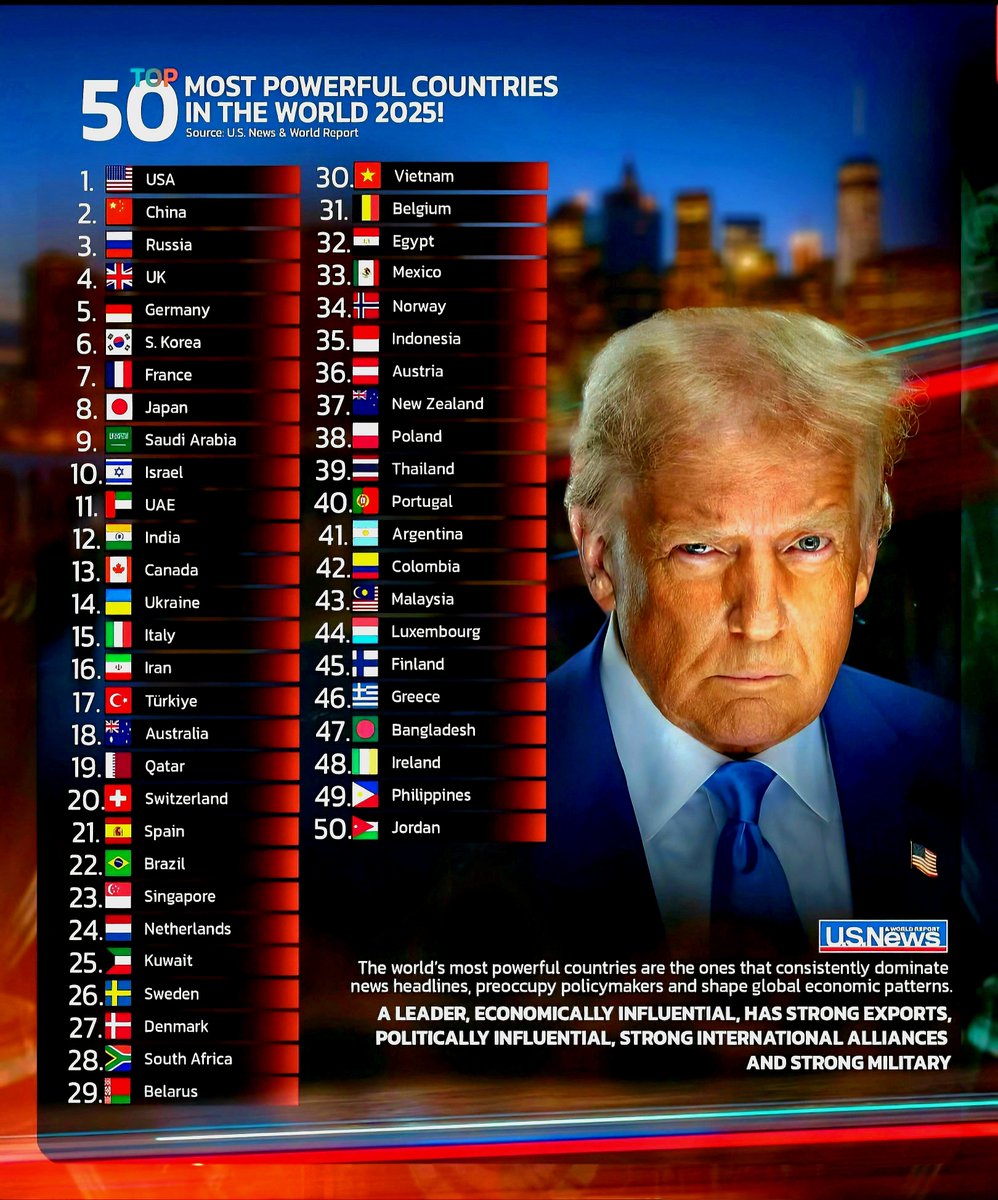
1. United States: The Global Leader in Influence and Innovation
The United States continues to hold its position as the world’s most influential country in 2025. With its robust economy, cutting-edge technological advancements, diverse culture, and significant military strength, the U.S. remains at the forefront of global affairs. The country’s leadership in sectors like AI, aerospace, and finance keeps it at the top of the global power hierarchy.
2. China: The Rising Superpower
China has solidified its role as a global superpower in 2025, boasting a rapidly growing economy, expansive Belt and Road Initiative, and significant technological advancements. Its military buildup and strategic investments across Asia and Africa have expanded its influence, positioning it as a key player rivaling the United States globally.
3. Russia: A Core Military and Energy Power
Russia maintains its status as a formidable military power with an expanding influence over Eurasian geopolitics. Its vast natural resources, especially in energy, contribute to its strength. The nation continues to play a critical role in global affairs, advocating for its interests in international organizations.
4. India: The Fastest Growing Economy
India has seen phenomenal economic growth, bolstered by technological innovation, demographic advantages, and a booming service sector. Its strategic importance continues to rise, especially within regional politics in South Asia and globally through its expanding military and space programs.
5. Japan: The Technological Powerhouse
Japan remains a leader in robotics, electronics, and automotive industries. Its innovative approach to technology and resilient economy have preserved its status as a top global power. Its diplomatic influence is also significant in the Indo-Pacific region.
6. Germany: The Economic Interface of Europe
As Europe’s largest economy, Germany remains central to the continent’s political and economic stability. It leads in engineering, automotive manufacturing, and renewable energy initiatives, maintaining a major influence within the European Union and beyond.
7. United Kingdom: A Financial and Diplomatic Power
Despite Brexit, the UK continues to wield considerable influence in global finance, politics, and culture. London remains a top financial hub, and the country is actively involved in international diplomacy, security, and innovation.
8. France: The Cultural and Military Power
France maintains its powerful position through its cultural influence, military strength, and strategic alliances. Its nuclear capabilities and leadership within the European Union contribute to its global standing.
9. South Korea: Innovation and Economic Resilience
South Korea remains at the forefront of technological innovation, especially in semiconductor manufacturing and electronics. Its resilient economy, combined with a strategic military alignment with the U.S., keeps it as a key regional power.
10. Brazil: Leading Latin America
Brazil continues to be the leading power in Latin America, driven by vast natural resources, expanding agribusiness, and emerging technology sectors. Its influence in regional politics and international organizations remains substantial.
11. Canada: The North American Stabilizer
Canada stands out for its political stability, natural resources, and commitment to environmental sustainability. Its proximity to the United States enhances its strategic importance in North American geopolitics.
12. Australia: The Pacific Power
Australia’s strategic location, rich natural resources, and strong alliance with the United States position it as a key player in the Pacific region. Its growing influence in regional security and climate initiatives continues to shape its global stature.
13. Italy: The Cultural and Diplomatic Hub
Italy’s influence is rooted in its rich history, cultural exports, and active diplomatic engagement within the European Union. Its leadership in fashion, art, and tourism also contribute to its global standing.
14. South Africa: The Gateway to Africa
South Africa remains a pivotal economy and political leader on the continent. Its diverse industries, from mining to finance, and regional influence in Africa make it a key power in shaping the future of the continent.
15. Saudi Arabia: The Oil and Investment Giant
Saudi Arabia continues to leverage its oil reserves and strategic investments into diverse sectors like technology and tourism. Its Vision 2030 plan aims to diversify its economy, positioning it as a major regional and global power.
16. Turkey: The Bridge Between Continents
Turkey’s strategic location and expanding military presence bolster its influence across Europe and the Middle East. Its economic reforms and pursuit of regional leadership have increased its global importance.
17. United Arab Emirates: The Business and Innovation Hub
The UAE’s rapid development into a regional financial and technological hub, alongside its strategic geopolitical role, secures its place among the world’s top countries.
18. Mexico: The Economic Power in North America
Mexico’s expanding manufacturing, technology, and trade sectors bolster its growing influence in North America. Its strategic partnerships and economic reforms forecast continued rise.
19. Indonesia: The Leading Southeast Asian Power
Indonesia’s democratic stability, economic growth, and massive population give it a rising role in regional and global affairs. Its initiatives in infrastructure and digital economy continue to expand its influence.
20. Argentina: The Gateway of South America
Argentina’s rich resources, technological development, and regional leadership secure its place among South America’s top powers. Its commitment to renewable energy and innovation are key drivers.
Complete list of the top 50 countries would continue in this manner, emphasizing their strengths, geopolitical roles, and strategic initiatives that solidify their position in 2025.
 ChatGPT
 Perplexity
 Gemini AI
 Grok AI