Select Language:
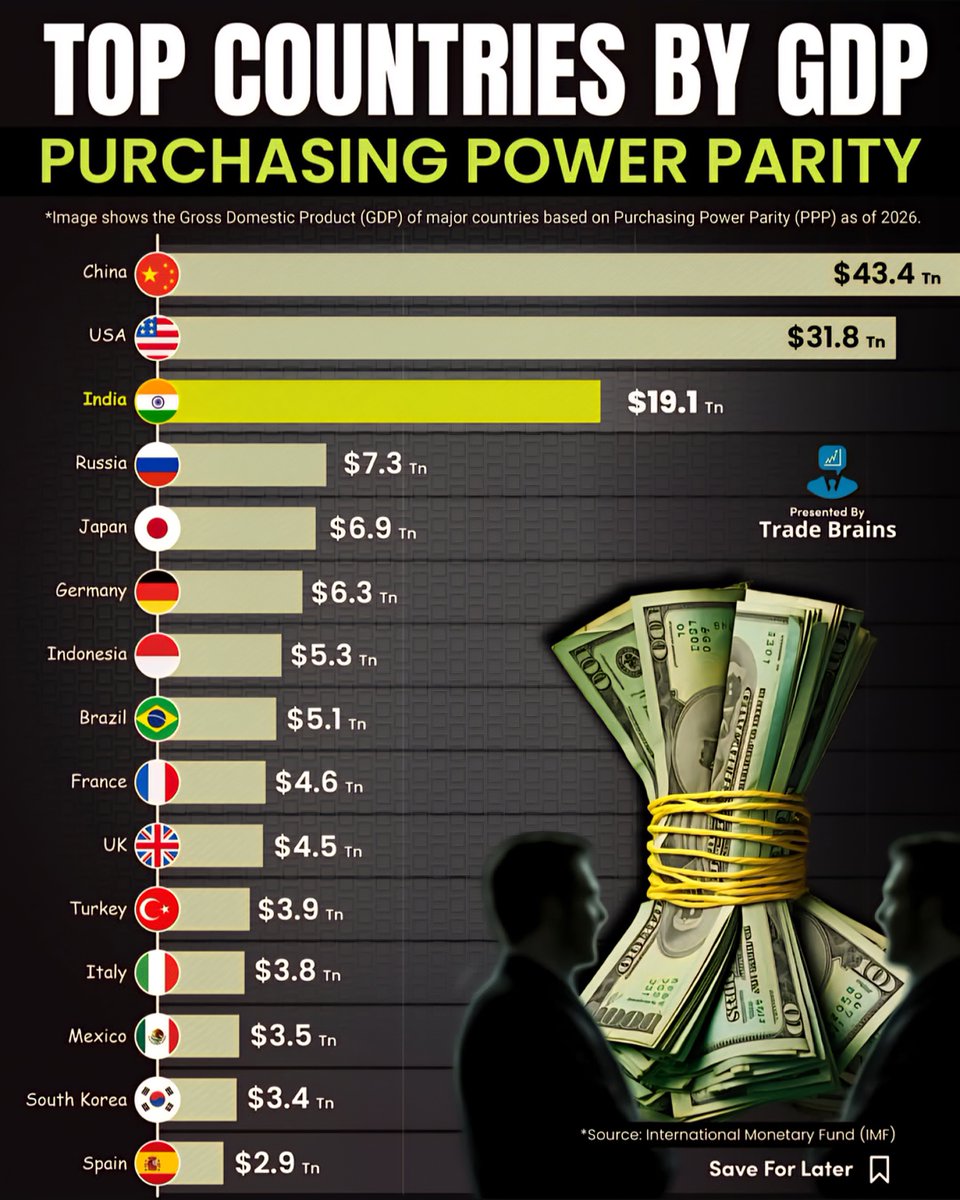
Top 50 Countries by GDP (PPP) in 2025: A Global Overview
1. China Leads the World Economy
China maintains its position as the largest economy measured by Purchasing Power Parity (PPP), boasting an impressive $43.4 trillion. Its rapid growth over the past decade underscores its influence on the global stage, driven by technological innovation, manufacturing capacity, and expanding consumer markets.
2. The United States Remains a Powerhouse
The United States continues to hold the second spot with a GDP (PPP) worth $31.8 trillion. Despite geopolitical shifts and economic challenges, the U.S. economy remains resilient, supported by its technology sector, financial services, and diversified industries.
3. India’s Rapid Ascent
India secures the third spot with a staggering $19.1 trillion in PPP terms. Its burgeoning middle class, technological advancements, and substantial foreign investments have propelled the nation into the global economic top tier, signaling a shift towards a more multipolar world economy.
4. Russia’s Substantial Economic Footprint
Russia’s economy is valued at $7.3 trillion, reflecting its natural resource dominance, especially in oil and gas. Despite global sanctions and economic fluctuations, Russia maintains a significant position in the global economy.
5. Japan’s Steady Performance
Japan remains in the top five with a GDP of $6.9 trillion. Its advanced technology, automotive industry, and innovation ecosystem continue to solidify its economic stature in 2025.
6. Germany’s Leadership in the EU
Germany’s economy, valued at $6.3 trillion, is the largest within the European Union. Its industrial base, export strength, and technological innovation keep it at the forefront of global economic rankings.
7. Indonesia’s Emerging Market Status
Indonesia emerges as a major player with a PPP GDP of $5.3 trillion. The nation’s rapid urbanization, demographic dividend, and resource-rich economy are catalyzing its growth trajectory.
8. Brazil’s Resilience Amidst Challenges
Brazil, with a PPP GDP of $5.1 trillion, exemplifies resilience through a diverse economy encompassing agriculture, mining, and services. Its growing digital infrastructure and investment initiatives continue to push its economic potential.
9. France’s Continued Economic Influence
France’s economy is valued at $4.6 trillion, with strengths spanning luxury goods, aerospace, and technology sectors. Its strategic global alliances enhance its economic stature.
10. The UK’s Post-Brexit Recovery
Despite Brexit challenges, the United Kingdom’s economy remains robust at $4.5 trillion. Financial services, pharmaceuticals, and innovative tech sectors drive its economic recovery and growth.
Additional Notable Economies
- Turkey: Ranks 11th with a $3.9 trillion PPP, transitionally navigating geopolitical and economic shifts.
- Italy: Holds the 12th spot at $3.8 trillion, with a focus on fashion, manufacturing, and tourism.
- Mexico: At $3.5 trillion, Mexico’s close ties with the U.S. and its manufacturing industry bolster its economic position.
- South Korea: Valued at $3.4 trillion, its technology and manufacturing sectors continue to thrive.
Accelerating Economies and Emerging Markets
- Vietnam and Bangladesh: Both surpass $1.8 trillion in PPP GDP, showcasing growth fueled by manufacturing, exports, and young populations.
- Nigeria and Pakistan: Climbing the ranks with economies at $1.6 trillion and $1.7 trillion respectively, driven by resource wealth and demographic advantages.
- South Africa and Singapore: Stable economies with PPP values at approximately $1 trillion, highlighting stability and innovation.
Small but Significant Economies
- Hong Kong: Remains a financial hub with a PPP GDP of $590 billion, serving as a gateway to China’s vast market.
- Peru and Czech Republic: Reflecting regional growth, their economies are valued at $640 billion and $650 billion, respectively.
This detailed overview underscores the dynamic shifts in global economic powerhouses as of 2025. Emerging markets continue to close the gap with traditionally dominant economies, signaling a more balanced and interconnected global economic landscape.
Source: IMF, Figures rounded in 2025
 ChatGPT
 Perplexity
 Gemini AI
 Grok AI