Select Language:
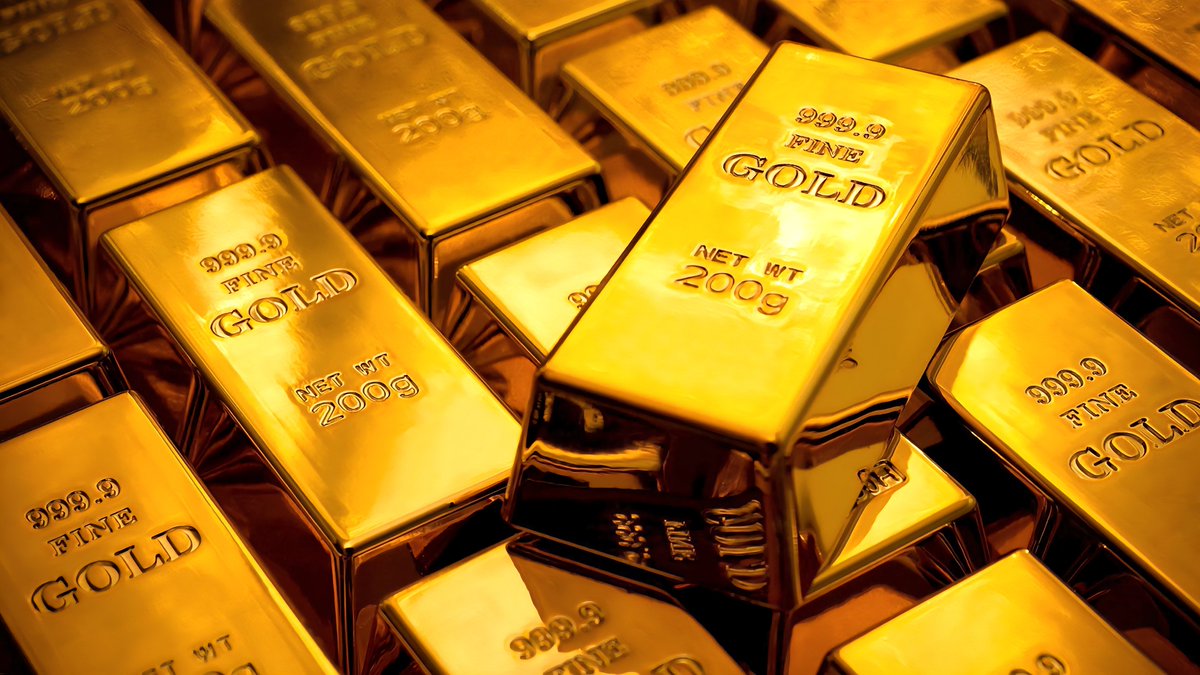
Gold Maintains Its Position as the Most Valuable Asset Globally
With a staggering market valuation of over $31 trillion, gold continues to be the reigning king of assets worldwide. Its enduring appeal stems from its status as a safe haven asset, especially during economic turbulence. As an inflation hedge and store of value, gold remains integral to global economies and individual investors alike. Despite fluctuations in financial markets, the precious metal’s intrinsic worth sustains its dominance at the top of the asset hierarchy.
Tech Giants Dominate the Corporate Valuation Landscape
Leading the equity assets, US-based technology giants hold commanding market capitalizations in the trillions. NVIDIA tops the list among non-traditional assets, valued at approximately $4.472 trillion, driven by surging demand for graphics processing units, artificial intelligence applications, and data centers. Apple closely follows with a valuation around $4.021 trillion, benefiting from its expansive product ecosystem and services.
Other notable tech leaders include Alphabet (Google) at $3.758 trillion and Microsoft at $3.604 trillion, underscoring the tech sector’s dominant role in the global economy. Meta Platforms (Facebook), Tesla, and Broadcom also rank among the top assets, reflecting innovation and consumer engagement’s financial rewards.
Precious Metals and Industrials Continue to Hold Value
Silver shares a substantial market value of roughly $3.921 trillion, serving as both an industrial metal and investment asset. Platinum and palladium are also significant, with valuations of approximately $552 billion and $333 billion, respectively, largely driven by their crucial roles in automotive catalytic converters and industrial catalysts. These metals’ scarcity and industrial demand provide strong counterweights to the volatility observed in other asset classes.
Oil, Energy, and Heavy Industry Powerhouses
Saudi Aramco, the world’s largest oil producer, commands a valuation near $1.532 trillion. Energy companies like Exxon Mobil and China’s China National Petroleum Corporation (CNPC) also feature prominently, with market caps exceeding $500 billion each. These firms are often viewed as barometers of global economic health, given their foundational role in powering industries and economies.
Asian Tech and Financial Sectors Rise in Prominence
Taiwan Semiconductor Manufacturing Company (TSMC) leads chip manufacturing, valued at approximately $1.521 trillion. Chinese firms like Tencent and Alibaba also figure prominently, with valuations of $713 billion and $360 billion, respectively, signaling a continued rise of technology and financial services from Asia in the global scene.
Financial Institutions and ETFs Close the Asset Spectrum
Major banks such as JPMorgan Chase ($888 billion), Bank of America ($414 billion), and ICBC ($354 billion) underscore the importance of financial services in the global economy. Investment vehicles like Vanguard’s S&P 500 ETFs, iShares Core S&P 500, and Invesco QQQ Trust combine to manage hundreds of billions of dollars, emphasizing the role of index funds and ETFs in broad market participation.
Non-Traditional and Emerging Digital Assets Grow Significantly
Cryptocurrencies and blockchain assets have gained substantial valuations, with Bitcoin valued around $1.749 trillion and Ethereum at approximately $357 billion. The rise of digital assets reflects investor interest in decentralized finance and the potential for blockchain to transform future financial infrastructure.
Consumer Staples and Healthcare Hold Steady Market Values
Walmart, Johnson & Johnson, and Procter & Gamble are stalwarts in consumer goods and healthcare sectors, with market cap valuations ranging from nearly $500 billion to over $900 billion. Their resilience and wide consumer reach make them indispensable in diversified investment portfolios.
Luxury and Retail Leaders Show Strength
LVMH, the luxury goods conglomerate, sits at $369 billion, highlighting the sustained demand for high-end fashion and accessories. Costco, with a valuation of $377 billion, exemplifies the strength of membership-based retail models.
Conclusion
The year’s asset landscape reflects a diverse and dynamic global economy, marked by rapid technological innovation, urbanization, and evolving consumer preferences. Traditional assets like gold and industrial metals continue to hold intrinsic value, while tech titans and digital assets exhibit explosive growth trajectories. As 2025 unfolds, investors are keeping a keen eye on these influential assets shaping the world’s financial ecosystem.
Source: Companies Market Capitalization Data 2025
 ChatGPT
 Perplexity
 Gemini AI
 Grok AI