Select Language:
Global Financial Shifts in Just Two Weeks: Key Indicators and Market Movements in 2025
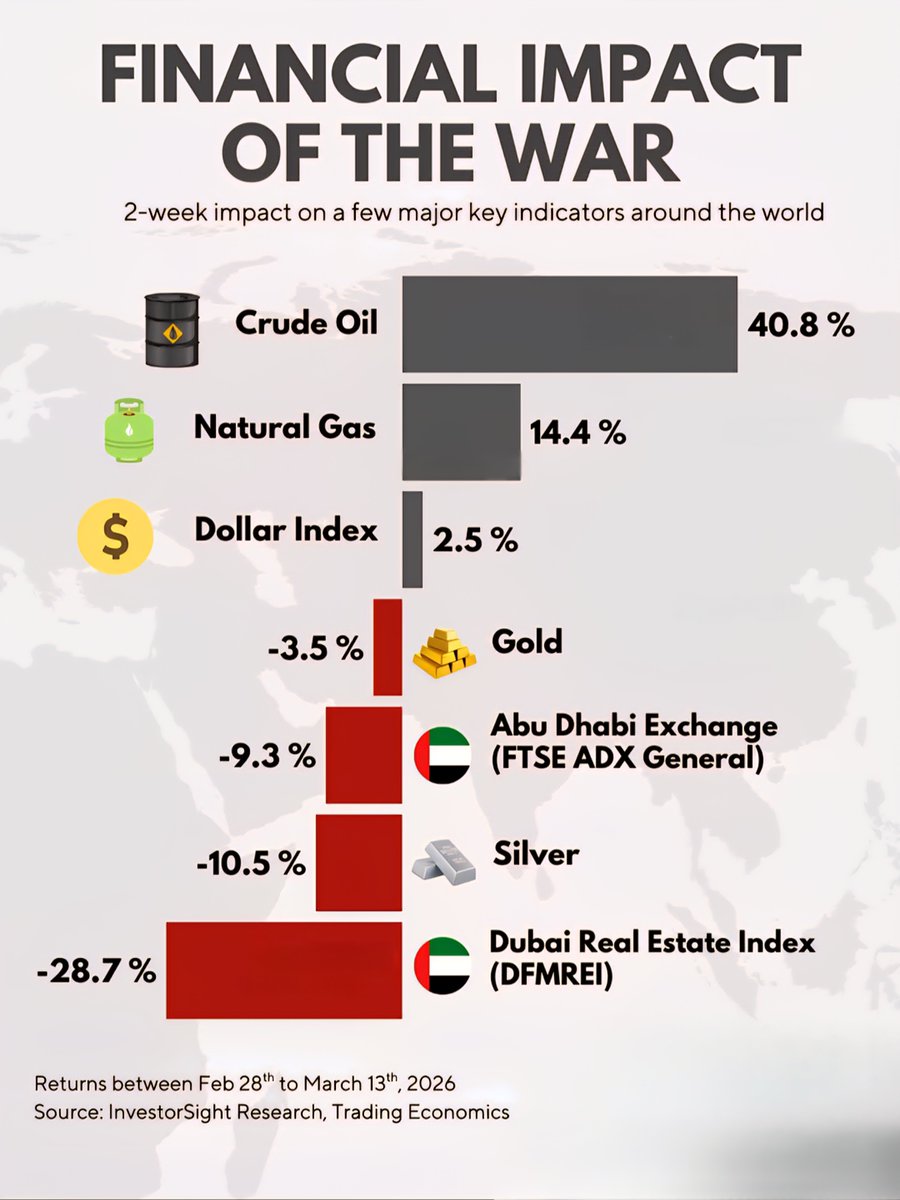
In the wake of ongoing geopolitical tensions and recent global developments, financial markets across the world have experienced significant shifts over the past two weeks. Here’s an in-depth look at how some of the major economic indicators have reacted and what it could mean for investors, governments, and everyday consumers alike.
1. Surge in Crude Oil Prices
One of the most noticeable movements has been in the crude oil sector, which saw a staggering increase of 40.8% from February 28 to March 13, 2026. This sharp rise can be attributed to disrupted supply chains, potential sanctions, and heightened geopolitical uncertainties, especially in oil-producing regions. Such a jump elevates costs for transportation and manufacturing sectors, making energy a critical concern for economies globally. Consumers might see higher gasoline prices, and industries reliant on oil are under pressure to manage increased expenses.
2. Natural Gas Prices Follow Suit
Natural gas prices also climbed by 14.4% during the same period. As an essential energy source, this uptick reflects the volatility triggered by supply constraints and increased demand in colder regions. Power grids, especially in Europe and Asia, face challenges amid the fluctuating prices, potentially leading to inflationary pressures that could ripple through various sectors of the economy.
3. The U.S. Dollar Index Gains Momentum
The dollar index experienced a modest rise of 2.5%, indicating a relative strengthening of the U.S. dollar against a basket of major currencies. In times of geopolitical and economic uncertainty, investors often turn to the dollar as a safe haven, which then influences global trade dynamics. A stronger dollar can make American exports more expensive but often benefits multinational corporations by reducing import costs.
4. Gold Prices Dip Amid Market Turmoil
Unlike other assets, gold has seen a 3.5% decrease. This decline is unusual in times of crisis, but it could be driven by the stronger dollar and shifting investment preferences toward other commodities like oil and gas. Investors might be re-evaluating their holdings based on rapid market changes, leading to decreased gold demand.
5. Asian Markets Experience Declines
The Abu Dhabi Exchange, represented by the FTSE ADX General index, has suffered a 9.3% loss. Similarly, Dubai’s real estate sector, tracked through the Dubai Financial Market Real Estate Index (DFMREI), has plummeted by 28.7%. These declines point to a broader trend of recession fears and investor caution in the Middle Eastern markets, where geopolitical concerns heavily influence investor confidence.
6. Silver and Real Estate: Contrasting Trends
Silver mirrored gold’s downward trend with a 10.5% decline, adding to the precious metals’ current slump. Meanwhile, the Dubai real estate segment faced a more severe downturn, highlighting a possible wave of property sell-offs or reduced investments in regional real estate amid economic instability.
Implications for Global Economy in 2025
The past two weeks have underscored a period of intense market volatility that could extend into the coming months. Rising energy prices threaten inflationary pressures worldwide, and declining equities and real estate indices suggest investor hesitance and economic caution. Policymakers are under high pressure to stabilize markets and reassure investors and consumers.
The interconnectedness of these indicators shows how a geopolitical event or conflict can cascade through global markets within weeks.
Investors should consider diversifying their portfolios, keeping a close eye on commodity prices, and remaining cognizant of currency fluctuations. Governments may also need to balance energy policies with economic resilience plans to navigate these turbulent times effectively.
As global markets adapt to these rapid changes, staying informed will be crucial for those looking to safeguard their assets and capitalize on emerging opportunities.
Source: Trading Economics, data from Feb 28 to March 13, 2026.
 ChatGPT
 Perplexity
 Gemini AI
 Grok AI