Select Language:
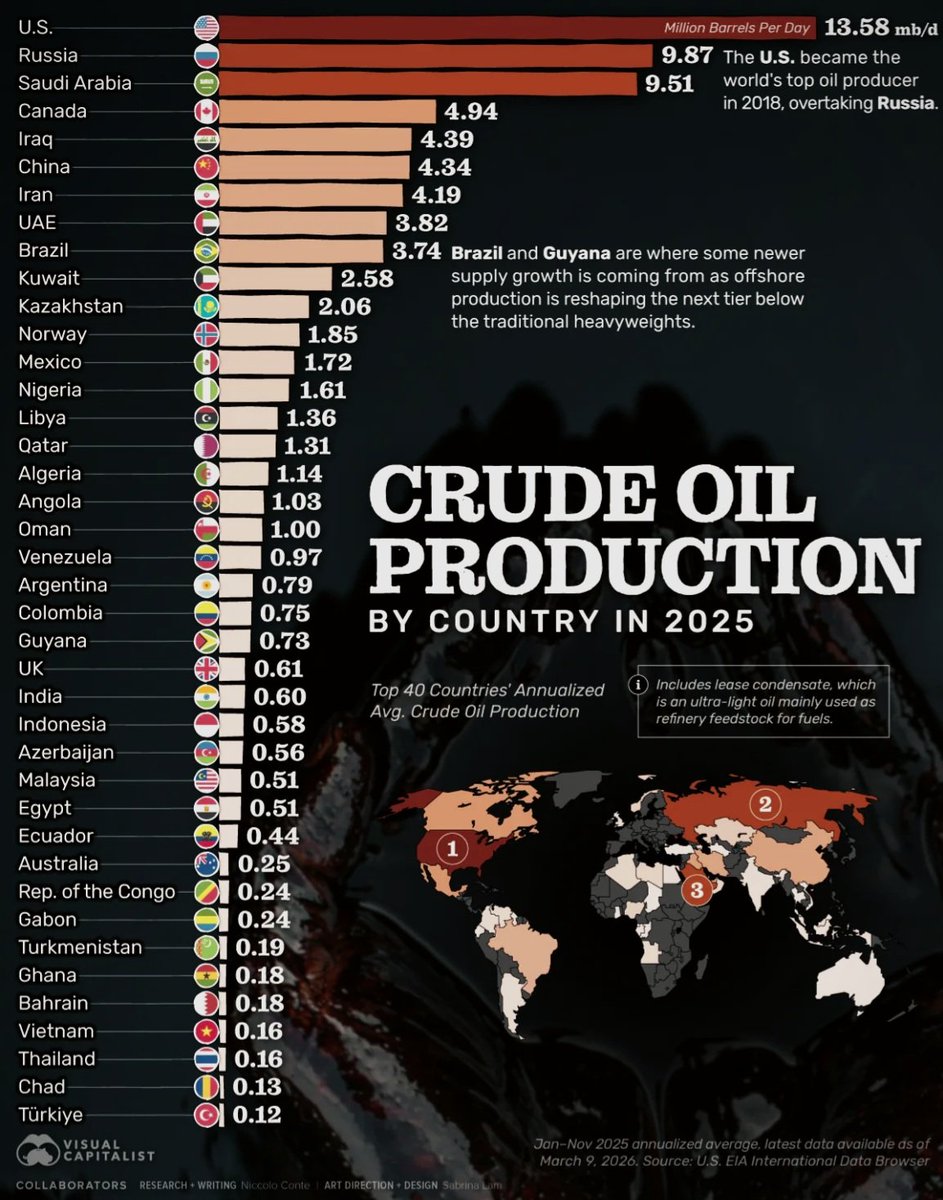
The Top 40 Oil Producers in 2025: Who Leads the Global Market?
1. United States Dominates Production
The United States remains the world’s leader in crude oil output, with an impressive 13.58 million barrels produced daily in 2025. This sustained dominance is fueled by advanced drilling technologies and prolific shale formations, particularly in Texas and North Dakota. The country’s resilience and innovative extraction methods continue to shape global oil markets.
2. Russia Continues as a Major Oil Power
Russia ranks second with nearly 9.87 million barrels daily. Despite geopolitical tensions, the nation’s vast Siberian reserves and established infrastructure keep it at the forefront of global oil production. Russian oil companies are investing heavily in modernizing fields to maintain their output levels.
3. Saudi Arabia’s Steady Output
Saudi Arabia maintains a crucial position with 9.51 million barrels per day. The country’s strategic oil reserves and OPEC membership enable it to influence global oil prices effectively. The Kingdom’s continued commitment to adjusting production levels supports global market stability.
4. Canada’s Surging Production
Canada produces approximately 4.94 million barrels daily, with a significant share coming from Alberta’s oil sands. Technological advancements have made extraction more efficient, bolstering Canada’s position among top producers. The country’s commitment to environmental regulations remains a balancing act.
5. Iraq’s Rising Oil Presence
Iraq’s output has surged to 4.39 million barrels daily. Efforts to refurbish aging fields and increase capacity have paid off, positioning Iraq as a vital player in global crude supply. Ongoing investments in infrastructure aim to sustain these levels.
6. China Expands Its Oil Capabilities
China’s production stands at 4.34 million barrels per day, reflecting its strategic focus on energy security amid rising internal demand. Enhanced exploration in deep-water and unconventional fields contributes to boosting domestic supply.
7. Iran’s Continued Oil Production
Iran maintains a strong output of 4.19 million barrels daily, despite sanctions impacting exports. Domestic production remains resilient, with plans to further develop its vast fields to increase future capacity.
8. UAE’s Strategic Oil Output
The United Arab Emirates produces 3.82 million barrels daily. Abu Dhabi’s mature fields and recent exploration initiatives help the country sustain its position as a regional energy hub.
9. Brazil’s Growing Oil Sector
Brazil produces about 3.74 million barrels per day. Deep-water offshore discoveries and increased investments in exploration activities have propelled Brazil to the top ten oil-producing nations.
10. Kuwait’s Stable Production Levels
Kuwait’s daily production reached approximately 2.58 million barrels. The nation’s focus on maintaining existing operations and modernizations ensures steady output amid fluctuating global demand.
11. Kazakhstan’s Expanding Capacity
With 2.06 million barrels daily, Kazakhstan is emerging as a significant oil producer. The country’s investment in upstream technology and regional infrastructure projects bolster its production capacity.
12. Norway’s Mature Fields and Innovation
Norway maintains 1.85 million barrels per day through efficient exploitation of its North Sea fields. Continued emphasis on technological innovation and environmental protections underline its strategy.
13. Mexico’s Oil Output Stabilizes
Mexico produces approximately 1.72 million barrels daily. Efforts to overhaul state-run PEMEX and invest in deep-water exploration are critical to maintaining their production levels.
14. Nigeria’s Oil Industry Resilience
Nigeria’s daily crude output is around 1.61 million barrels. Despite political and infrastructural challenges, the country remains a key player in West Africa’s energy scene.
15. Libya’s Volatile Yet Significant Production
Libya averages 1.36 million barrels daily. Political instability has led to fluctuations, but ongoing efforts aim to restore and stabilize production levels.
16. Qatar’s OPEC Influence
Qatar produces about 1.31 million barrels daily, focusing on natural gas liquids and oil. Its strategic importance within OPEC contributes to regional stability.
17. Algeria’s Steady Oil Output
Algeria maintains a daily production of 1.14 million barrels, leveraging mature fields and new exploration to sustain its economy.
18. Angola’s Strategic Oil Operations
At 1.03 million barrels per day, Angola continues to develop offshore fields, aiming to diversify its oil sources.
19. Oman’s Consistent Production
Oman’s oil output sits at 1 million barrels daily. The nation invests in upstream technology and collaborates regionally to optimize its reserves.
20. Venezuela’s Struggling Yet Significant Role
Venezuela produces around 970,000 barrels per day. Political and economic hurdles limit its output, but the country’s vast reserves still make it an important regional player.
21. Argentina’s Increasing Oil Production
Argentina produces approximately 790,000 barrels daily. Recent discoveries and improved extraction methods are boosting output and attracting foreign investment.
22. Colombia’s Advancing Oil Sector
At 750,000 barrels daily, Colombia is seeking to expand its production through new exploration projects, especially in the Magdalena Valley.
23. Guyana’s Offshore Growth
Guyana’s oil output has reached about 730,000 barrels per day, thanks to recent offshore discoveries, positioning it as an emerging oil hotspot in South America.
24. The UK Maintains Oil Production
The United Kingdom produces around 610,000 barrels daily, primarily from the North Sea. Despite declining fields, technological upgrades help sustain production.
25. India’s Developing Oil Capabilities
India produces roughly 600,000 barrels per day, with increased focus on offshore exploration and deep-water projects to reduce reliance on imports.
26. Indonesia’s Oil Production Efforts
Producing about 580,000 barrels daily, Indonesia is actively exploring new offshore fields and investing in enhanced recovery techniques.
27. Azerbaijan’s Expanding Offshore Operations
Azerbaijan maintains 560,000 barrels per day with continued development of its Caspian Sea fields and exploration initiatives.
28. Malaysia’s Ongoing Oil Projects
With a production of approximately 510,000 barrels daily, Malaysia is investing in deep-water offshore fields to sustain output levels.
29. Egypt’s Resilience in Oil Production
Egypt produces about 510,000 barrels per day, with recent discoveries in the Mediterranean boosting prospects for future growth.
30. Ecuador’s Stable Oil Output
Ecuador maintains around 440,000 barrels per day through consistent operation of its oil fields and exploration efforts.
31. Australia’s Niche Oil Operations
Australia’s production stands at 250,000 barrels daily, primarily from offshore basins which are gradually being tapped for potential reserves.
32. The Republic of the Congo and Gabon
Both countries produce roughly 240,000 barrels daily, focusing on offshore and shallow water projects to sustain their outputs.
33. Turkmenistan’s Limited Yet Steady Output
Turkmenistan’s daily output is around 190,000 barrels, mainly from land-based operations with ongoing regional exploration.
34. Ghana’s Emerging Oil Sector
Ghana produces approximately 180,000 barrels daily, with recent offshore discoveries signaling future growth opportunities.
35. Bahrain’s Small but Significant Production
Bahrain contributes about 180,000 barrels daily, focused on maintaining existing fields and exploring new offshore prospects.
36. Vietnam and Thailand’s Modest Outputs
Both nations produce around 160,000 barrels per day each, with ongoing efforts to explore new offshore fields and improve efficiency.
37. Chad’s Growing Oil Reserves
Chad’s production is about 130,000 barrels daily, as the country explores more onshore fields to boost its oil sector.
38. Turkey’s Developing Oil Potential
Turkey produces roughly 120,000 barrels per day, focusing on regional exploration and developing existing fields to expand capacity.
The above list reflects the latest data from the U.S. Energy Information Administration (EIA), based on annualized averages from January through November 2025. Despite ongoing global shifts toward renewable energy, these nations continue to play vital roles in shaping the world’s energy landscape.
Data Source: U.S. EIA International Data Browser, March 2026.
 ChatGPT
 Perplexity
 Gemini AI
 Grok AI